Serving Kansas City, MO & nearby
(816) 857-5830
Kansas City, MO

Off-Track Doors in North Kansas City: Why 1970s Hardware Slips

North Kansas City homes built around 1974 mostly run steel track and roller hardware that's now 50 years old. Here's why doors jump track and how the fix goes.

Off-Track Doors in North Kansas City: Why 1970s Hardware Slips
Kansas City, MO
8 services
6 service areas
Diagnosis first, then the fix

Stocked Parts

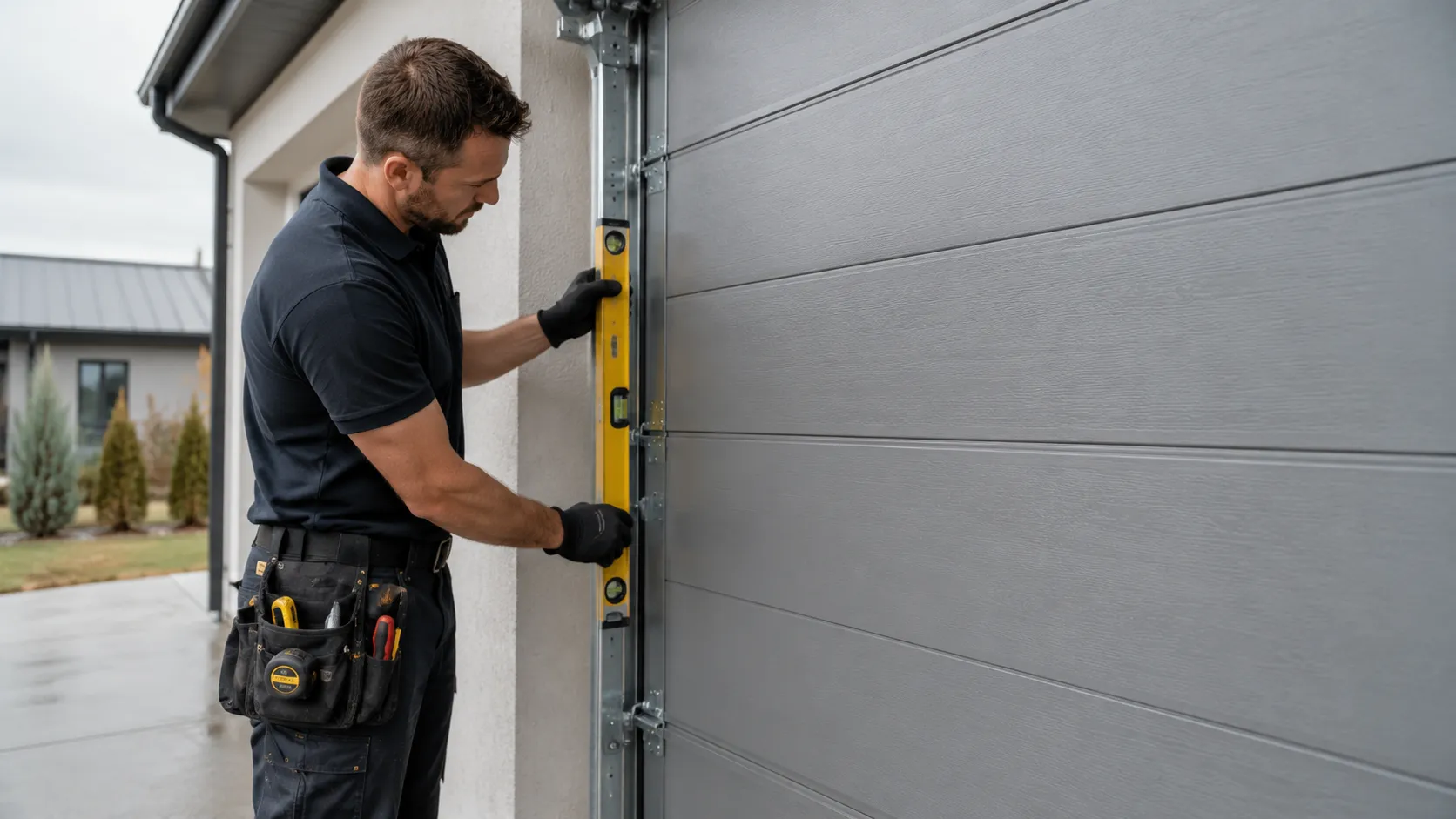
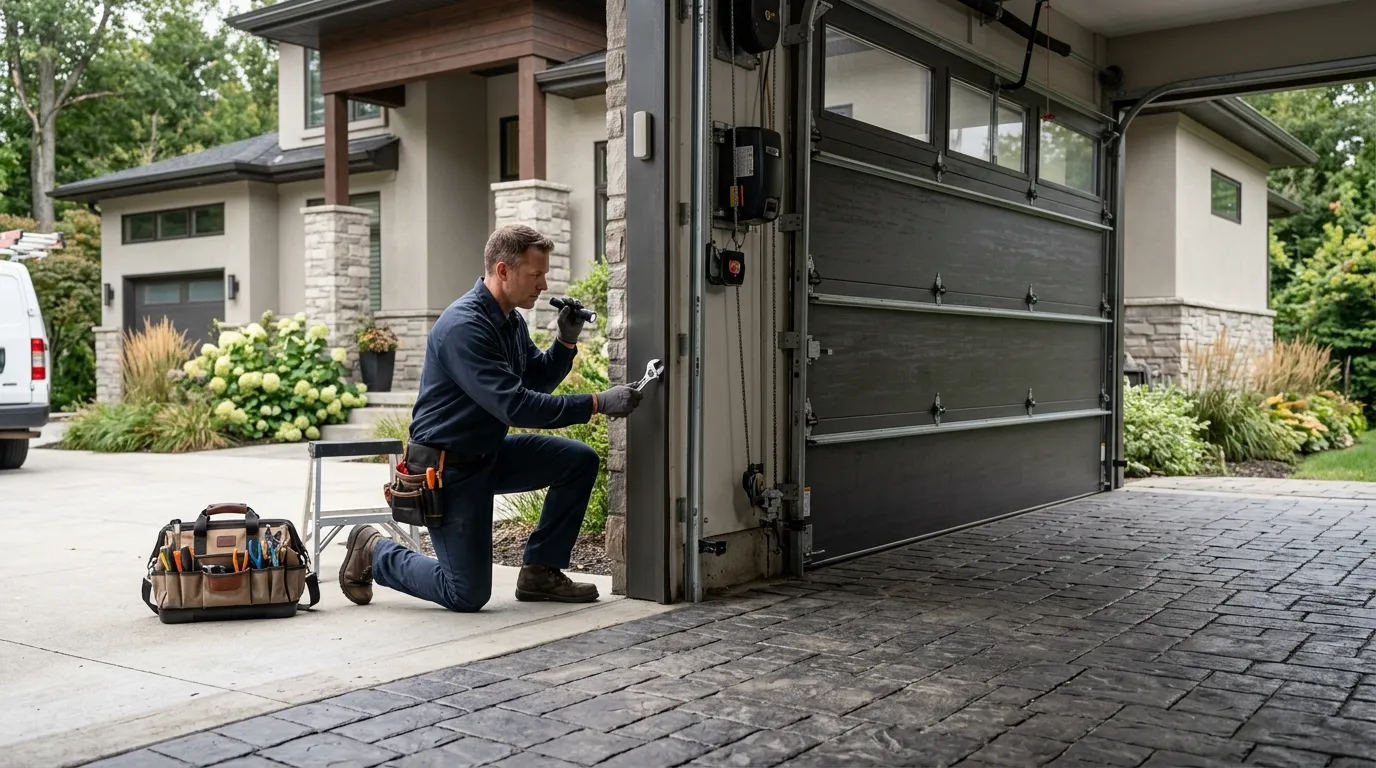
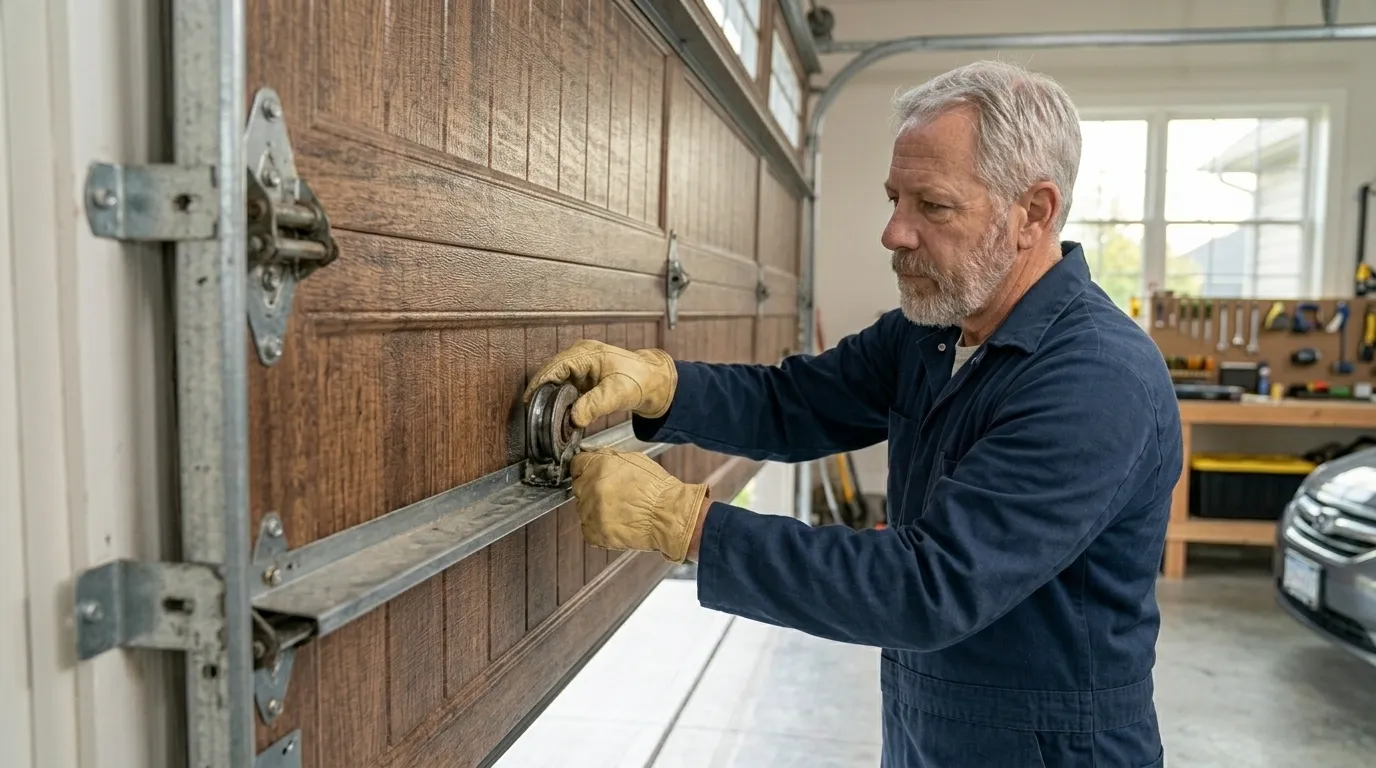
Most houses in North Kansas City went up around 1974, which puts the garage door hardware squarely in the era of galvanized steel track sections, steel rollers on straight stems, and track brackets lag-bolted right into the door jamb rather than into reinforced framing. That's the hardware we carry parts for when we come out here: replacement track sections in the standard widths from that build era, nylon and steel rollers to match worn originals, and the flag brackets and jamb brackets that hold track to a house frame that's now half a century old. We also carry the shims and lag screws needed when the original mounting has worked loose in the wood, which on houses this age is common. What we don't stock on the truck is anything custom - if a track was modified or widened at some point by a prior owner, that section may need to be sourced before the job finishes, and we'll say so up front rather than force a mismatched part onto your door.

Why This Fails Locally

A door built to the standards of 1974 was hung on track that assumed the rollers and springs would be serviced somewhat regularly and that the jamb it's bolted to would stay square. Fifty years later, neither assumption holds up everywhere. The bracket screws work loose in wood that's dried and shrunk over the decades, and once one bracket walks even an eighth of an inch, the track is no longer parallel to the door edge - that's when a panel starts riding up over the roller instead of guided by it. North Kansas City sits in a cold-climate zone with real winter swings, and steel track contracts in the cold just enough to change the tolerance at every bracket joint. On a track that's already loose, that seasonal shrink is what finally pushes a roller off the rail. It's not a defect in the door - it's fifty-year-old hardware meeting a temperature swing it was never asked to handle when new. We see this pattern often enough on doors from this build era that it's the first thing we check, not the last.

How It Shows Up

The most common version: the door runs fine most of the year, then one cold morning it binds partway up, or a bottom corner drops and the door hangs crooked in the opening. Sometimes it's a loud bang as a roller pops out of the track entirely, usually near a bracket that's finally let go. Other times it's quieter - the door still closes, but it rubs against the track or the weatherstrip on one side, which means it's already riding off true even though nobody's called yet. If you push the door by hand (opener disconnected, springs relaxed) and feel it catch or veer to one side partway through the travel, that's a track alignment problem, not an opener problem, and it's worth having looked at before a full derailment happens on a day you actually need the car out.

Doing It Yourself

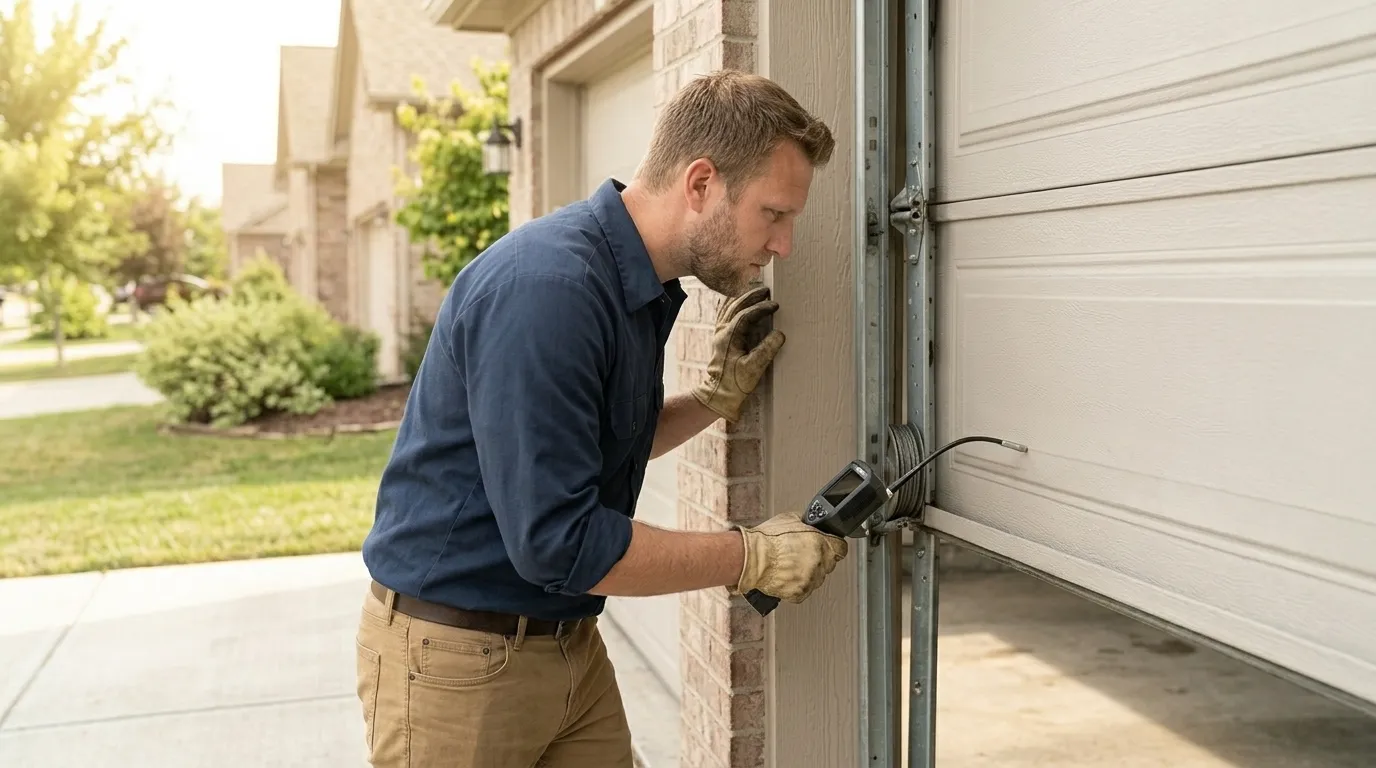
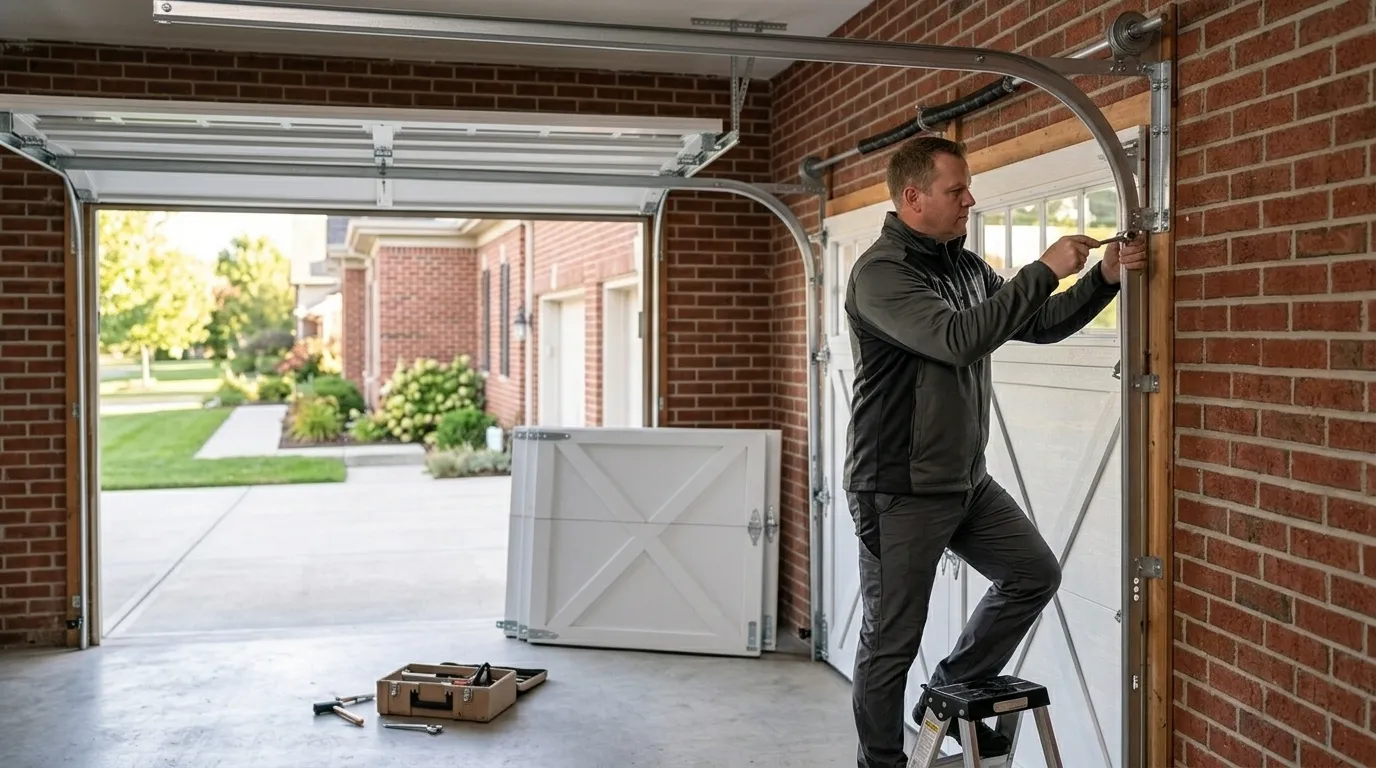
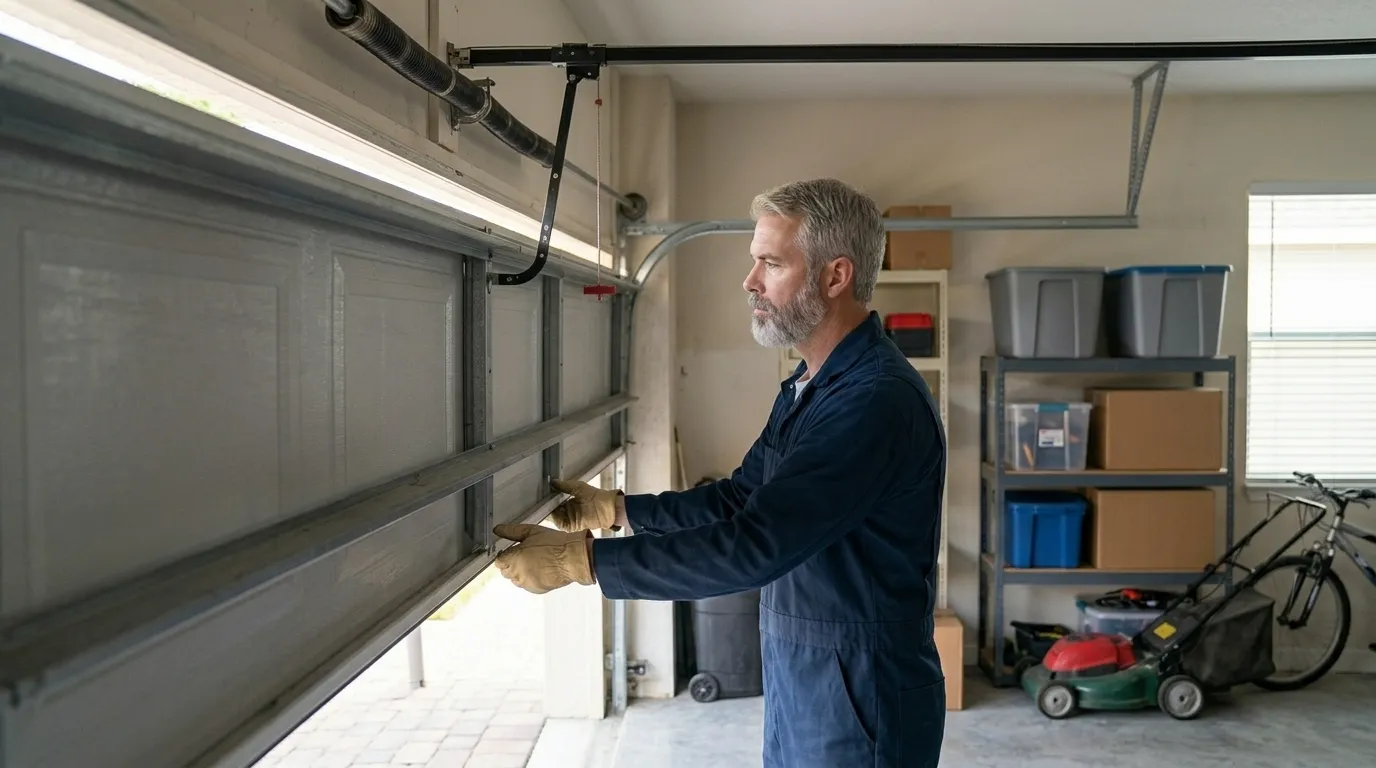
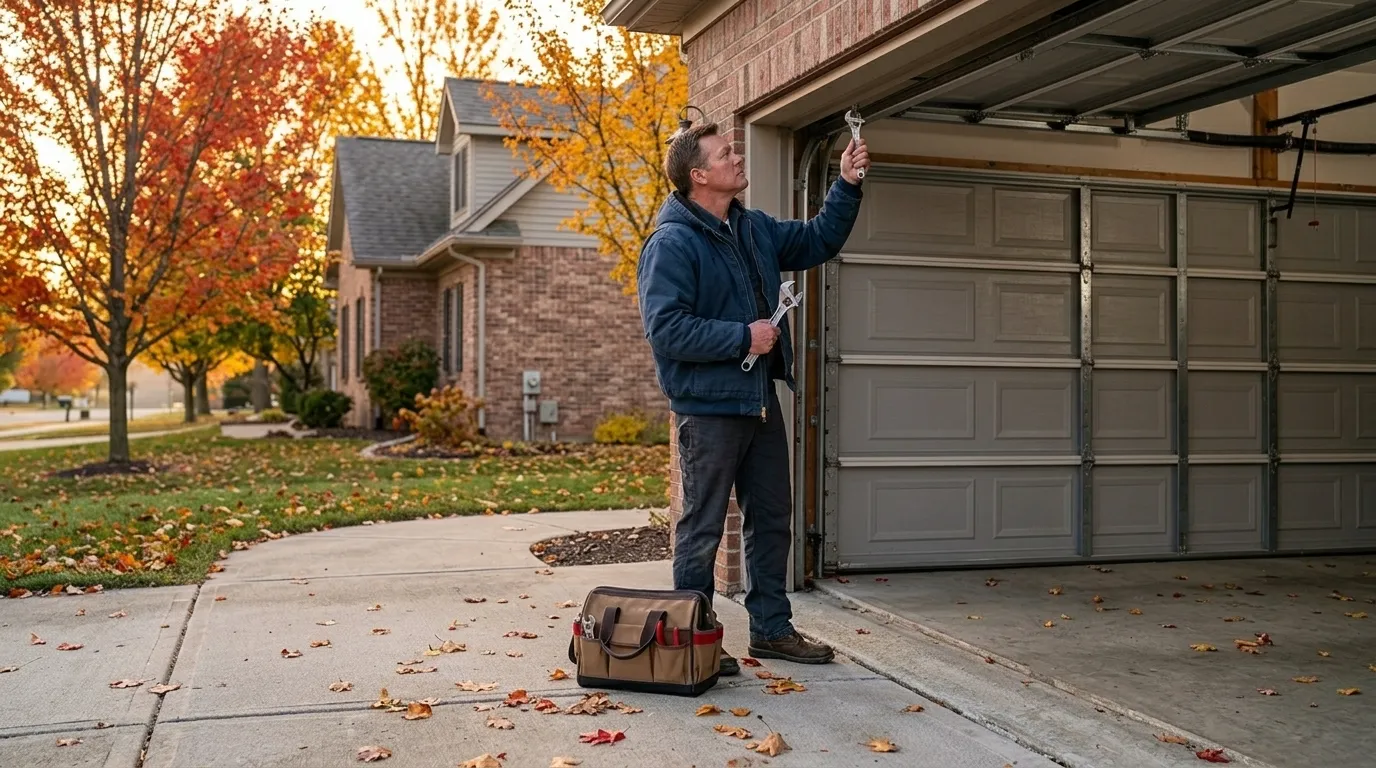
You can safely check a few things before calling anyone. With the door closed and the opener disconnected, look down each track from the bottom - a straight track should show a clean, even gap along its whole length; any spot where the track visibly kinks in or out is a starting point for a repair estimate over the phone. You can also check bracket screws by hand for obvious looseness, though don't try to re-tighten them into a jamb that's clearly stripped out - that just delays the real fix. What you should not do is force a door back onto its track yourself, or cut the cable to free a jammed panel. Extension and torsion springs on a door this old are under enough stored tension to cause a real injury, and a bent track is often cheaper to replace outright than to bend back into shape and hope.
Getting It Booked In

We run this repair out from Kansas City, about a mile away, so there's no local branch or drop-in counter here - a call gets a truck sent out, same as any other stop on the route. Tell us the door's approximate age when you call; on a house from the early-to-mid 1970s that's usually enough to know which track and roller stock to load before we're on site. See the North Kansas City coverage page for what else we handle in the area, or the off-track repair page for Kansas City for the broader service description this page sits under.

How it works

From “it’s stuck” to “it’s fixed”

Tell us what’s wrong - Kansas City garage door service

Tell us what’s wrong

Describe the symptom - won’t open, loud bang, opener runs but the door won’t move.

On-site diagnosis - Kansas City garage door service

On-site diagnosis

A technician tests the door under power and by hand and finds what actually failed.

Clear, up-front plan - Kansas City garage door service

Clear, up-front plan

You get the fix that’s needed and what drives the cost - before any work starts.

Repaired & tested - Kansas City garage door service

Repaired & tested

The repair is done, the door is set true and tested, and the work area left clean.

Serving Kansas City, MO - tell us what your door’s doing and we’ll take it from there.

How we work

What to expect

Diagnosis first

Every visit starts by finding what actually failed - not a pre-written parts list.

The right part for the door

Springs and openers matched to the door’s weight and age, so the fix holds up.

Straight answers

When a repair makes more sense than a replacement - or the reverse - you hear it plainly.

Clean, careful work

Tension released safely, hardware set true, the door tested under power before we leave.

475,378Residents in Kansas City
8Garage door services
6Neighborhoods & suburbs
MOServing Kansas City, MO
Questions

Frequently asked

Straight answers about garage door repair in Kansas City. Still unsure? Ask us directly.

Why does my door only jump track in winter?

Steel track contracts slightly in cold weather, and on a bracket that's already loosened over the decades, that small shrink is often what finally pushes a roller past the rail edge. It's a hardware-age issue triggered by temperature, not caused by it.

Is a bent track worth fixing or should I replace the section?

A track bent more than slightly rarely straightens cleanly enough to run true again. On houses from this era, we usually replace the bent section outright rather than bend it back, since a re-bent track tends to fail again at the same spot within a year or two.

Can I just push the door back onto the track myself?

No. The door is under spring tension even when it looks still, and forcing a panel back onto a track while that tension is live is a common way people get hurt. Disconnect the opener, don't touch the springs, and call it in instead.

Ready to get your garage door sorted?

Tell us what it’s doing and where you are in Kansas City - we’ll take it from there.

Request a QuoteCall