How It Shows Up
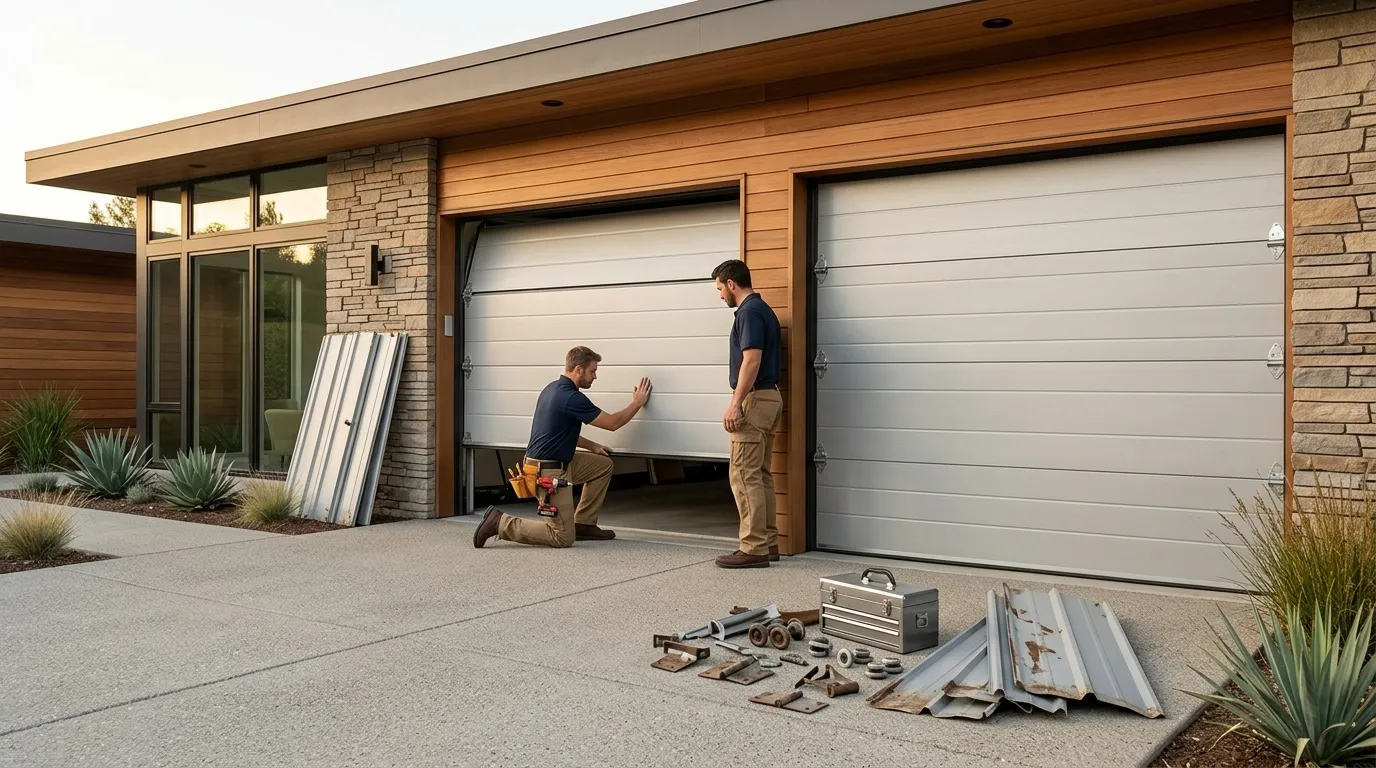
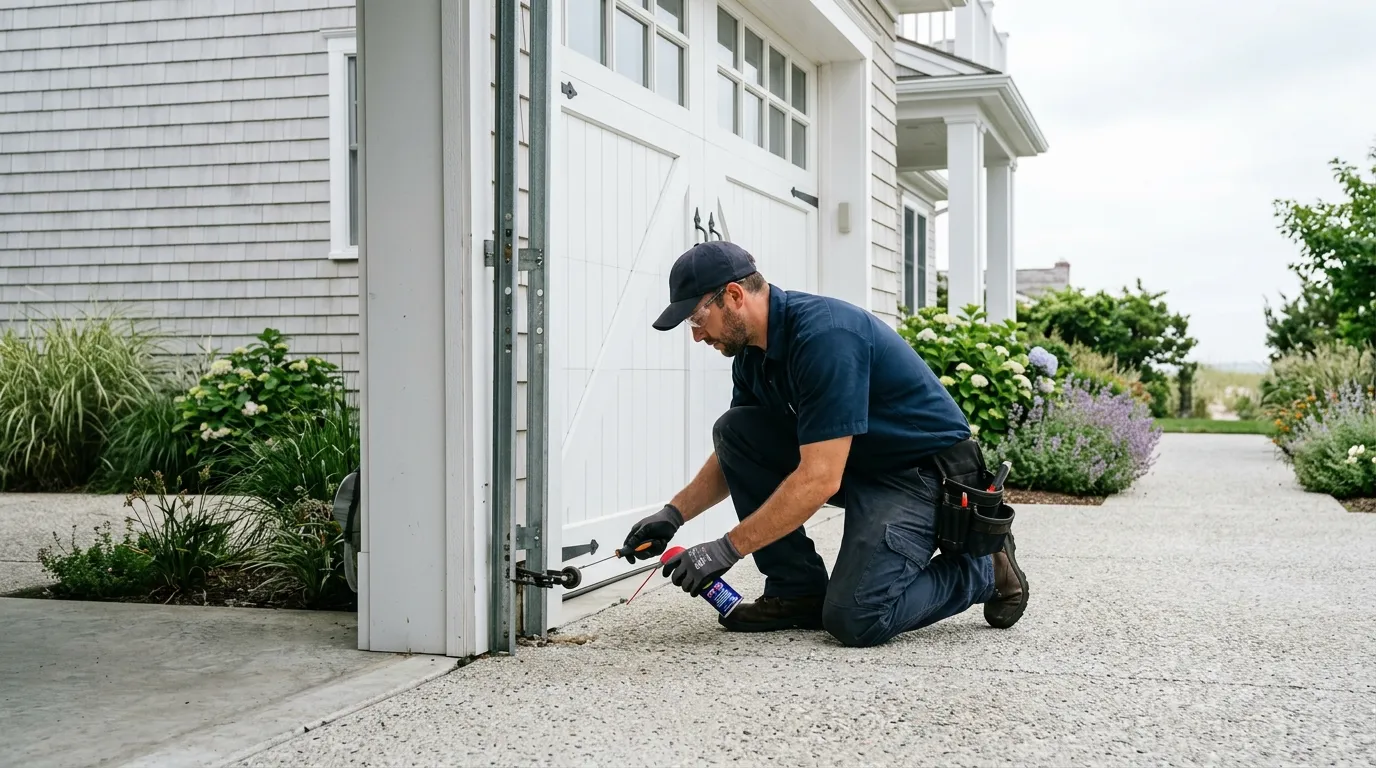
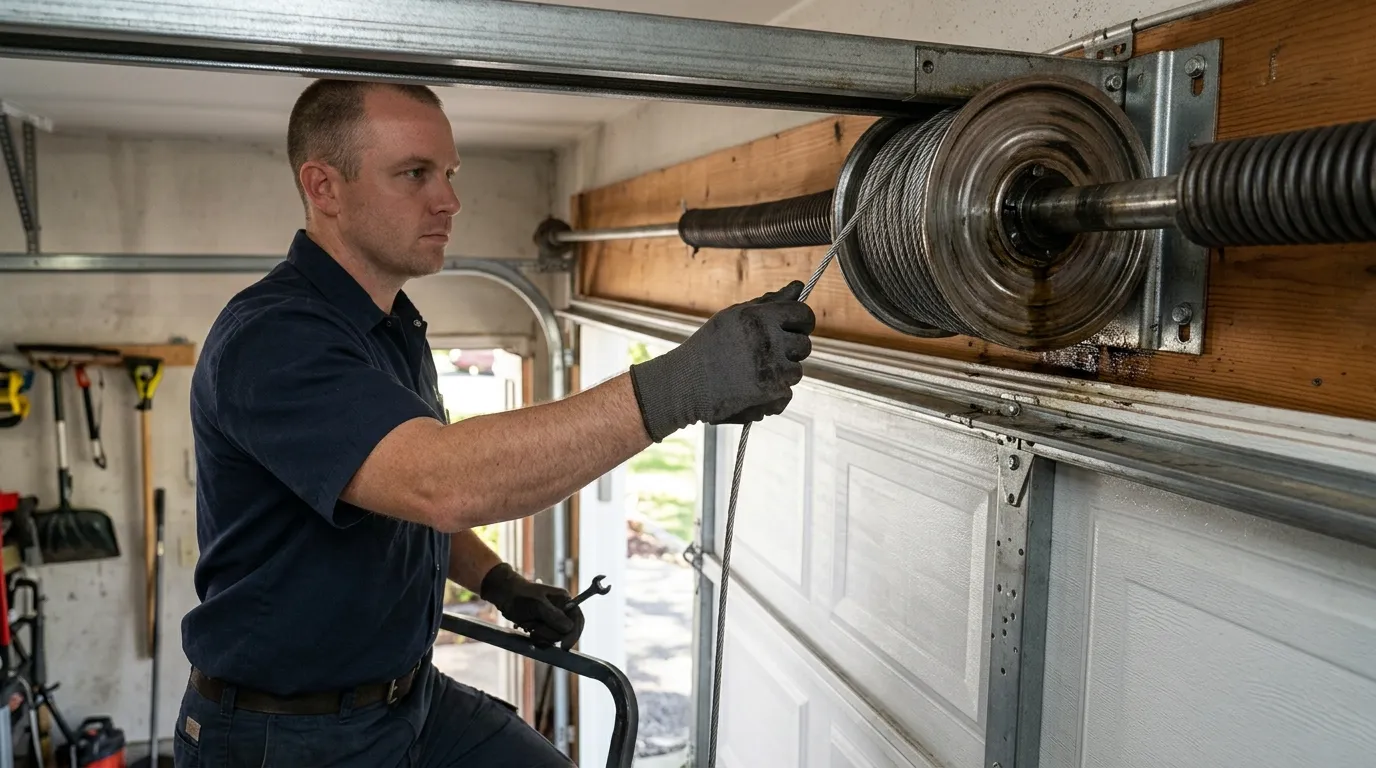
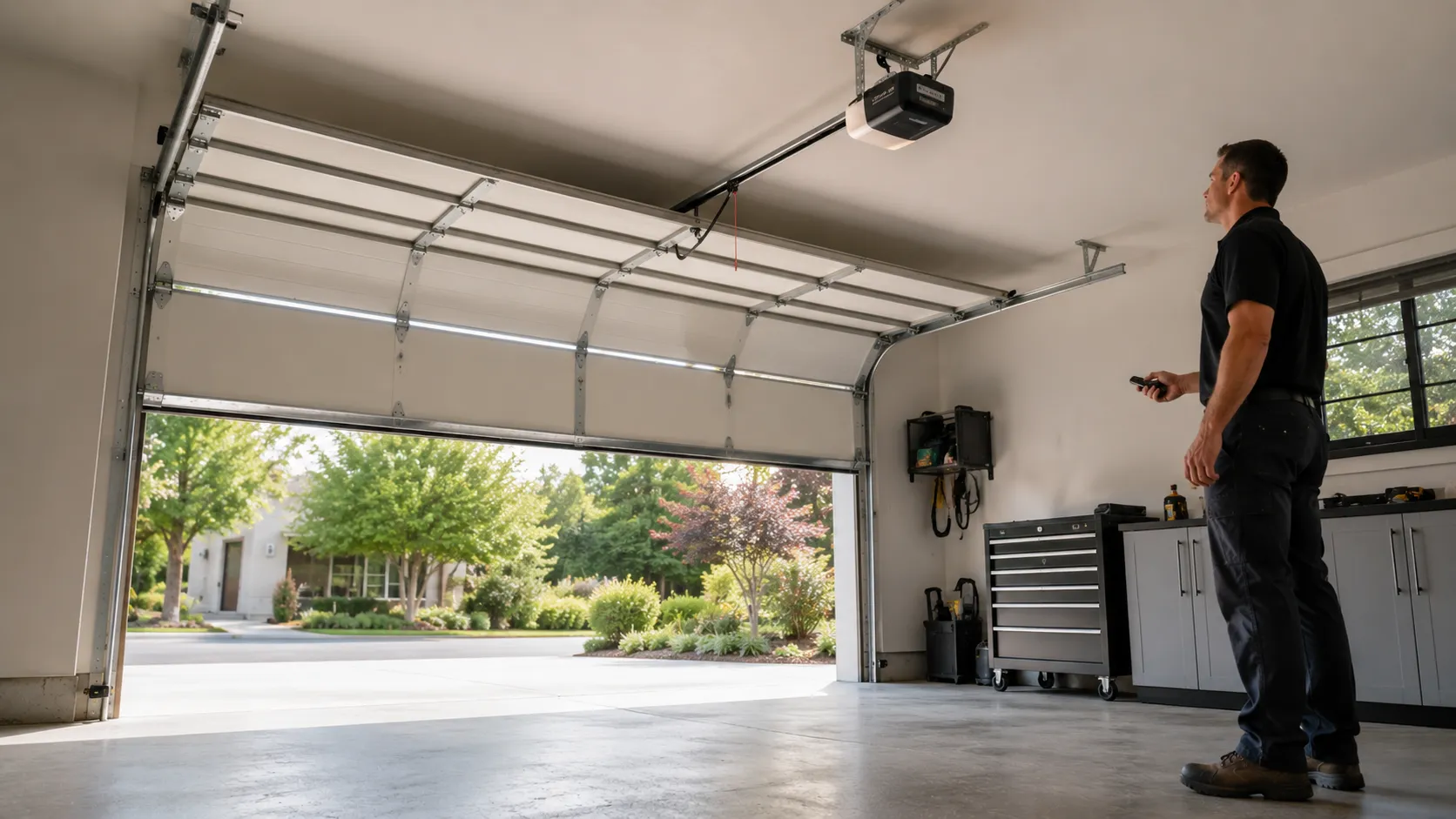
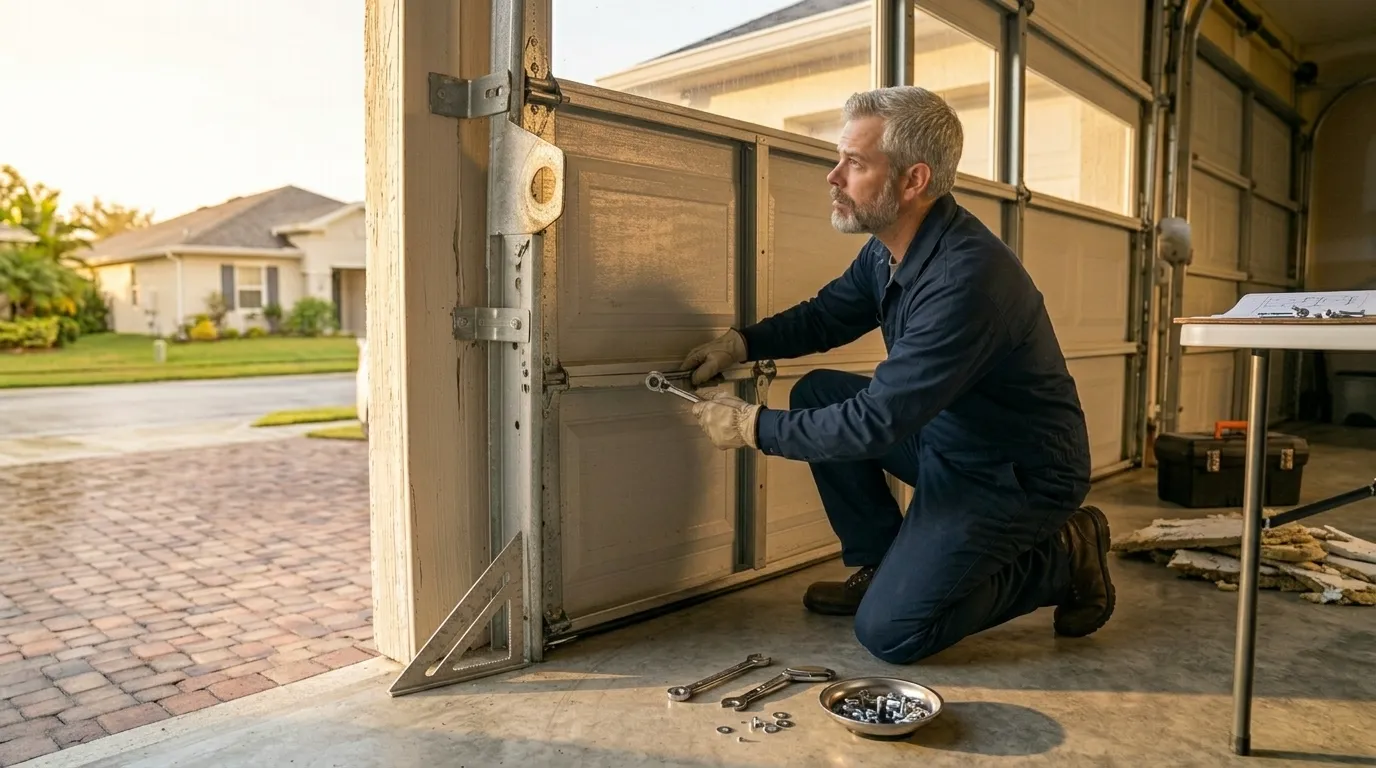
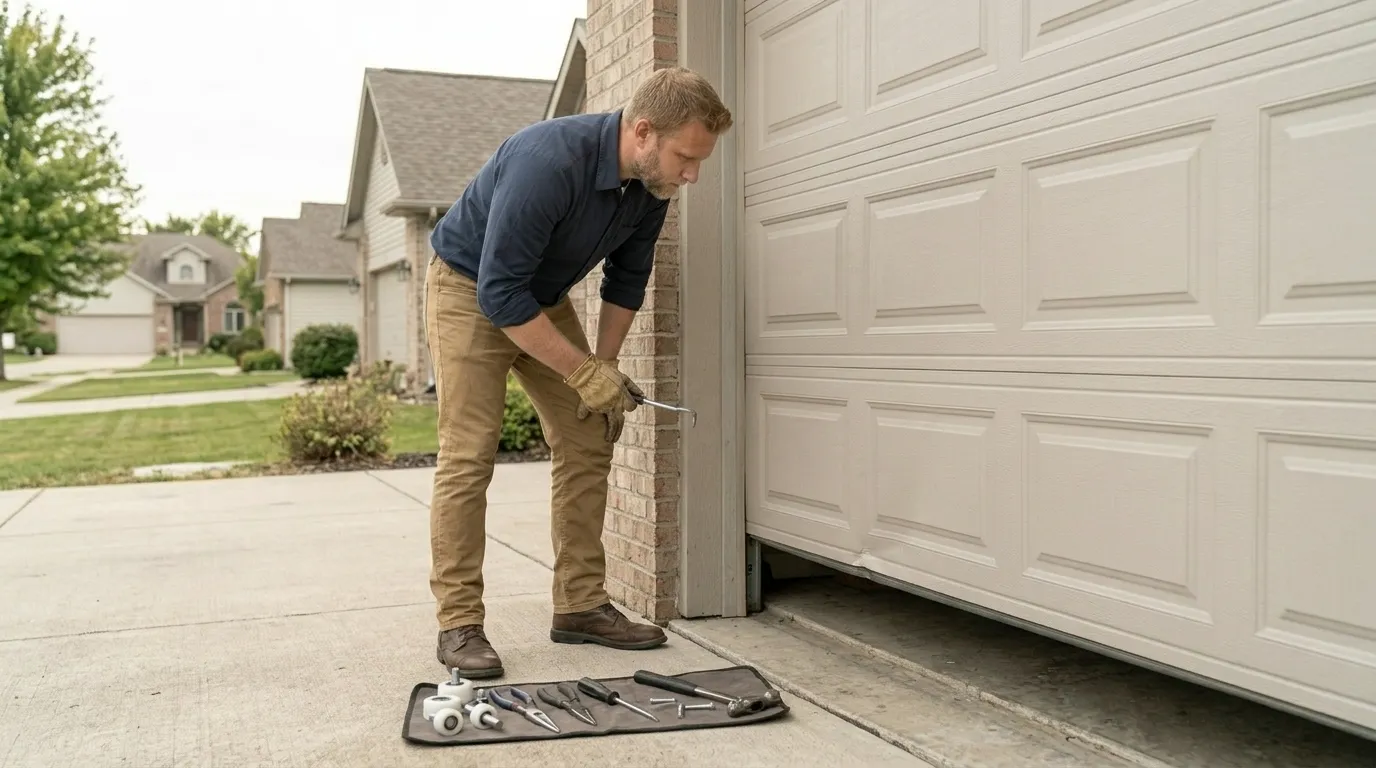
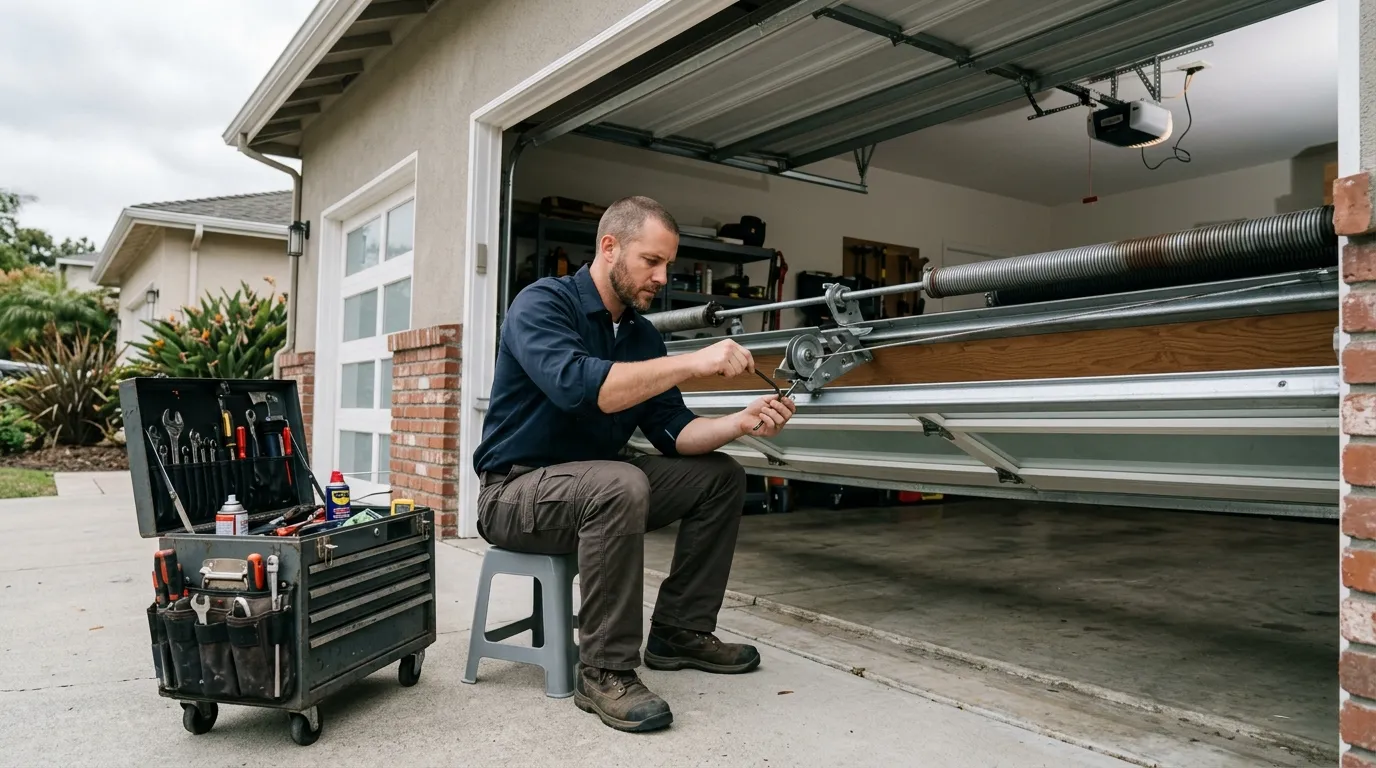
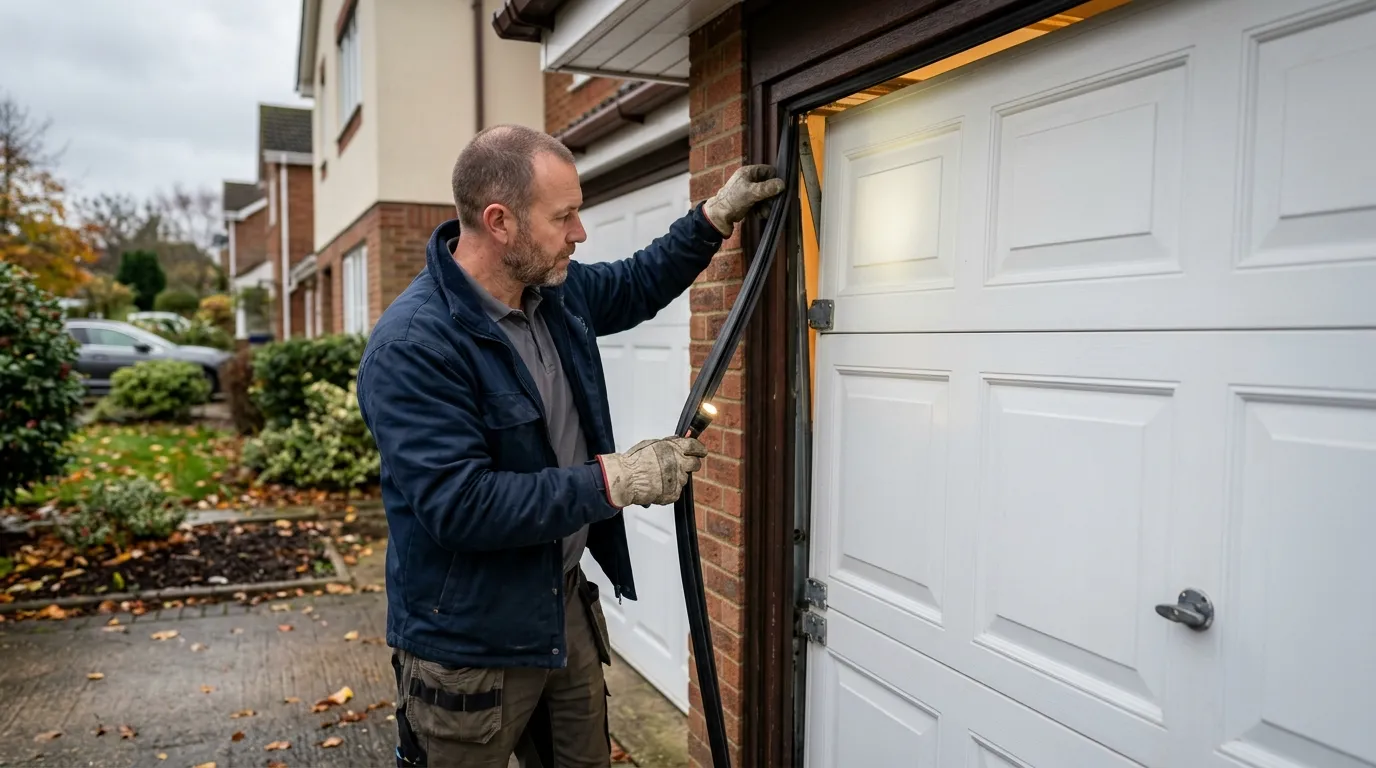
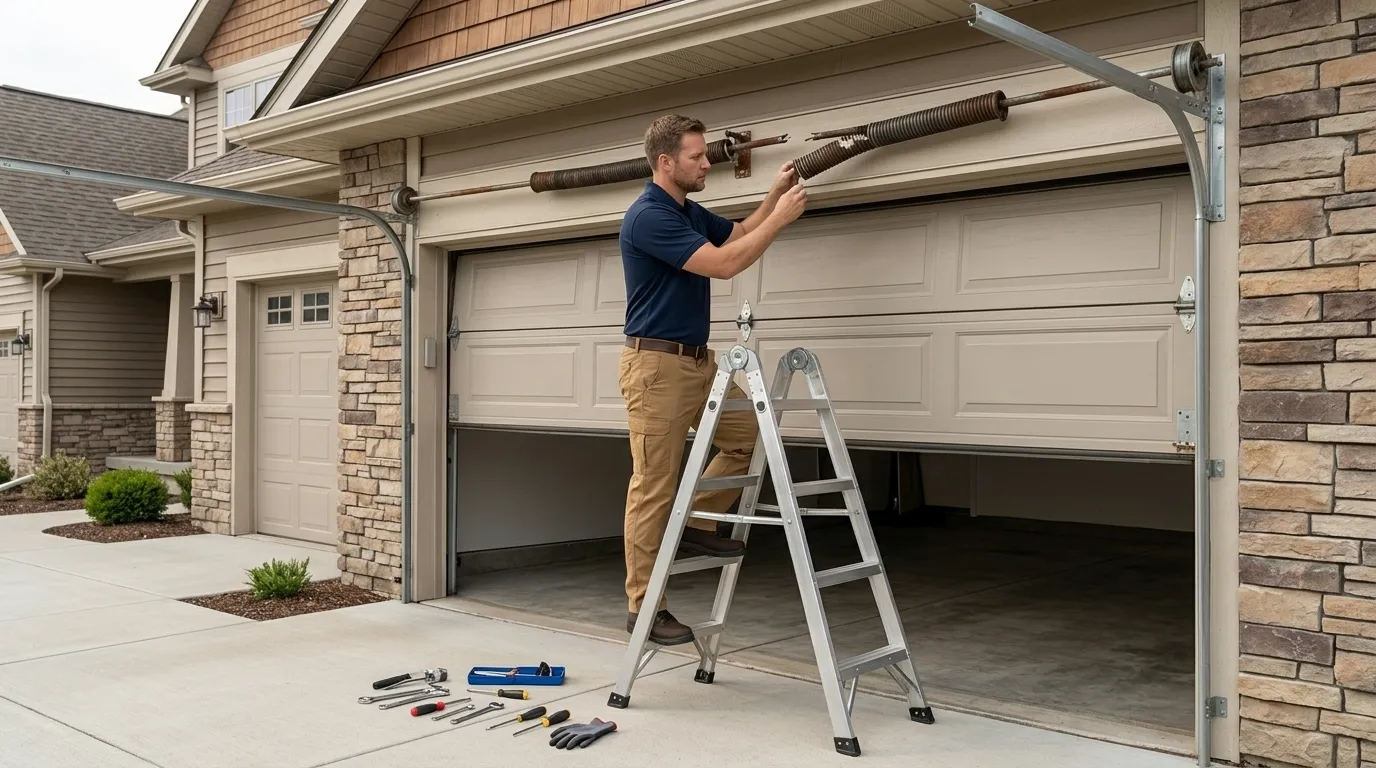
You notice it before you can name it. Daylight shows under the bottom seal even with the door shut tight. The opener strains and reverses partway up, or the door drops the last foot instead of settling. On older steel doors from this side of town, panels dent inward at the bottom where salt spray and plow slush hit all winter, and the paint chalks and flakes on the sun-facing side. Wood-look doors on the pre-1980 stock crack at the seams where the cladding meets the frame. A lot of it traces back to the door itself being decades past its intended service life rather than any one broken part. If your opener runs hotter than it used to, or the remote works some mornings and not others when it's below freezing, that's usually the door binding in a track that's shifted with the house, not the opener failing. Once you're replacing springs, cables, and rollers inside of two years on the same door, you're paying repair money toward a door that was never going to last much longer anyway.
Why This Fails Locally
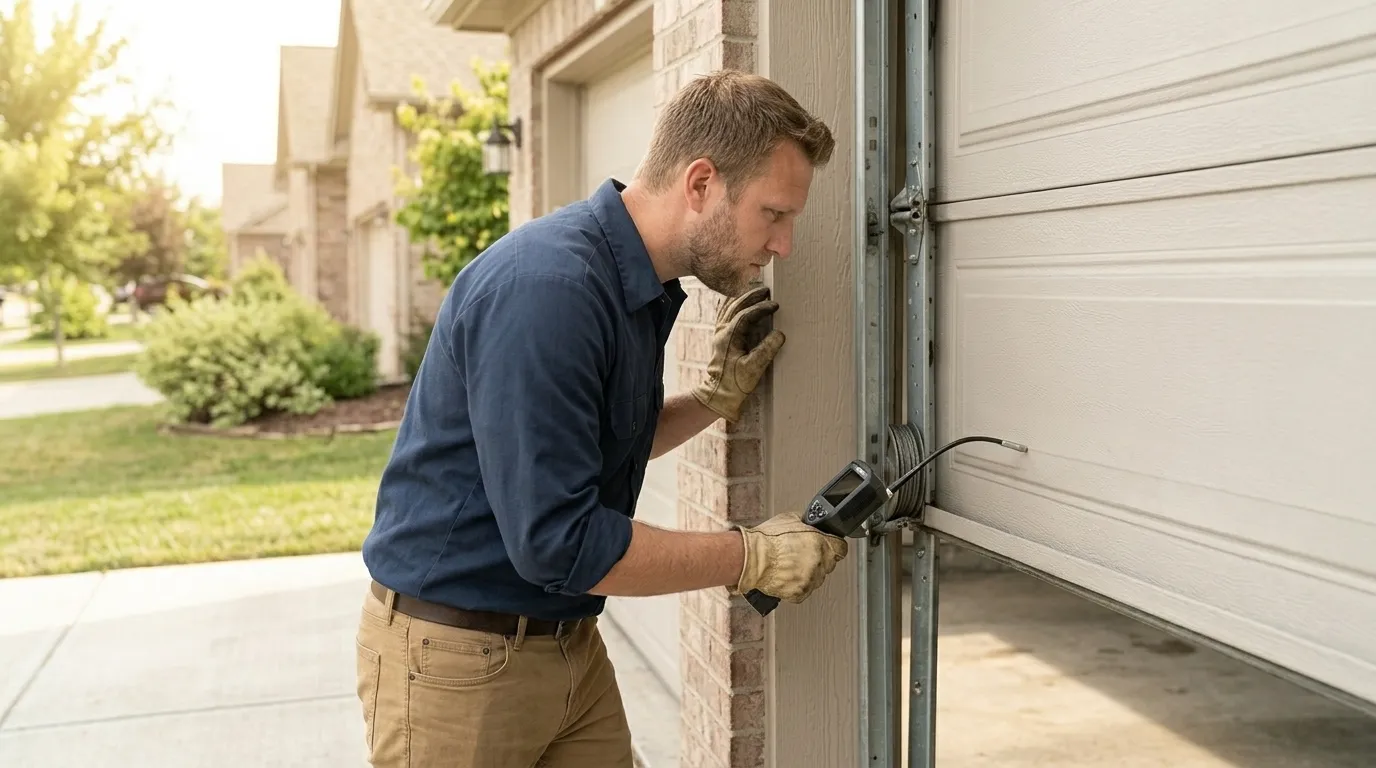
The housing stock across this service area runs 1951 to 2002, with the heaviest concentration from the 1960s and 70s spread across the eighteen named areas here, from North Kansas City a mile out to ten miles northwest. Doors and openings sized for that era's lighter steel panels are now thirty to seventy years old, and they were never built for the insulated doors homeowners are installing today. Layer on the severe cold climate band this region sits in and you get a second problem: repeated freeze-thaw cycling works fasteners loose in the header and jamb faster than it would in a milder climate, so even a door that looks fine from the driveway may be hanging on hardware that's already fatigued. That combination - old framing plus hard winters - is why a straight swap-the-door job here more often turns into a swap-the-door-and-reinforce-the-opening job than it would in a newer subdivision. It's not a sign anything was built wrong originally; it's just what forty-plus years of Kansas City winters does to wood and steel.
What It Costs
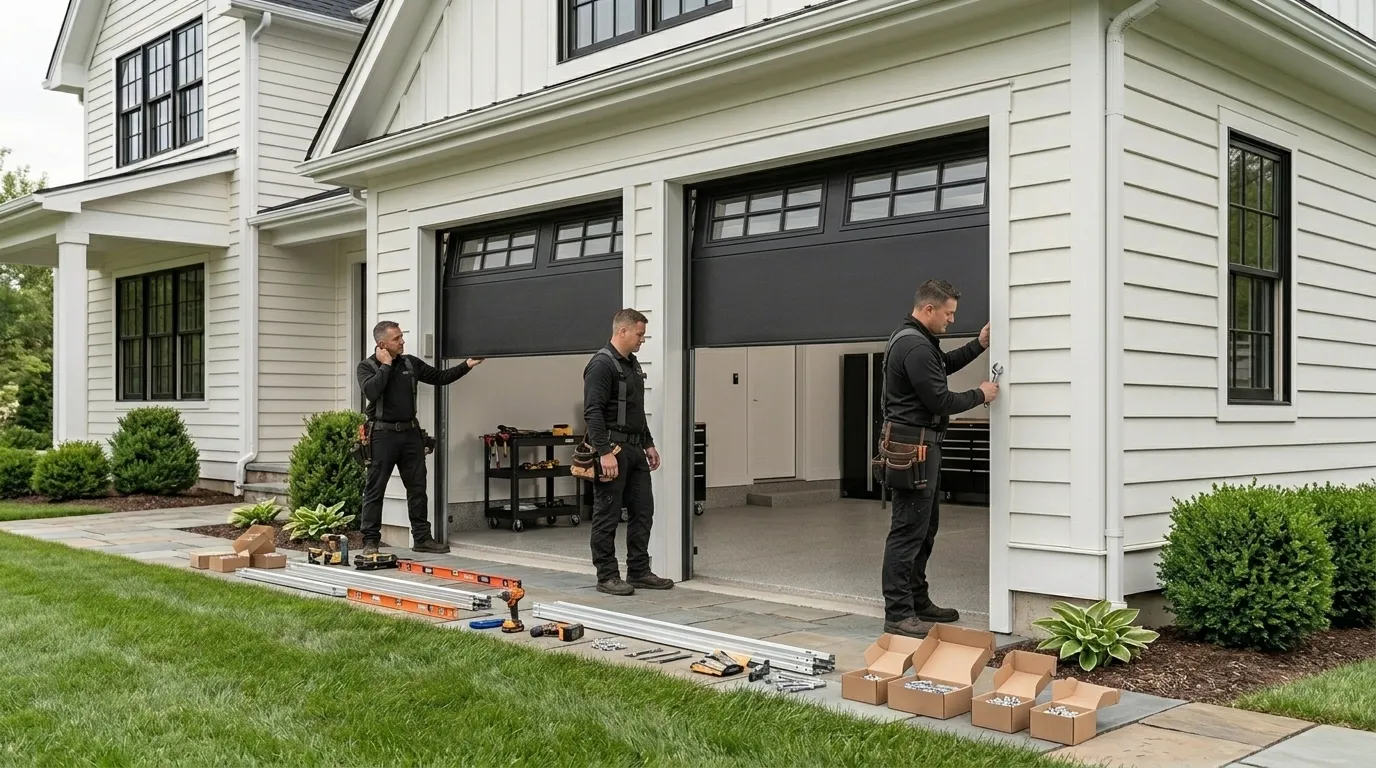
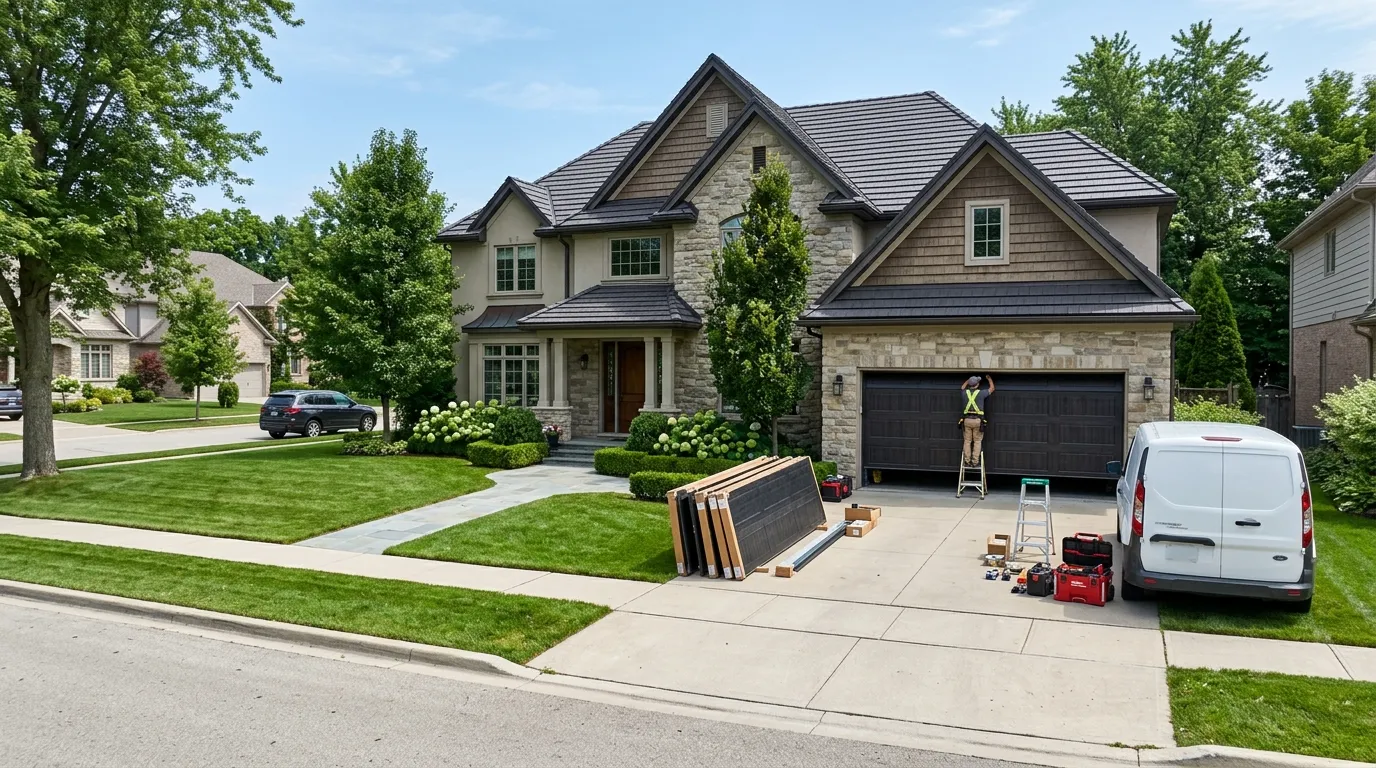
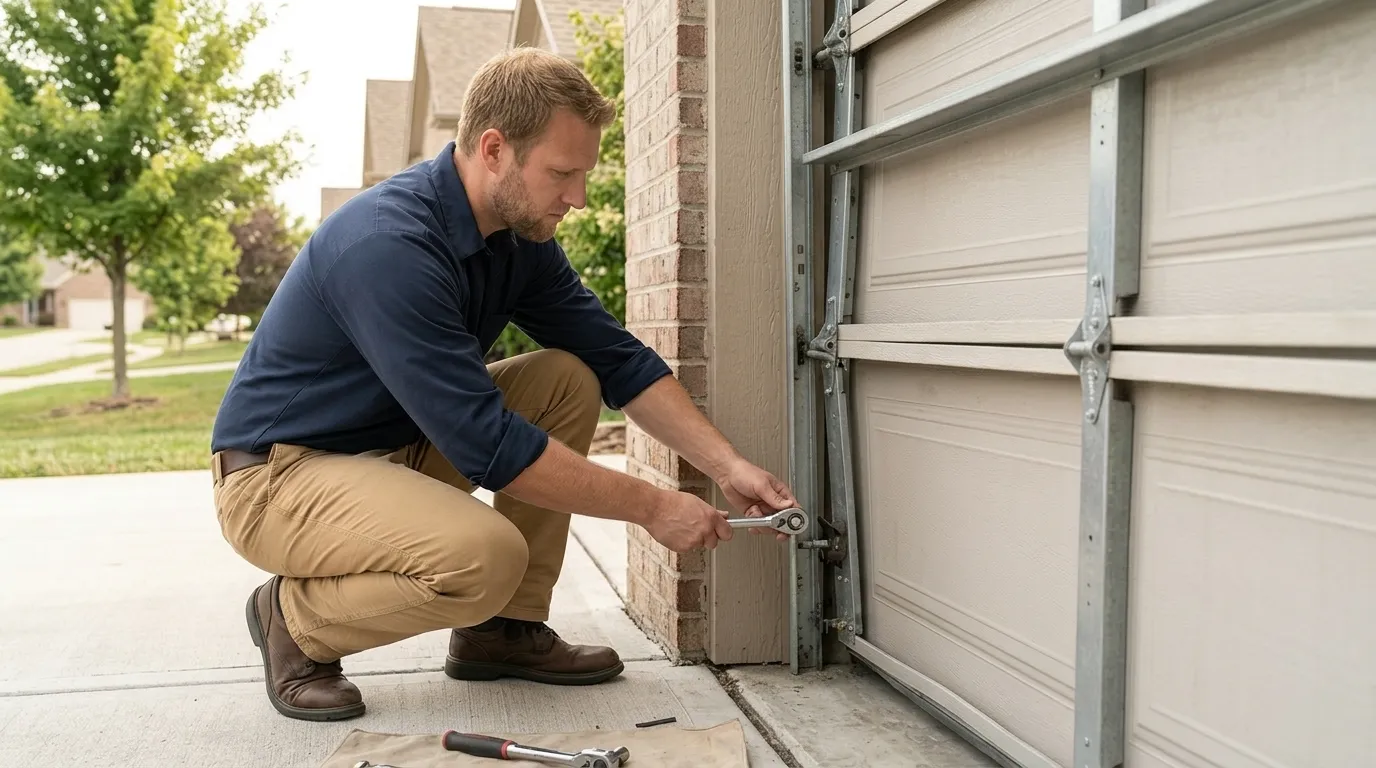
We don't have a set price to quote here, because the honest driver of cost on an installation job is the opening, not the door catalog. A straight swap onto sound framing costs less than a job where the header needs sistering or the jamb needs rebuilding to carry a heavier insulated door - and on housing from the 1951 to 2002 era common here, you don't always know which one you've got until the old door comes off. Door size matters too: a single is a smaller job than a double, and a fully insulated door costs more upfront than a hollow one but does more work against a severe cold winter. With 52,855 owner-occupied houses across a service area where median household income sits at $69,680, most people here are weighing a full install against patching the existing door one more time, and that's a fair question to ask before committing to anything. Our limitation: we can give you a firm number once we've seen the opening and the door you want, not before - anyone quoting a flat number over the phone hasn't looked at your header yet.