How It Shows Up
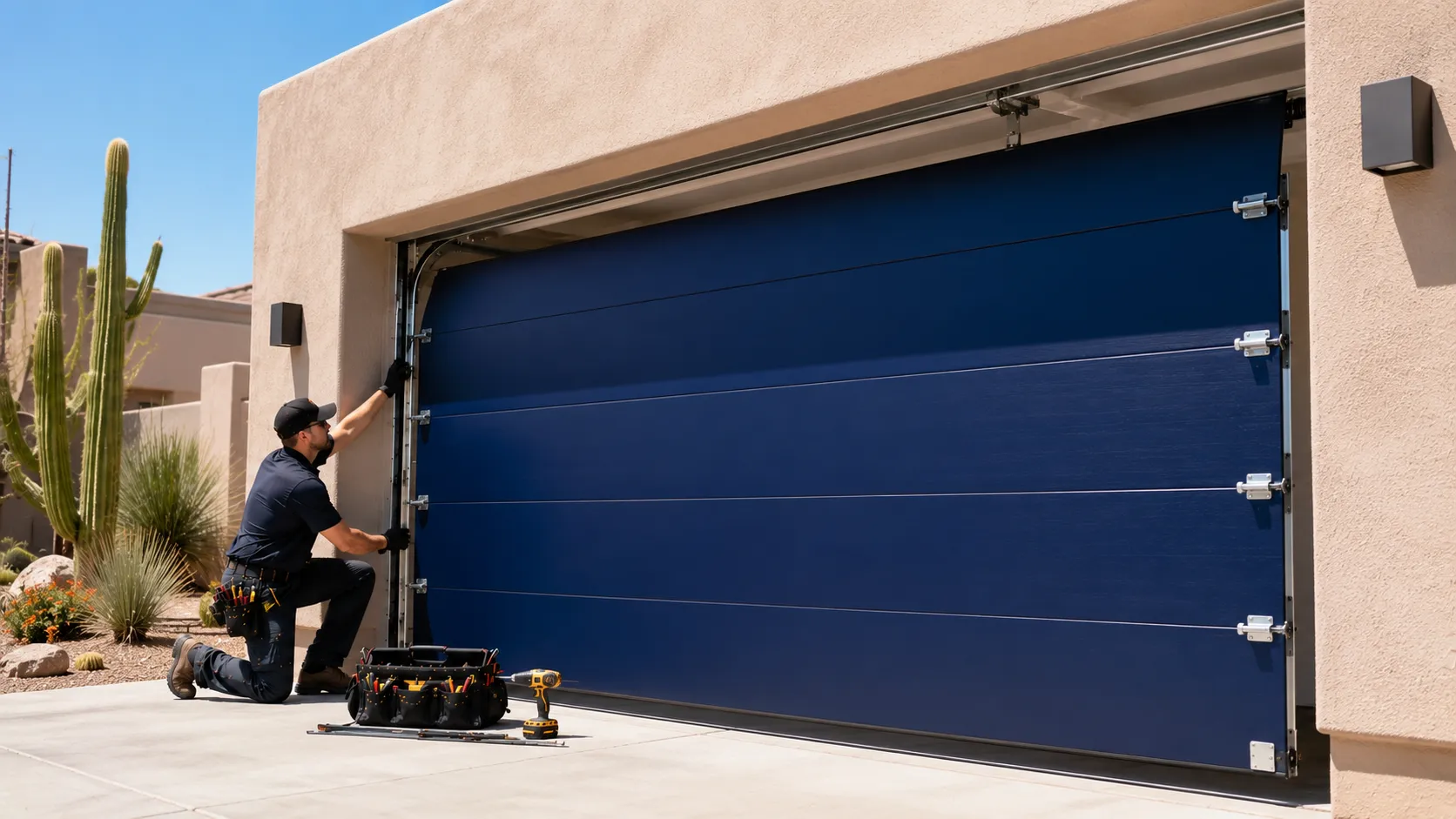
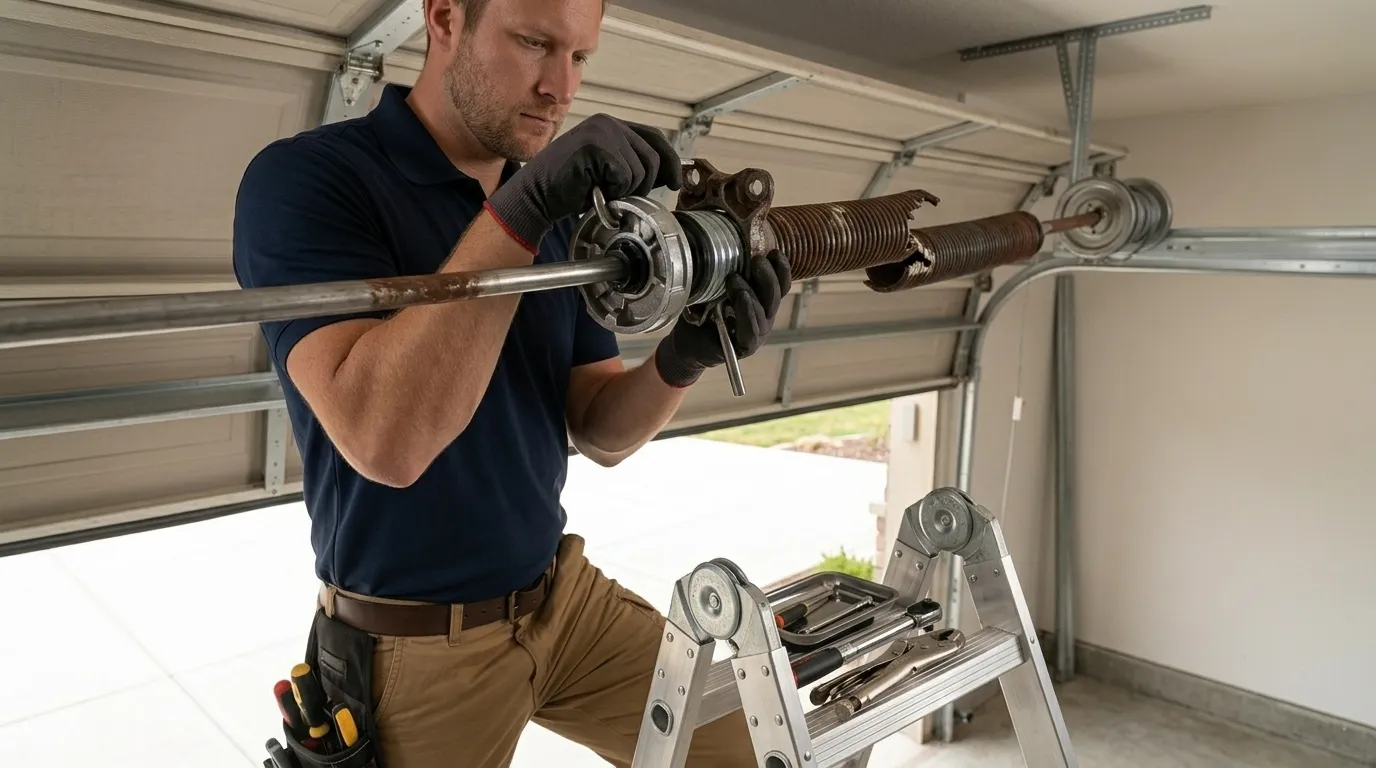
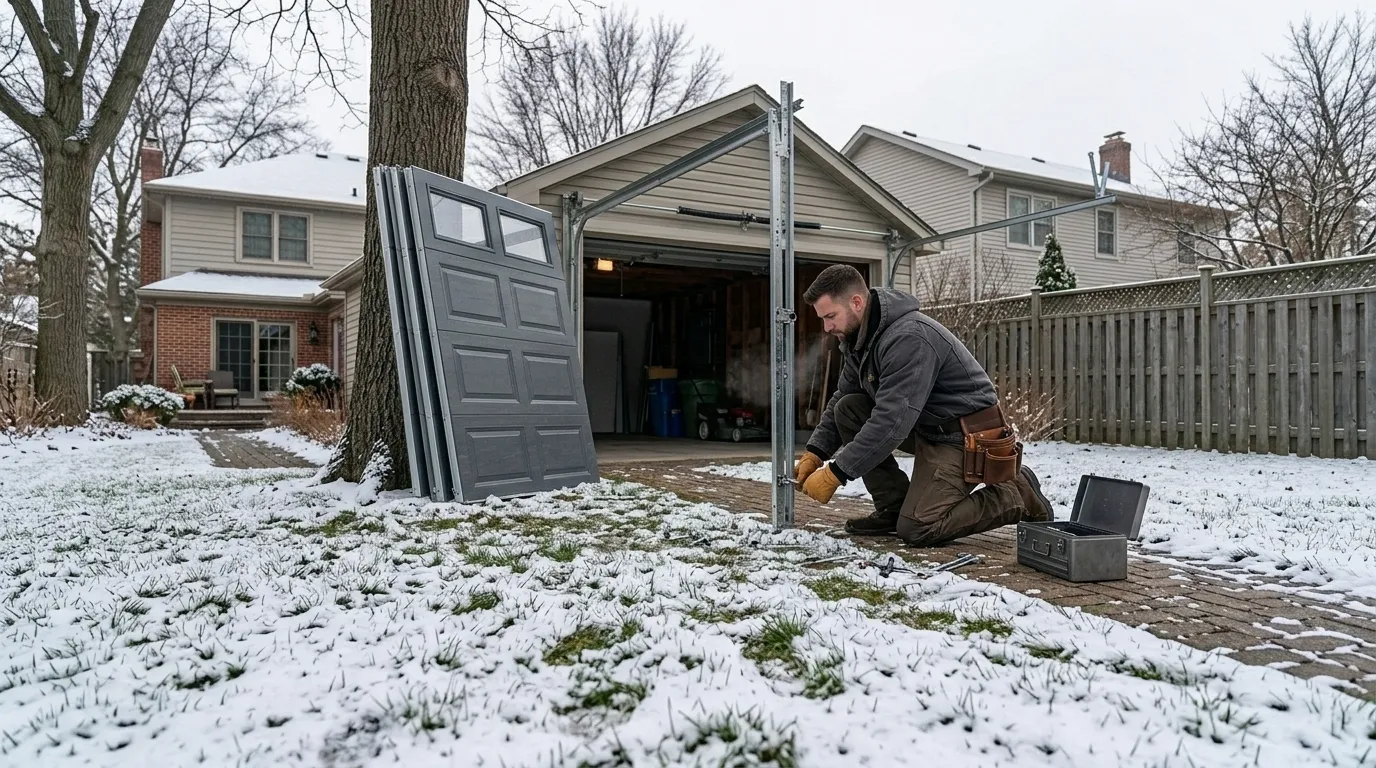
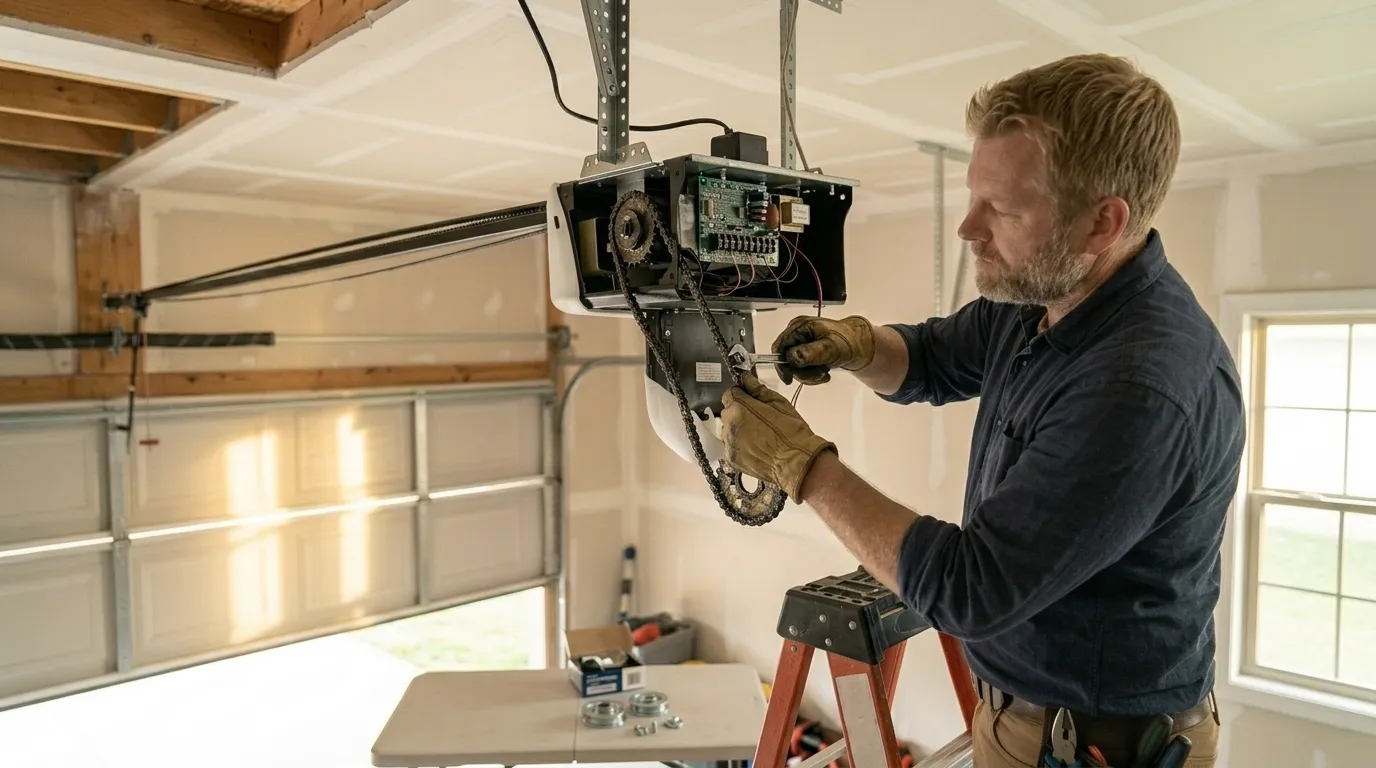
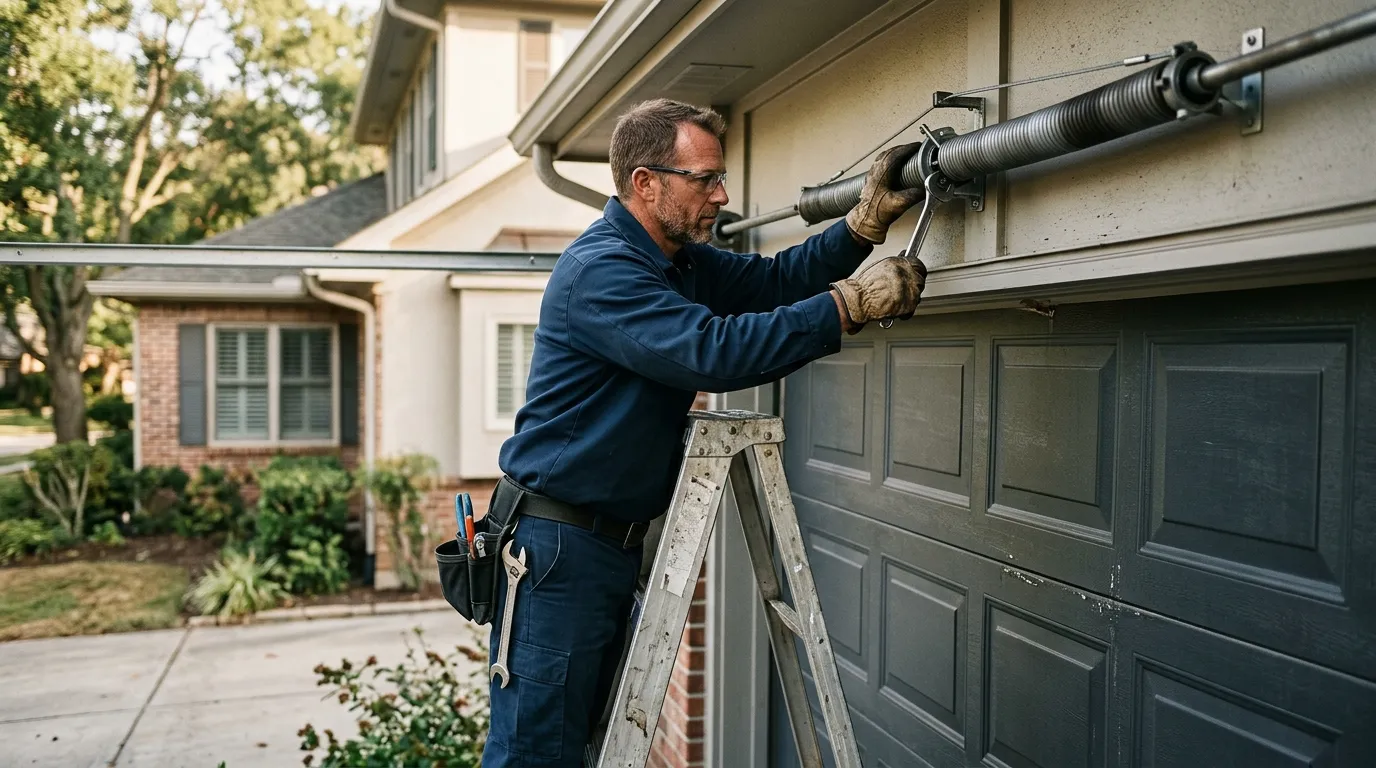
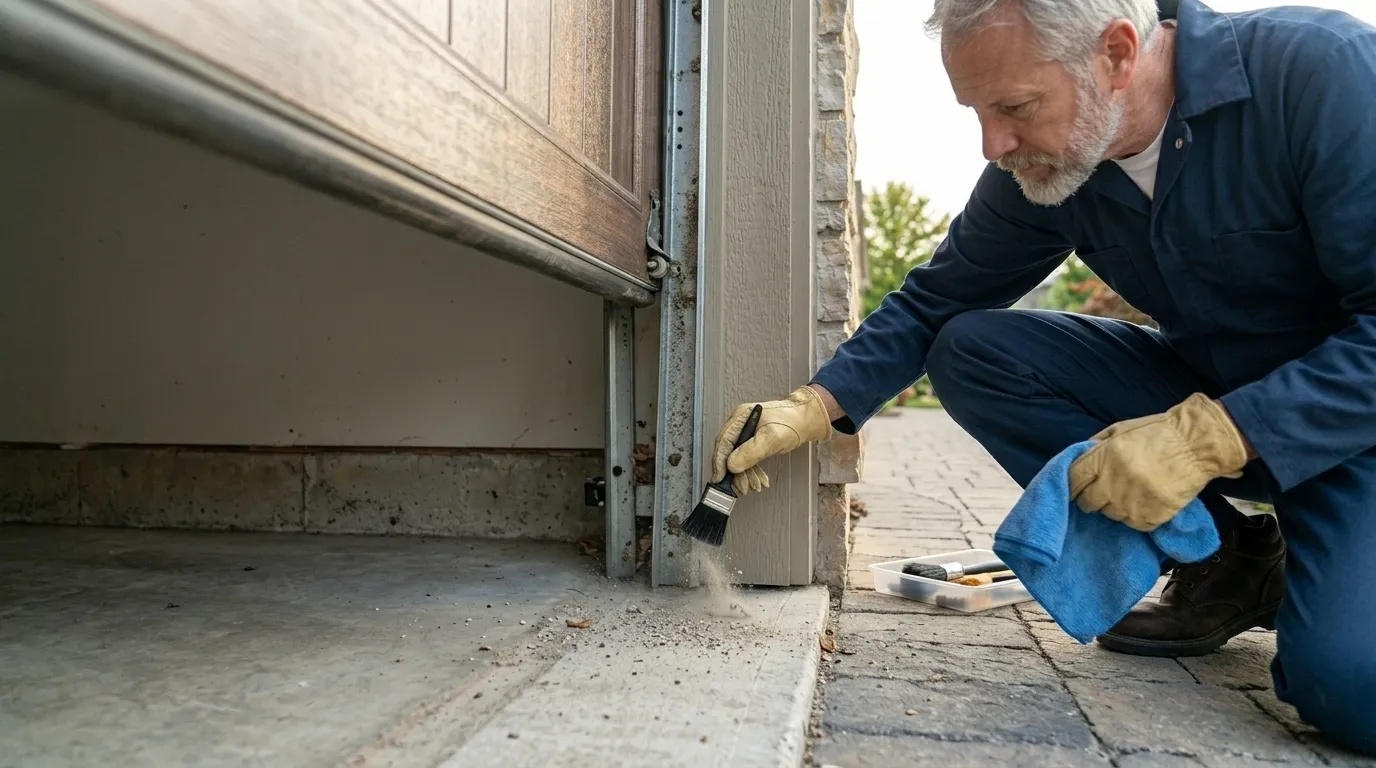
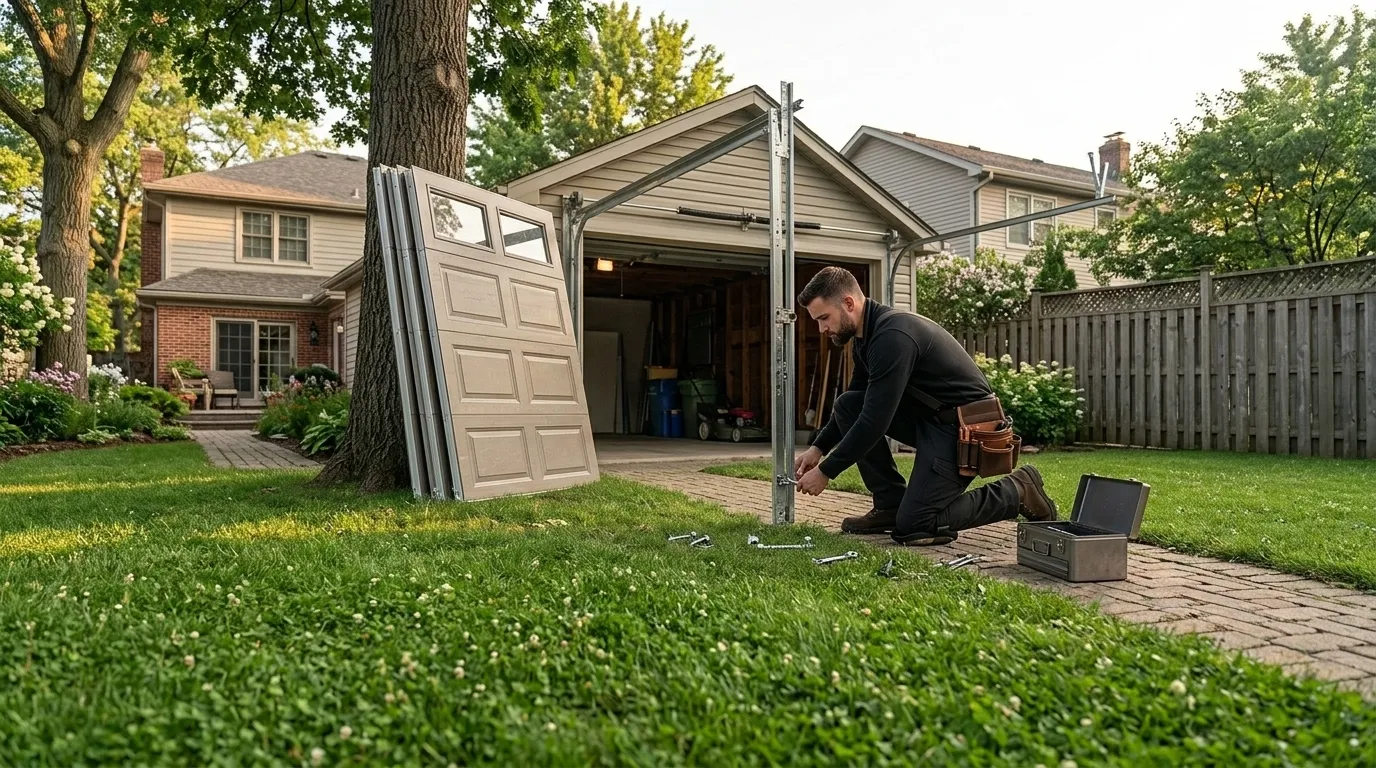
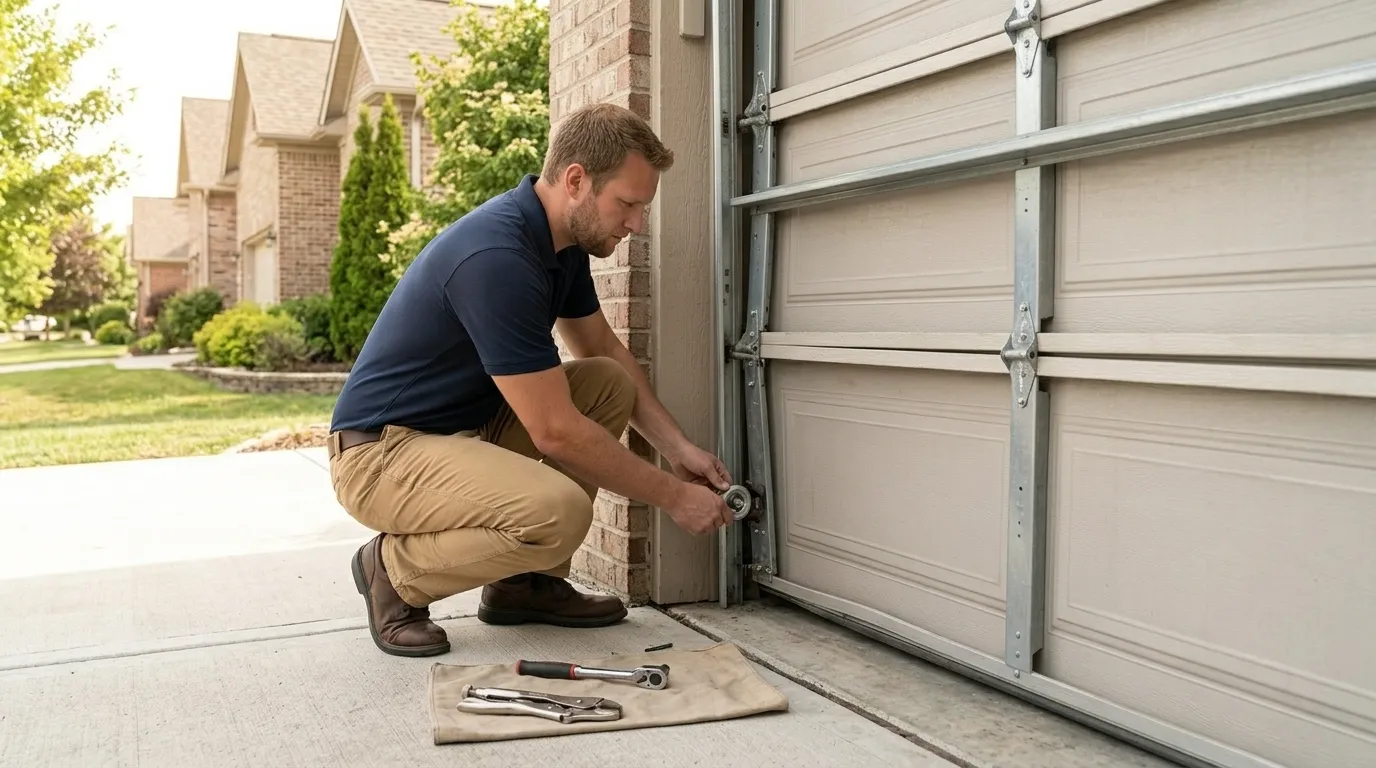
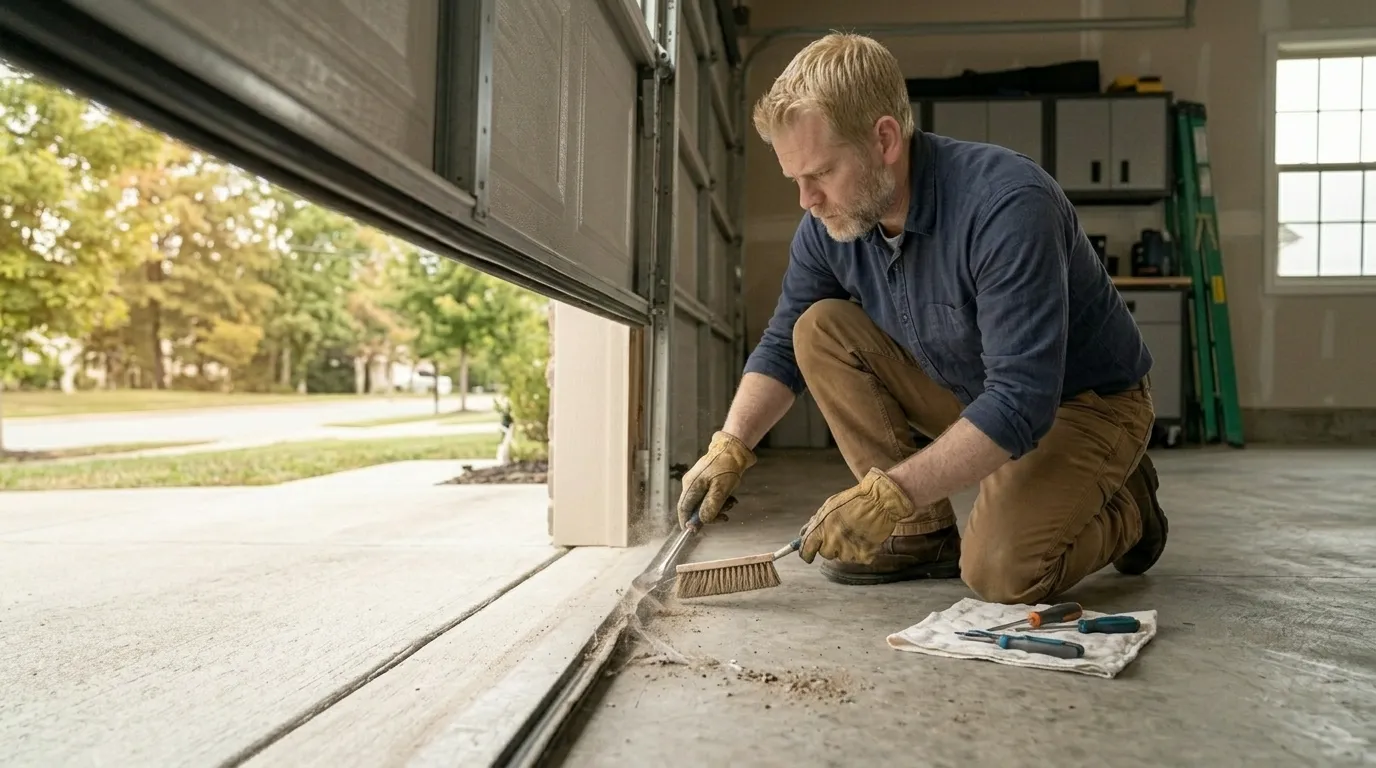
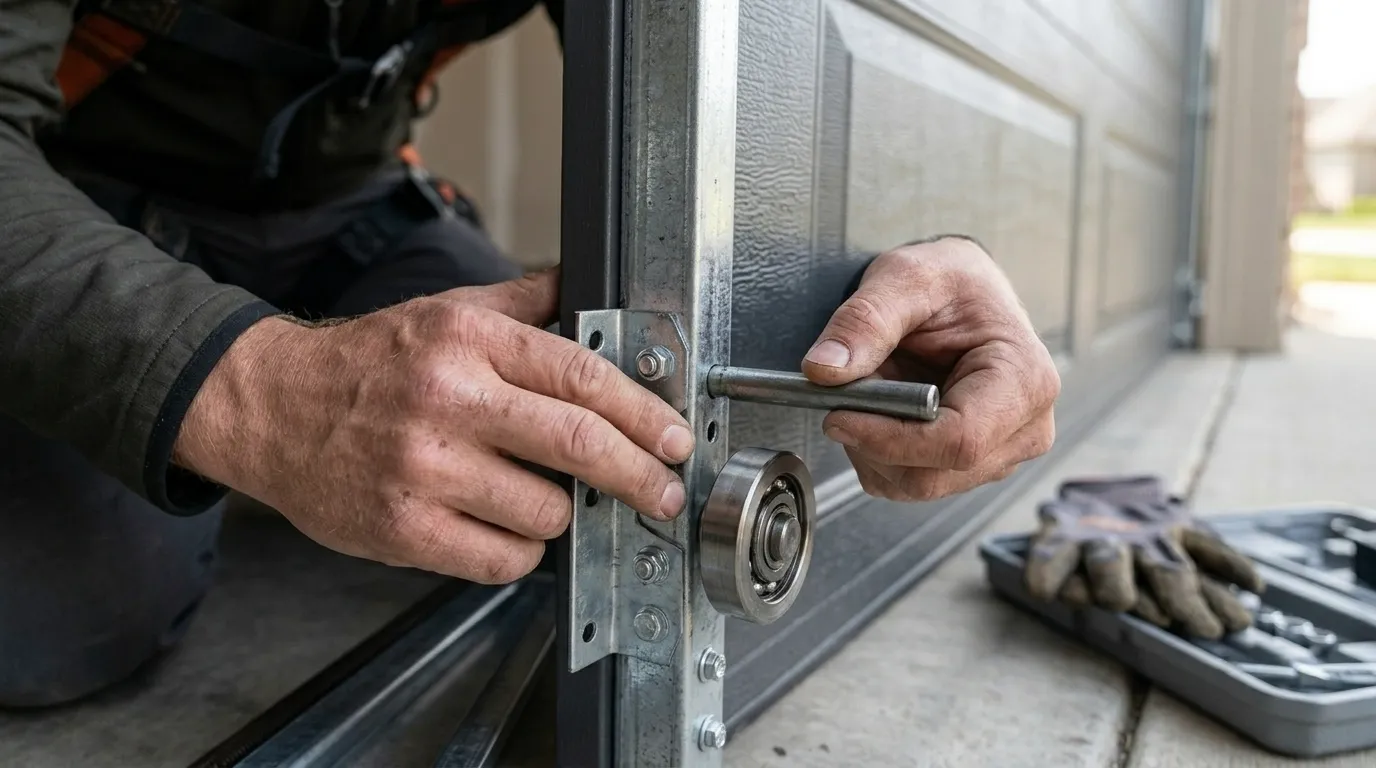
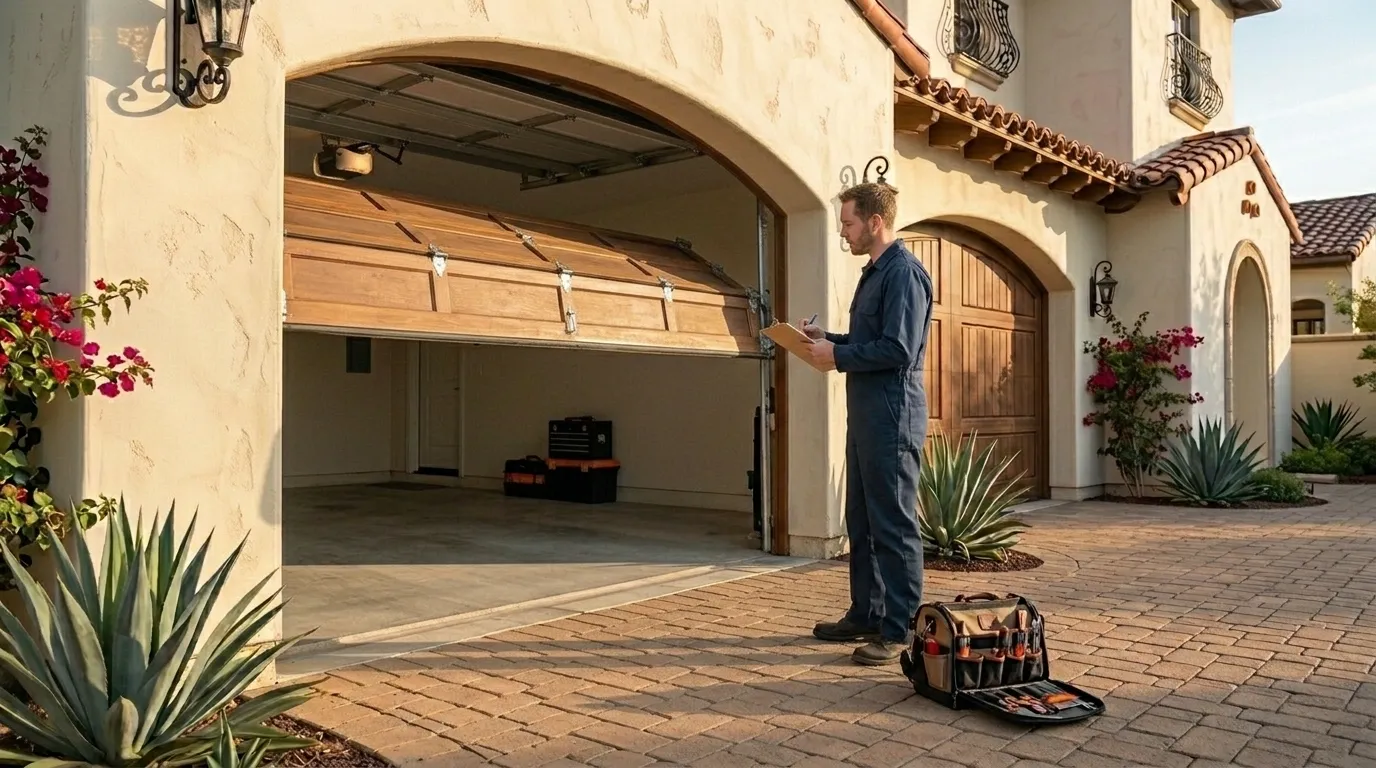
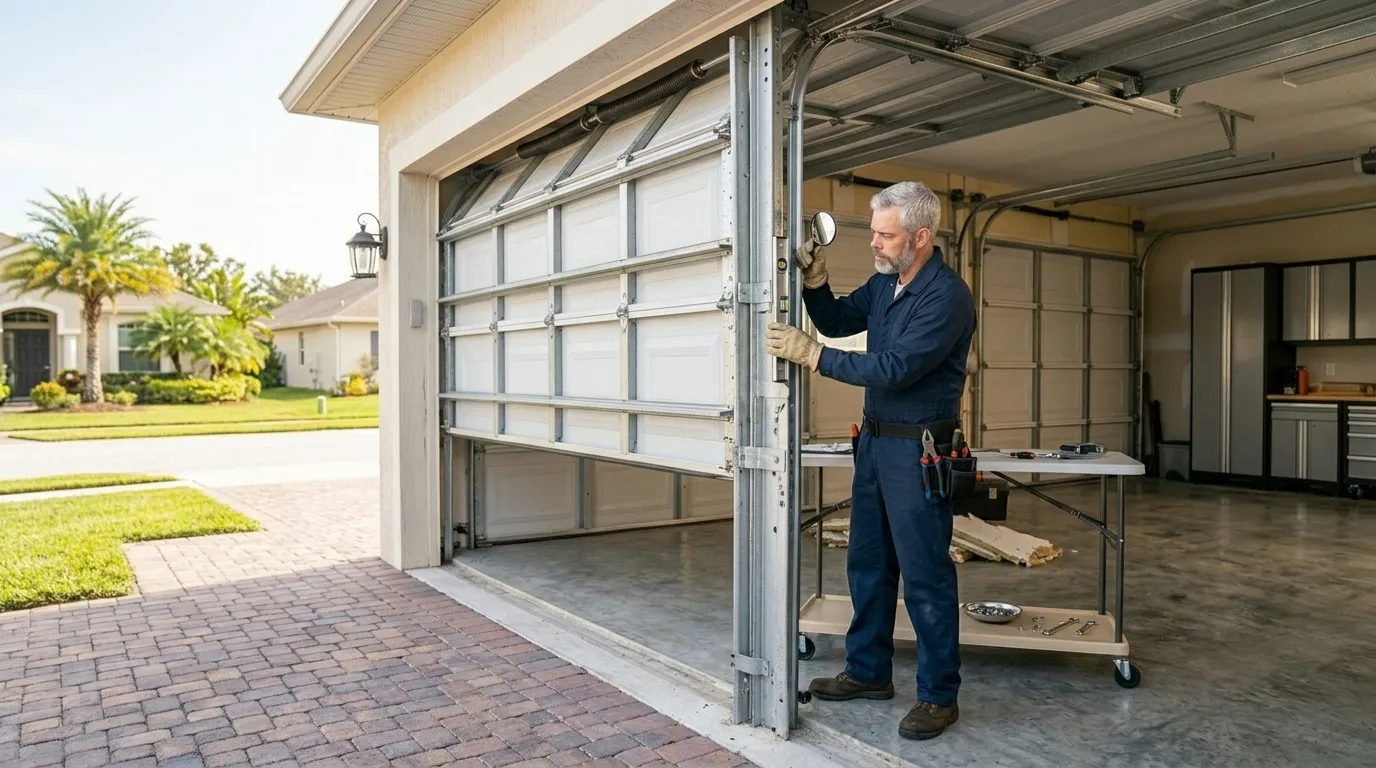
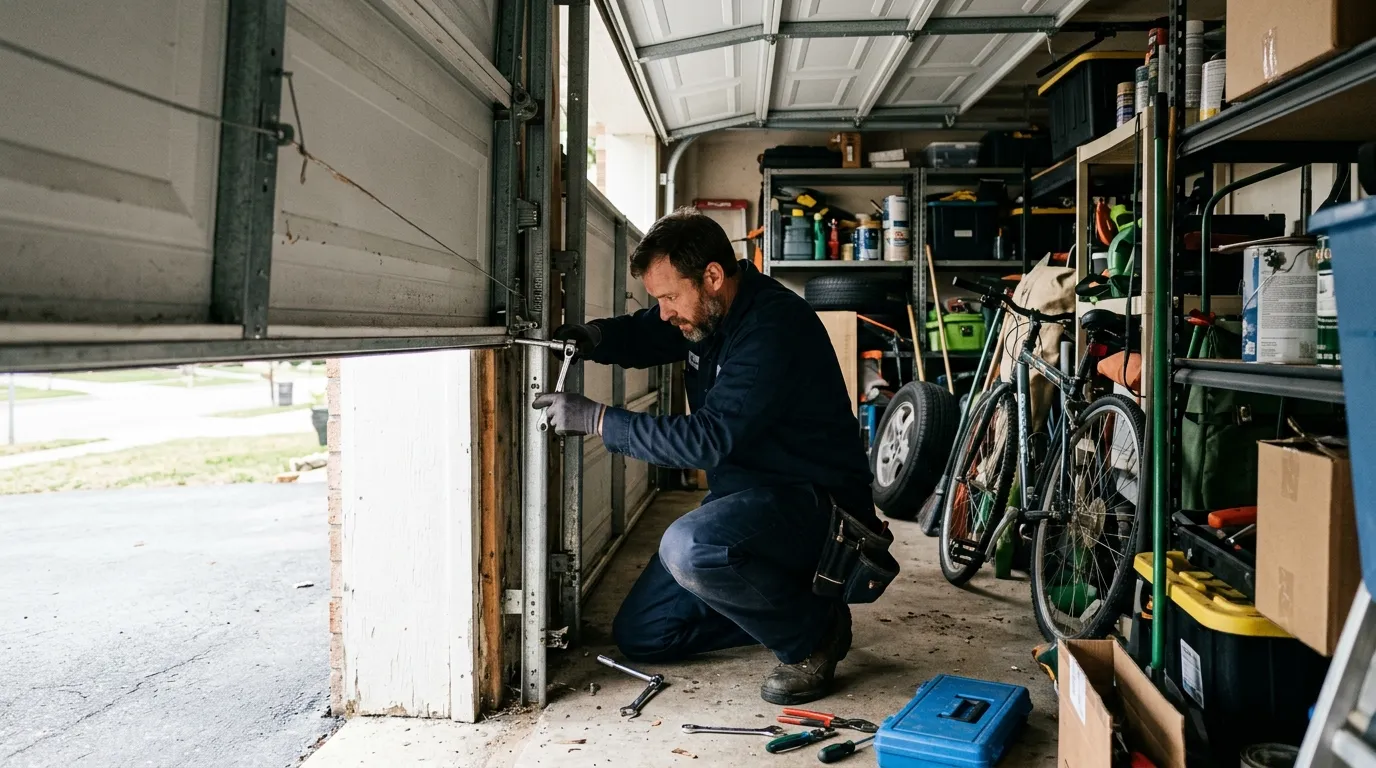
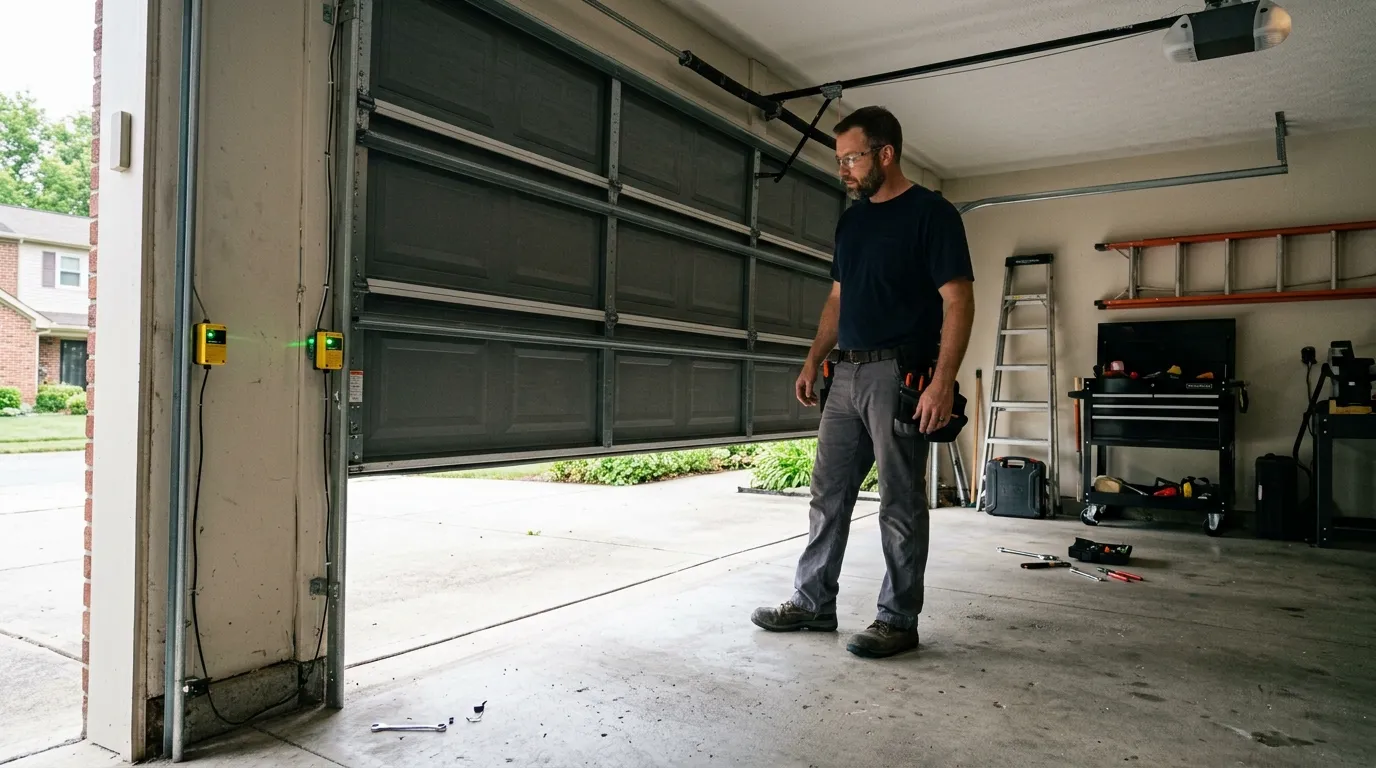
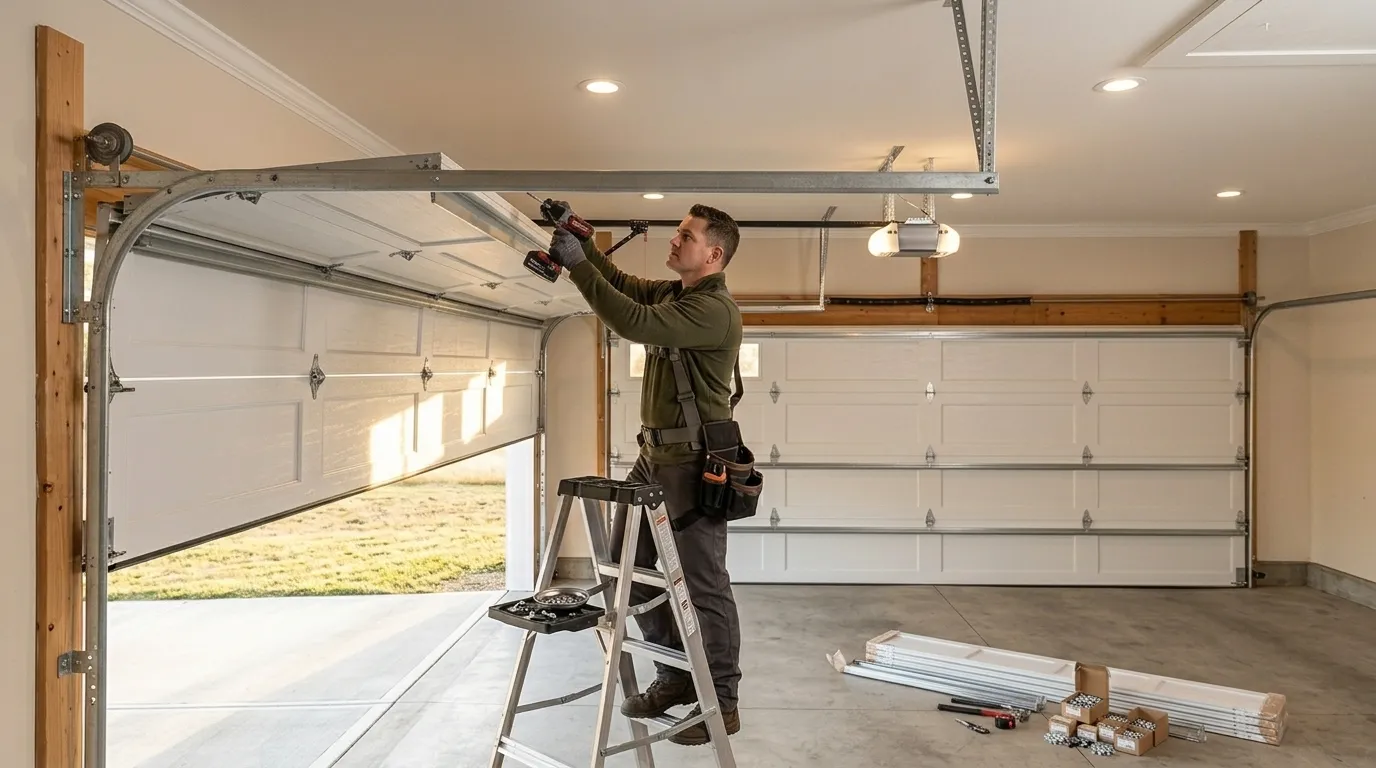
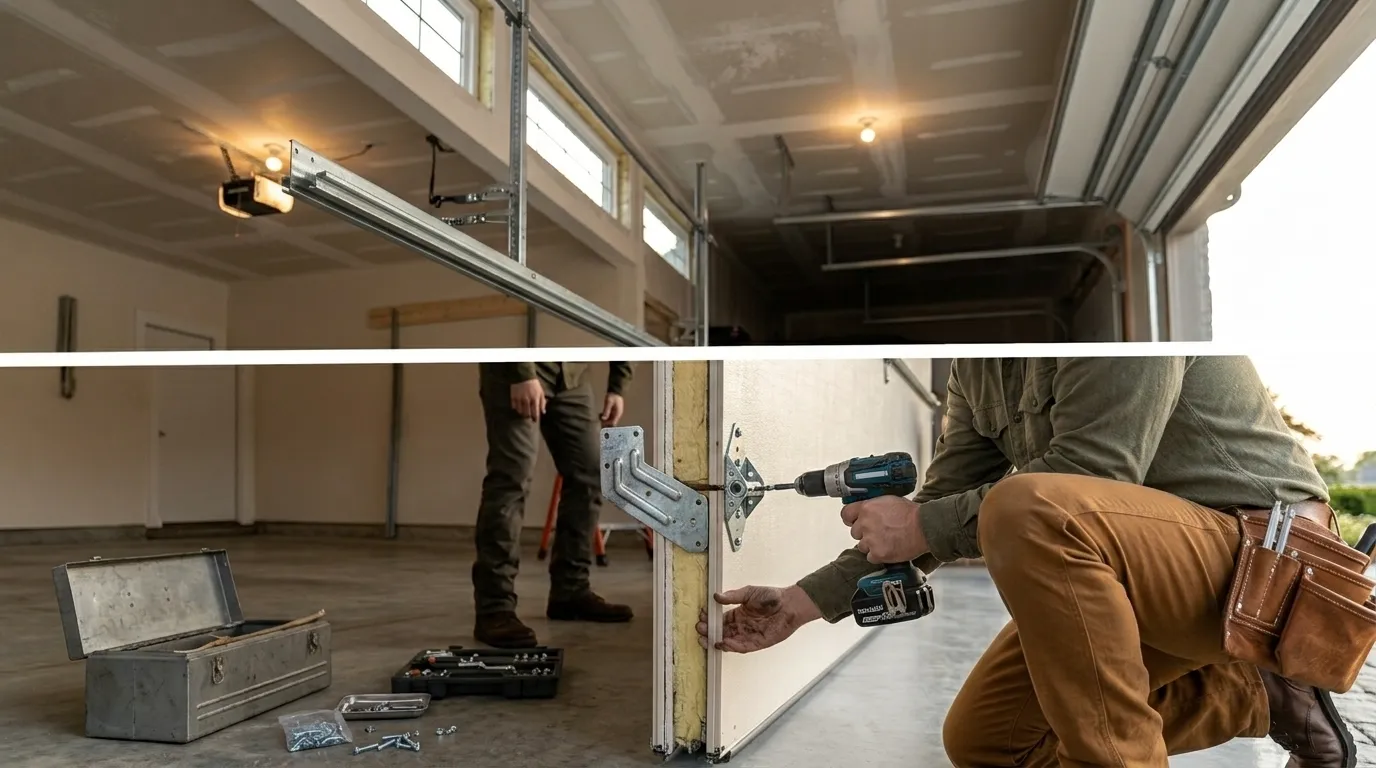
Most calls start the same way: the door stops halfway, reverses on its own, or won't budge at all. Sometimes it's a loud bang from the garage overnight - that's usually a torsion spring letting go, not the opener. Other times it's slower: a door that groans and shudders going up, rollers that have worn to the point the door rides crooked in the track, or a cable that's started to fray at the bottom bracket where it wraps the drum. Openers fail differently - grinding, running without moving the door, or losing the wall button entirely after a power blip. On older sectional doors we also see hinges pulled loose from panels that have flexed one too many winters. None of these get better on their own. A spring under tension that's cracked but hasn't fully snapped is still dangerous to touch, and a door running on one good cable is one bad pull away from coming off the track. If your door is off-balance - closes faster than it opens, or won't stay up on its own when disconnected from the opener - that's a spring problem, not an opener problem, no matter what the remote is doing.
Why This Fails Locally
Housing across this service area was mostly built between 1951 and 2002, with the median sitting around 1973, and the bulk of it - across the eighteen named areas we work, from North Kansas City a mile out to twenty miles south - is 1960s and 70s stock. That means a lot of original torsion hardware, single-wall track, and steel doors that were never rated for the insulation retrofits and heavier openers homeowners have added since. Kansas City sits in a severe cold band, and that matters more than people think: steel springs lose temper faster cycling through hard freezes, galvanized cable sheathing cracks in cold and lets moisture into the strands, and nylon rollers from that era go brittle and chip rather than just wearing smooth. A door that's fine in October can bind hard the first week it drops below freezing because the metal has contracted just enough to bind against a track that was already slightly out of plumb. It's a predictable failure pattern tied to when these houses went up and what the winters here do to old steel, not random bad luck.
What It Costs
We don't have a set price list to hand you here, and any number we quoted without seeing the door would be a guess dressed up as a fact. What we can tell you is how the decision usually breaks down. A spring or a set of rollers is a straightforward repair on most doors from this era. An opener with a failed board is a swap, not a repair, once the part's obsolete - and on doors built before the more common opener retrofits, that's often the case. At a median household income of $69,680 across this service area, most of the calls we get are homeowners trying to decide between fixing what's broken now versus replacing a door that's going to need three more repairs in the next two winters anyway. We'll tell you flat out which side of that line your door is on before we start work, not after.