Serving Kansas City, MO & nearby
(816) 857-5830
Kansas City, MO

When a Spring Goes in Cold Weather in Kansas City

Kansas City homes built 1951-2002 face torsion springs stressed by severe cold. Here's when a snapped spring is a DIY fix and when it isn't.

When a Spring Goes in Cold Weather in Kansas City

When It Stops Being a DIY Job

A garage door spring doesn't care what the calendar says, but cold makes the break more likely and the fix more dangerous. Most houses across this service area - the stretch running from North Kansas City down through Gladstone, Raytown, and out to Lee's Summit - were built between 1951 and 2002, with the bulk going up in the 1960s and 70s. That means torsion springs sized for doors and hardware that are decades old, often with steel that's fatigued from thousands of cold-weather cycles.

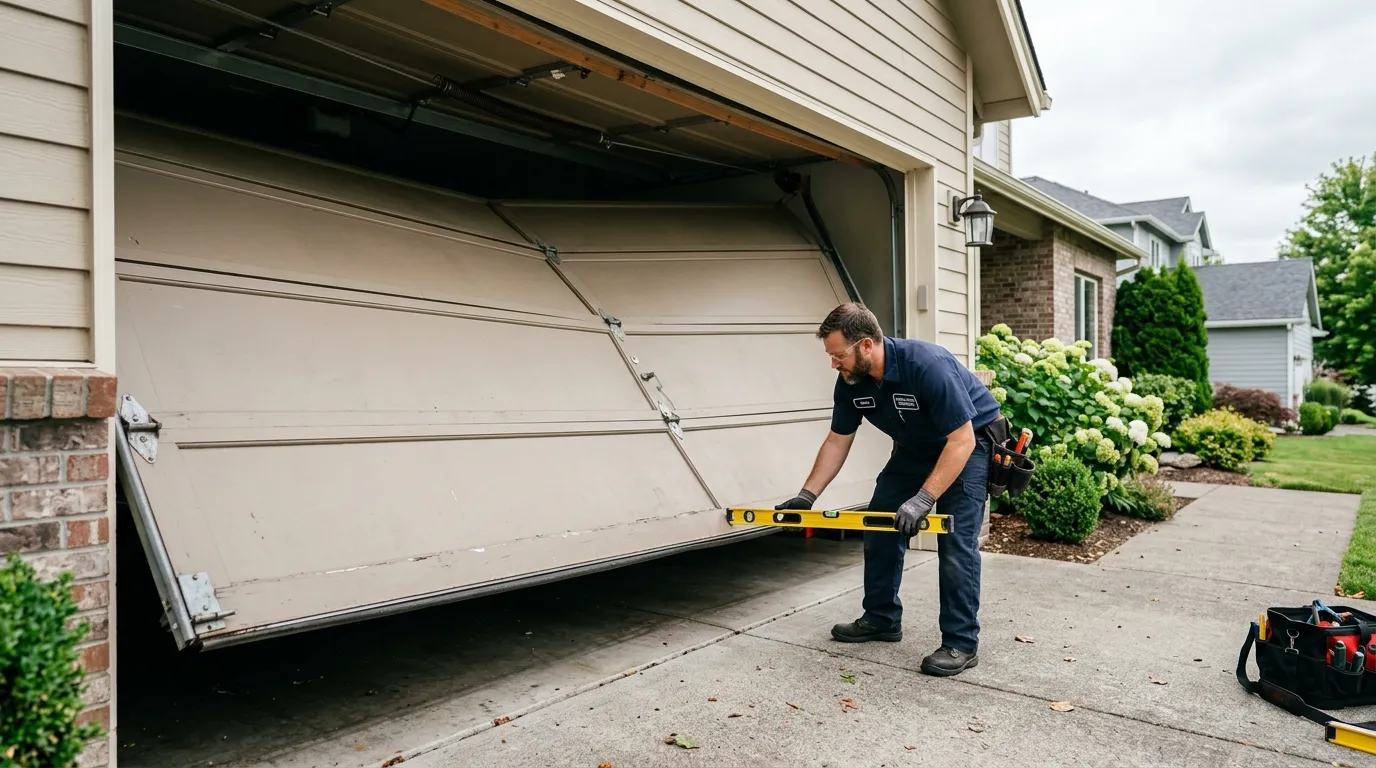
If the spring snapped and the door is stuck halfway, or the cable jumped the drum, that's not a tighten-a-bolt afternoon project. A torsion spring under load can put someone in the ER faster than almost anything else in a house. If you can see a coil gap in the spring, if the door won't lift with the opener disconnected, or if a cable is frayed or off the drum, stop and call someone. If it's just a noisy roller or a track that needs a wipe-down, that's still yours to handle.

We don't do full replacements on doors where the frame or track is bent beyond square - at that point you're paying for a new door, not a repair, and we'll tell you that instead of billing for parts that won't hold.

What the Weather Here Does to It

This region sits in a severe cold climate band, and that matters more for springs than most people expect. Steel contracts in cold, and a torsion spring that's already carrying years of cycle fatigue loses flexibility right when the temperature drops hardest. That's why late-night and early-morning cold snaps are when we see the most spring failures - not because the door was used harder, but because the metal had less give left in it.

Houses built in the 1960s and 70s stock common across this area often still run the original spring size, sometimes paired with hardware that was upgraded once somewhere along the way and never matched again. A mismatched spring under cold stress is a common cause of an uneven, sagging door well before an outright break.

We can't control when a spring lets go, and there's no coating or lubricant that stops metal fatigue forever. What helps is knowing the age of your door and spring, and not waiting until it snaps in a January cold front to find out how old that spring really is.

The Situation

Across the service area - 103,053 households, with 52,855 of those owner-occupied houses - a lot of garage doors are original or close to it, installed when the house was built between 1951 and 2002. Median household income here runs $69,680, which shapes a lot of the calls we get: people want the door fixed right, not replaced outright, if the door and track are still sound.

That's usually the right call. A torsion spring replacement on an otherwise solid door, even an older one, is a fraction of the cost of a full door swap. Where it stops making sense is when the track is bent, the panels are rusted through, or the opener is original to a 1970s install and the whole system is straining together. At that point, patching one part just moves the failure point somewhere else.

If your door is original to a house built in that 1951-2002 window and it's never had the spring replaced, treat a sudden increase in noise or a door that won't stay up as an early warning, not something to ride out.

What Most People Get Wrong

The most common mistake we see: someone hears a spring snap, the door still moves a little with muscle, and they assume it's fine to keep opening it by hand until they get around to calling. A broken torsion spring means the opener and the remaining hardware are now carrying weight they weren't built to hold alone. Every cycle after that break stresses the cables, drums, and opener gears harder, and in cold weather that stressed metal fails faster, not slower.

The second mistake is assuming any spring will do. Torsion springs are matched to door weight and wind unwind direction, and installing the wrong one on the door types common in this area's 1960s-70s housing stock either leaves the door heavy on one side or burns out an opener within a season.

We won't quote a same-day full-door replacement over the phone without seeing the track and frame first - too many houses here have settled or shifted enough that measurements taken sight-unseen turn out wrong once we're on site.
How it works

From “it’s stuck” to “it’s fixed”

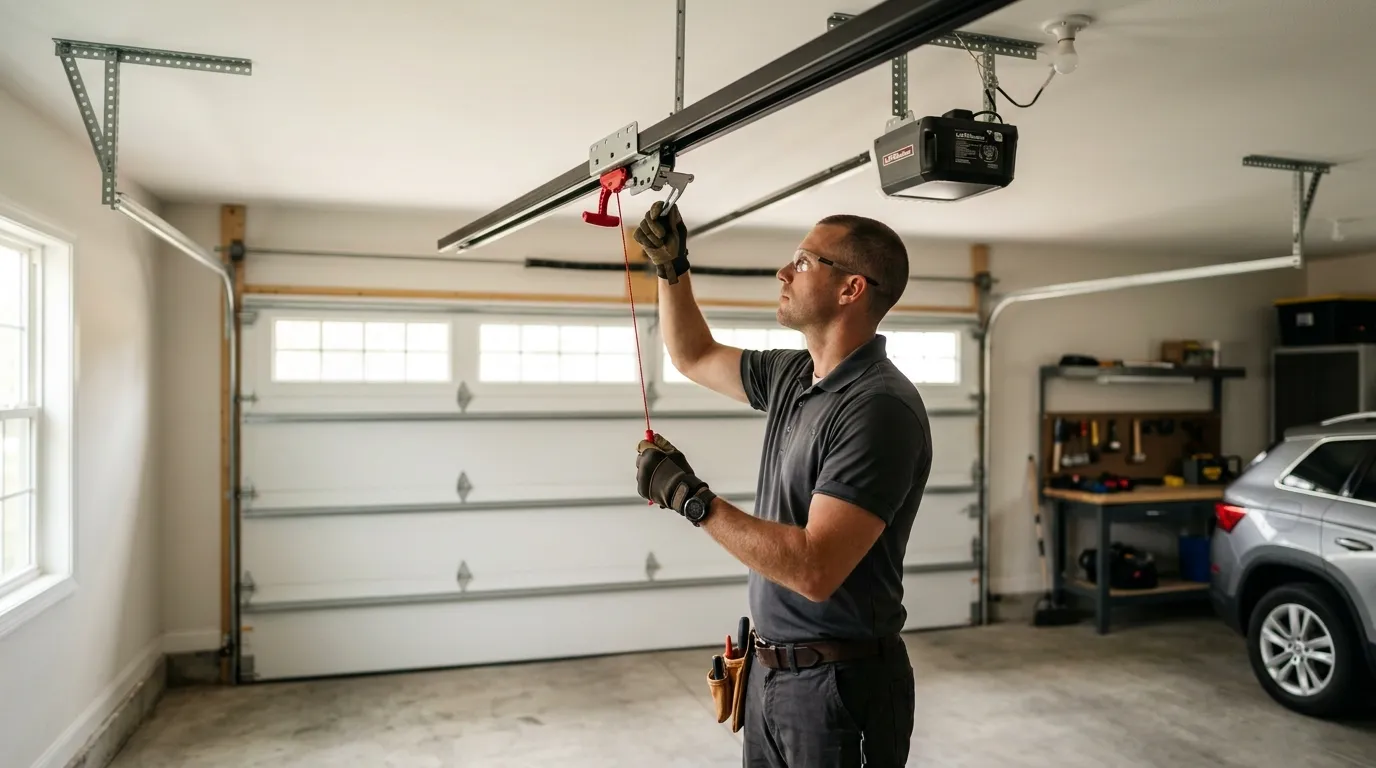
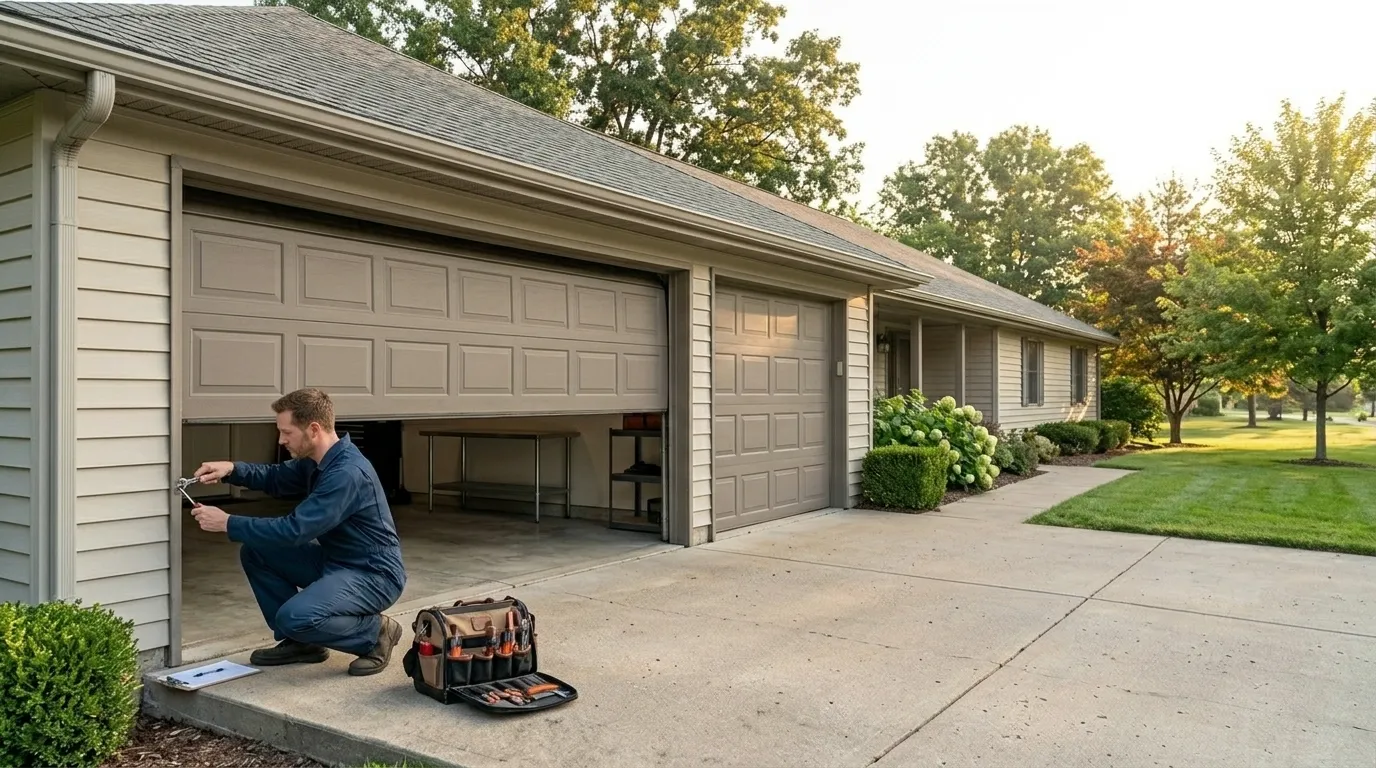
Tell us what’s wrong - Kansas City garage door service

Tell us what’s wrong

Describe the symptom - won’t open, loud bang, opener runs but the door won’t move.

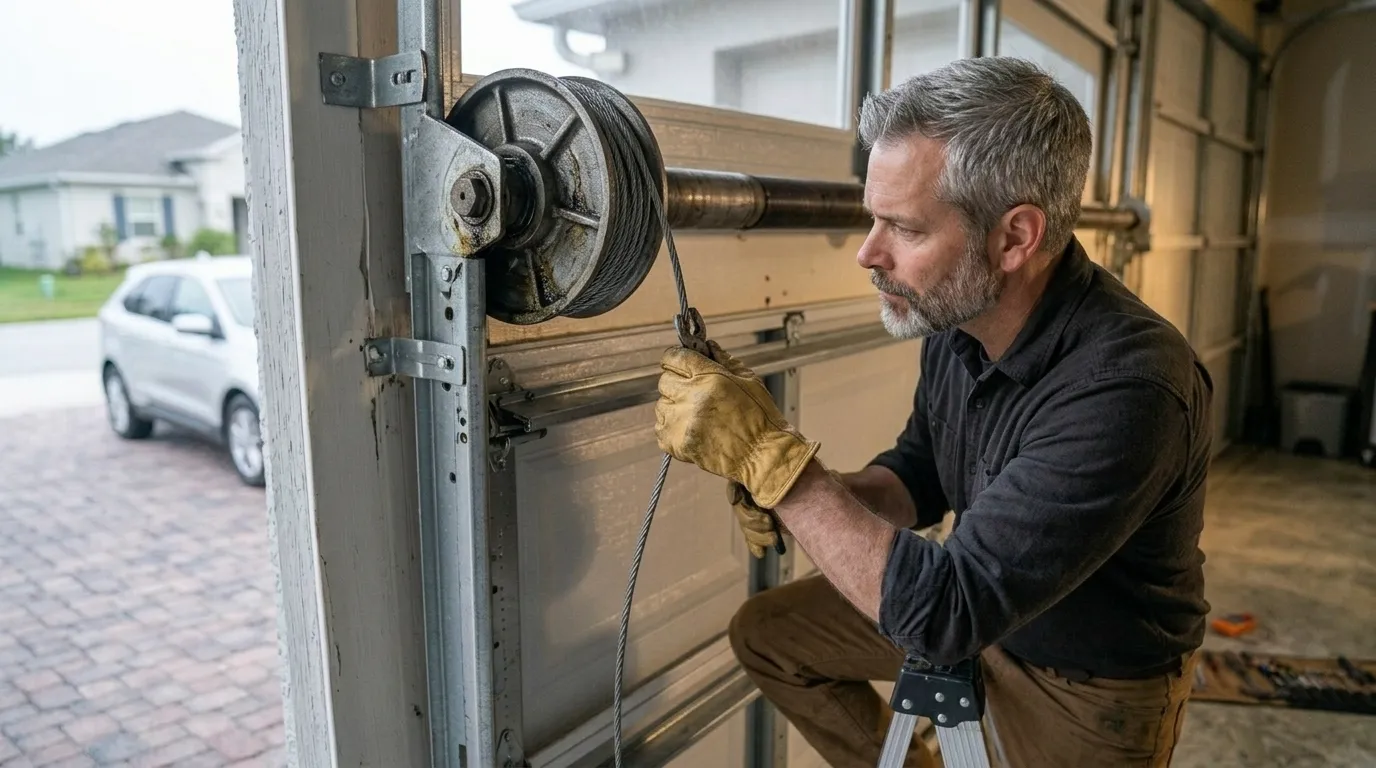
On-site diagnosis - Kansas City garage door service

On-site diagnosis

A technician tests the door under power and by hand and finds what actually failed.

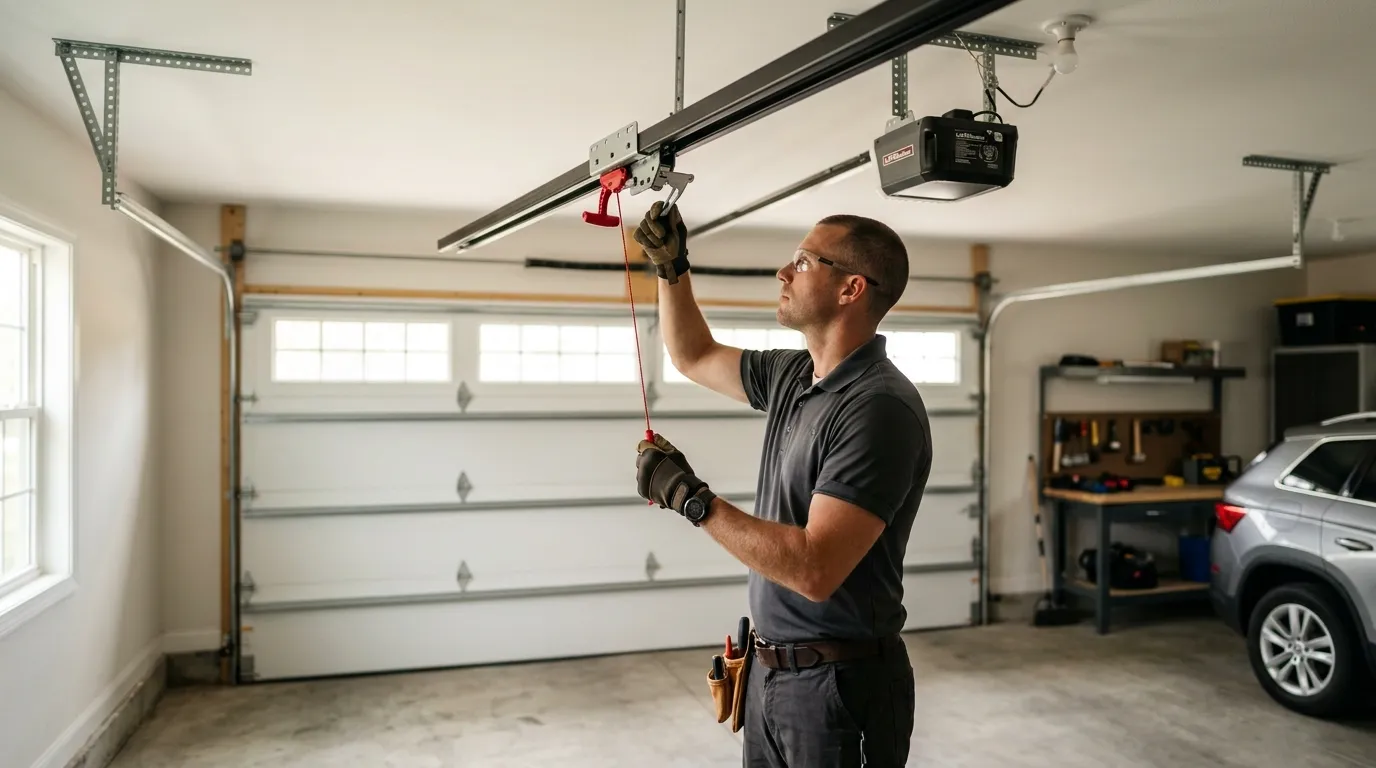
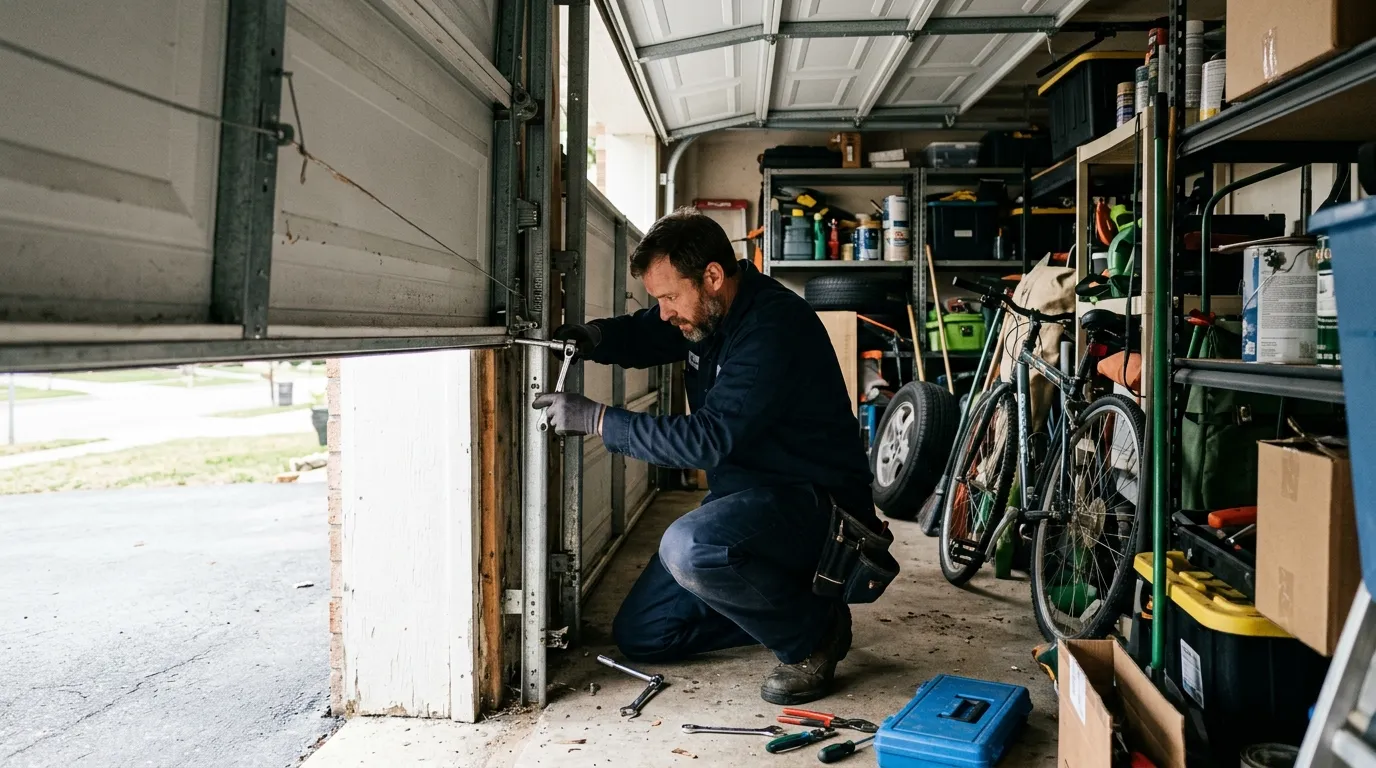
Clear, up-front plan - Kansas City garage door service

Clear, up-front plan

You get the fix that’s needed and what drives the cost - before any work starts.

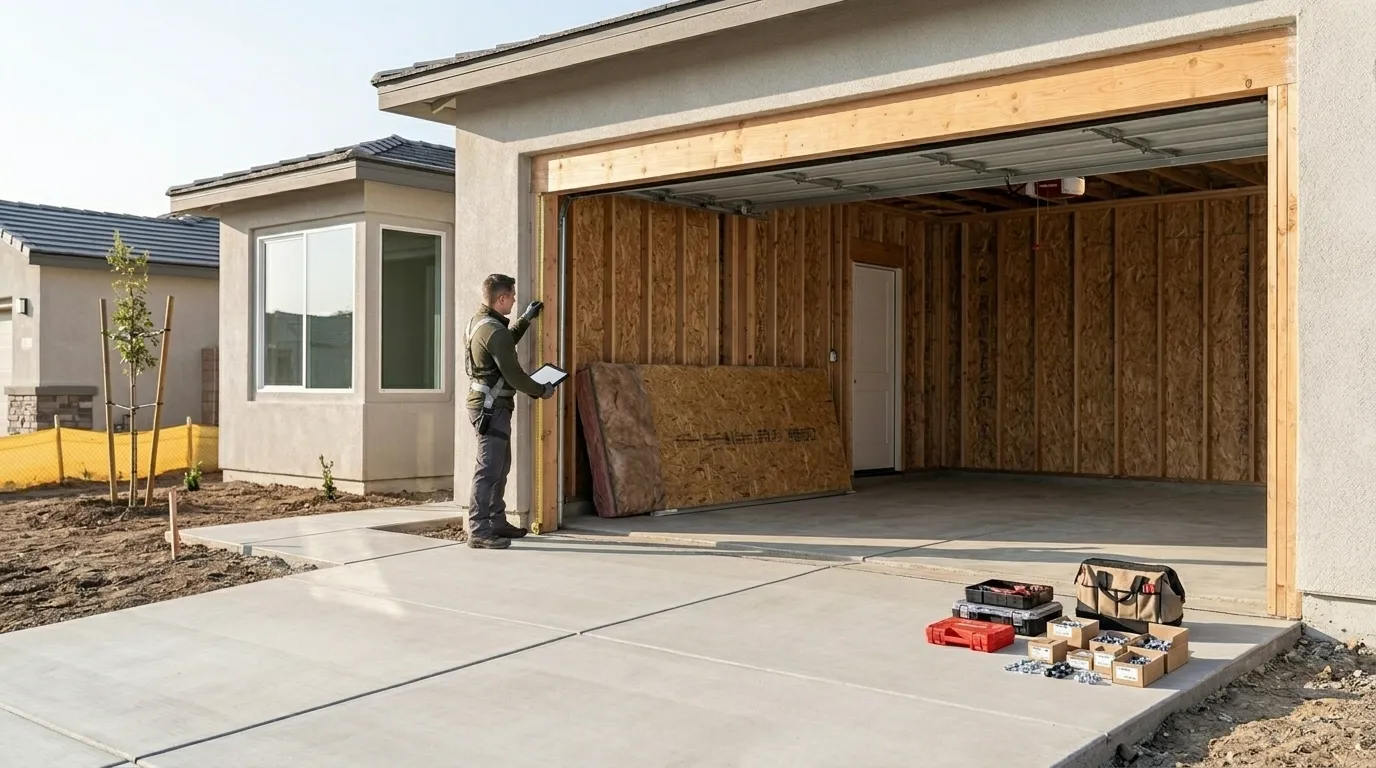
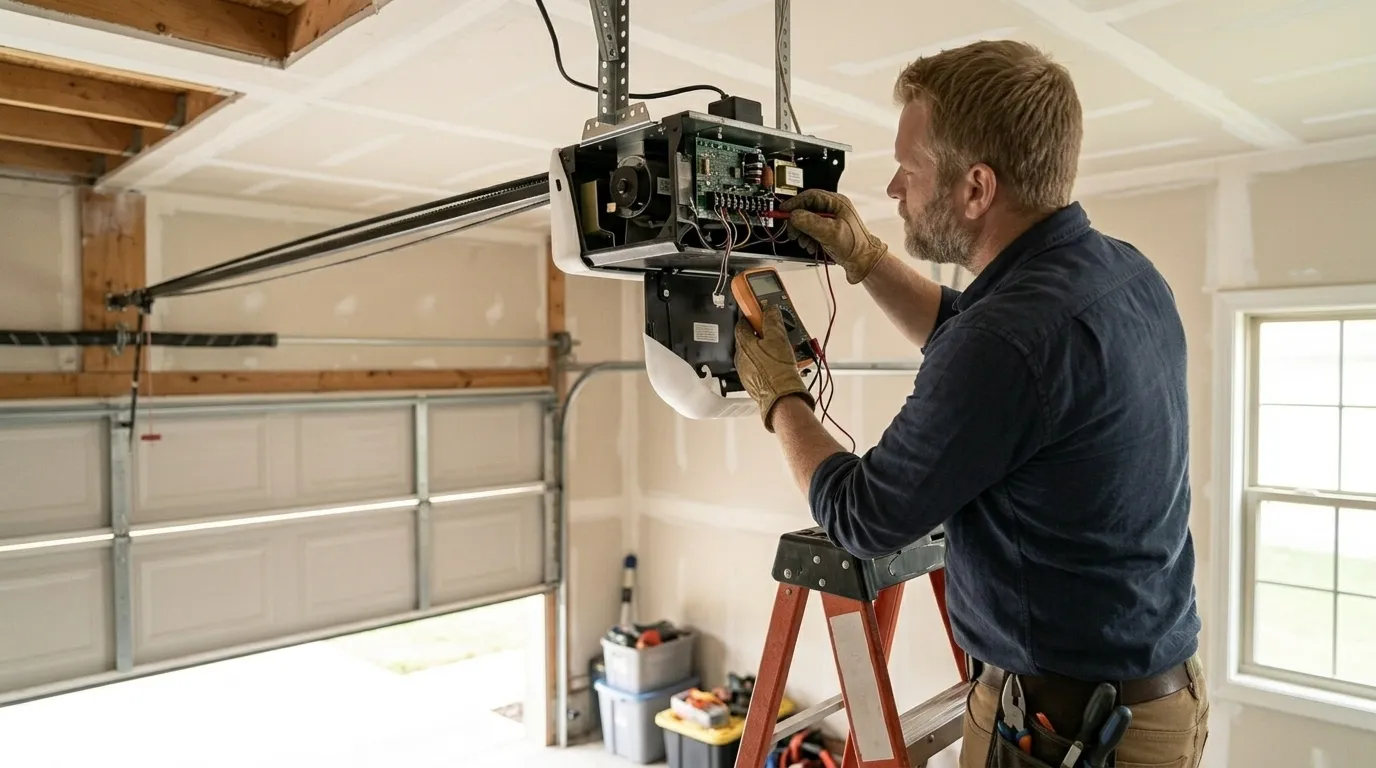
Repaired & tested - Kansas City garage door service

Repaired & tested

The repair is done, the door is set true and tested, and the work area left clean.

Serving Kansas City, MO - tell us what your door’s doing and we’ll take it from there.

How we work

What to expect

Diagnosis first

Every visit starts by finding what actually failed - not a pre-written parts list.

The right part for the door

Springs and openers matched to the door’s weight and age, so the fix holds up.

Straight answers

When a repair makes more sense than a replacement - or the reverse - you hear it plainly.

Clean, careful work

Tension released safely, hardware set true, the door tested under power before we leave.

What we do

Garage Door Services

Repair and installation work for Kansas City homes and businesses.

Garage Door Repair in Kansas City

Garage Door Repair

Garage door repair in Kansas City for houses built 1951-2002, from broken springs to openers that fail in severe cold. Straight fixes, fair prices, no upsell.

Learn more
Garage Door Installation in Kansas City

Garage Door Installation

Most Kansas City homes date from 1951 to 2002, with openings built for lighter doors. Here's what installing a new door involves, costs, and why fit matters.

Learn more
Garage Door Service in Kansas City

Garage Door Service

Kansas City's 1960s-70s housing stock and severe cold winters wear out original springs and openers fast. Here's how that failure shows up and what fixing it involves.

Learn more
Opener Repair in Kansas City

Opener Repair

Opener repair for Kansas City homes built mostly between 1951 and 2002, where cold winters and aging drive systems wear out openers faster than newer suburbs.

Learn more
Cable Repair in Kansas City

Cable Repair

Broken or frayed garage door cables on Kansas City homes built between 1951 and 2002. We diagnose the cause and replace cables the right way, not just the symptom.

Learn more
Off-Track Repair in Kansas City

Off-Track Repair

Off-track doors are common in Kansas City's 1960s-70s housing stock and cold winters. See how the fix works and why it happens here more than most places.

Learn more
Commercial Garage Door in Kansas City

Commercial Garage Door

Commercial garage door repair for warehouses, shops, and industrial buildings across Kansas City, tied to the metro's building stock and cold-severe winters.

Learn more
Emergency Garage Door Repair in Kansas City

Emergency Garage Door Repair

Broken spring or stuck door at 6am? We fix emergency garage door failures across Kansas City's older housing stock, built mostly 1951-2002, in cold-weather conditions.

Learn more
Questions

Frequently asked

Straight answers about garage door repair in Kansas City. Still unsure? Ask us directly.

Why do garage door springs break more in winter here?

Steel loses flexibility as it gets cold, and a spring that's already fatigued from years of cycles has less give left when temperatures drop hard. This area sits in a severe cold climate band, and we see spring failures cluster during the coldest stretches, especially on older doors.

Is my house old enough to have an original spring?

If your house was built between 1951 and 2002, which covers most of this service area, there's a real chance the spring has been replaced at least once, but plenty of doors are still running close to original hardware. If you don't know the last time it was serviced, that's worth checking before it fails.

Can I replace a torsion spring myself?

We don't recommend it. A torsion spring under tension can cause serious injury if it releases wrong, and the tools to wind it safely aren't something most homeowners keep around. A snapped extension spring on an older door is sometimes safer to inspect yourself, but torsion springs are a call, not a project.

When does it make more sense to replace the whole door instead of just the spring?

If the track is bent, panels are rusted or cracked, or the opener is original and struggling, replacing just the spring often shifts the failure to the next weakest part. On a door that's otherwise sound, a spring swap is the cheaper and correct fix.

Ready to get your garage door sorted?

Tell us what it’s doing and where you are in Kansas City - we’ll take it from there.

Request a QuoteCall