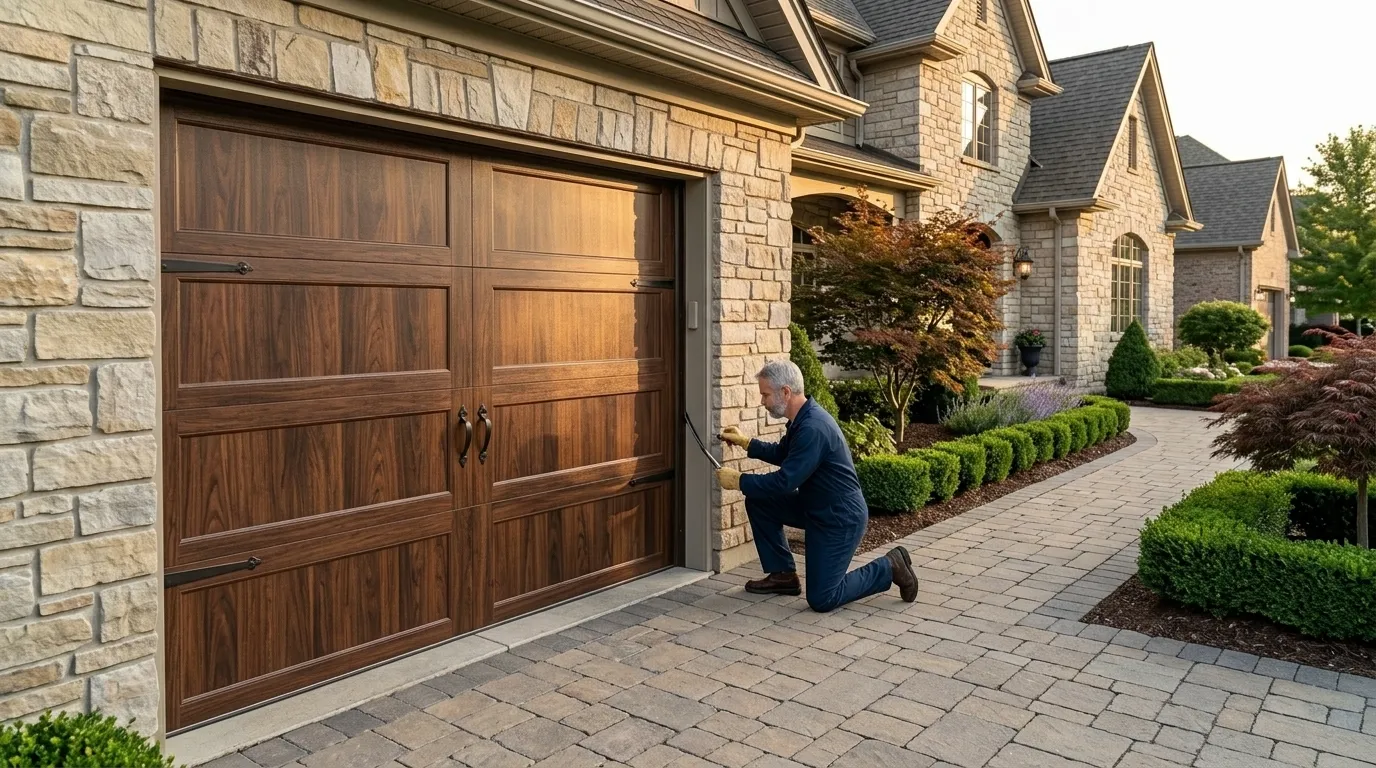
When It Stops Being a DIY Job
Most of the houses we get called to here went up between 1951 and 2002, with the bulk of that stock dating to the 1960s and 70s across the metro's named neighborhoods, from to Line Creek. That range matters because a door installed in 1968 and a door installed in 1995 don't share hardware, and a lot of the "fix" videos online assume a torsion setup that isn't what's on your header.
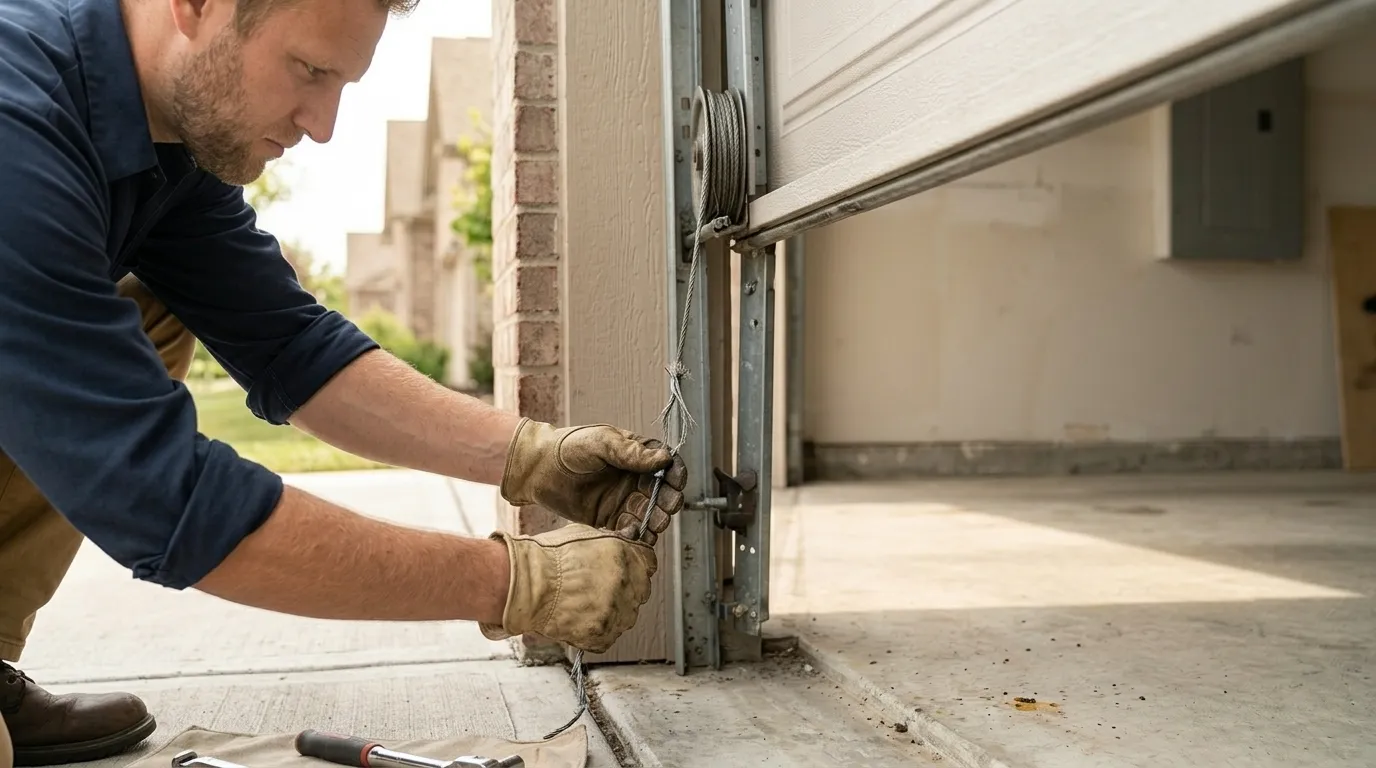
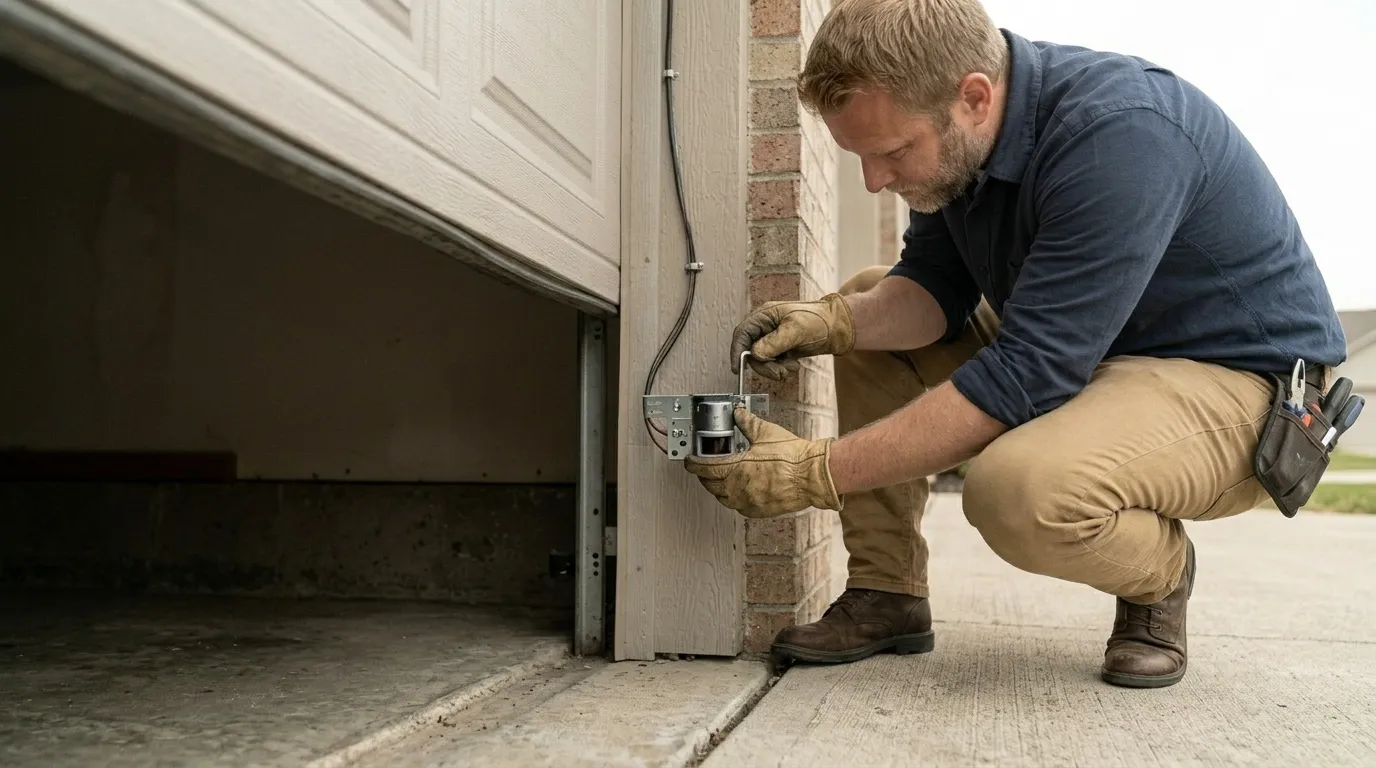
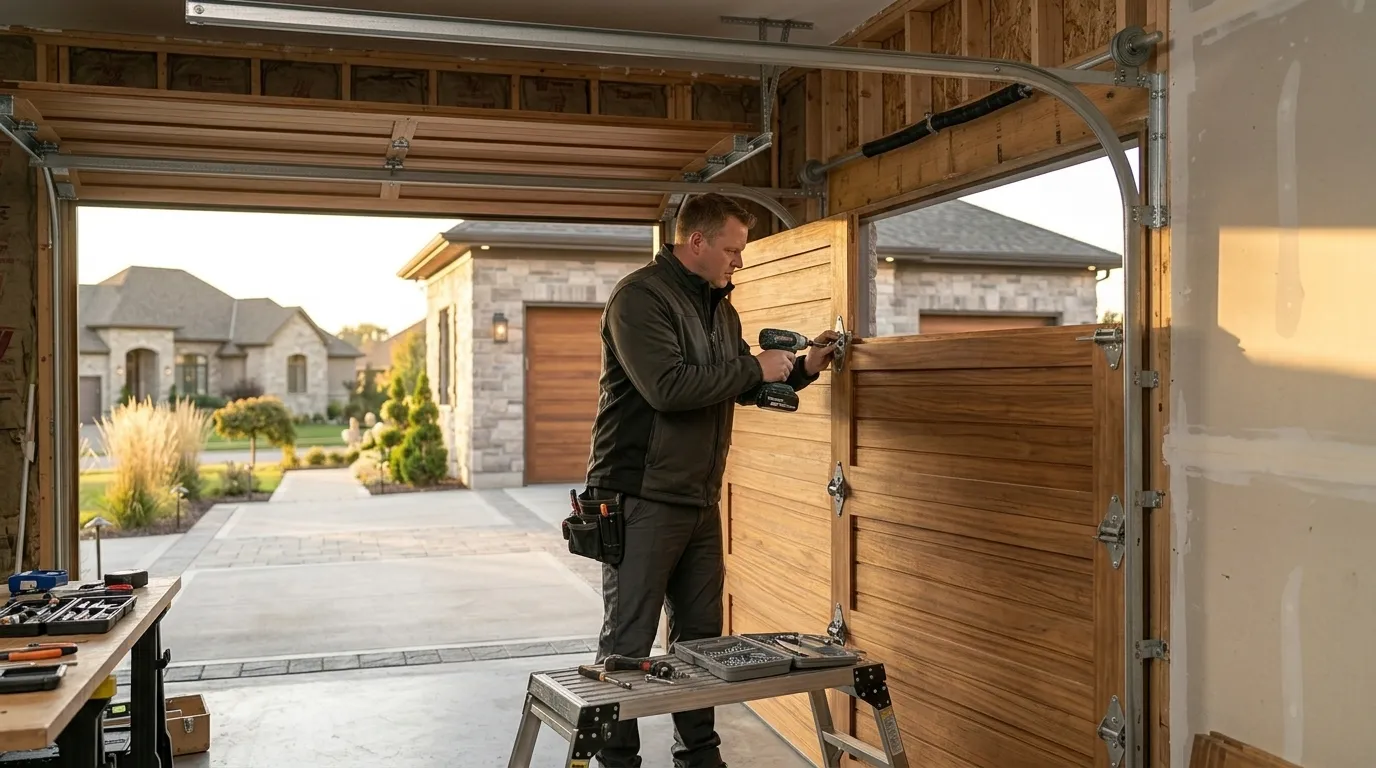
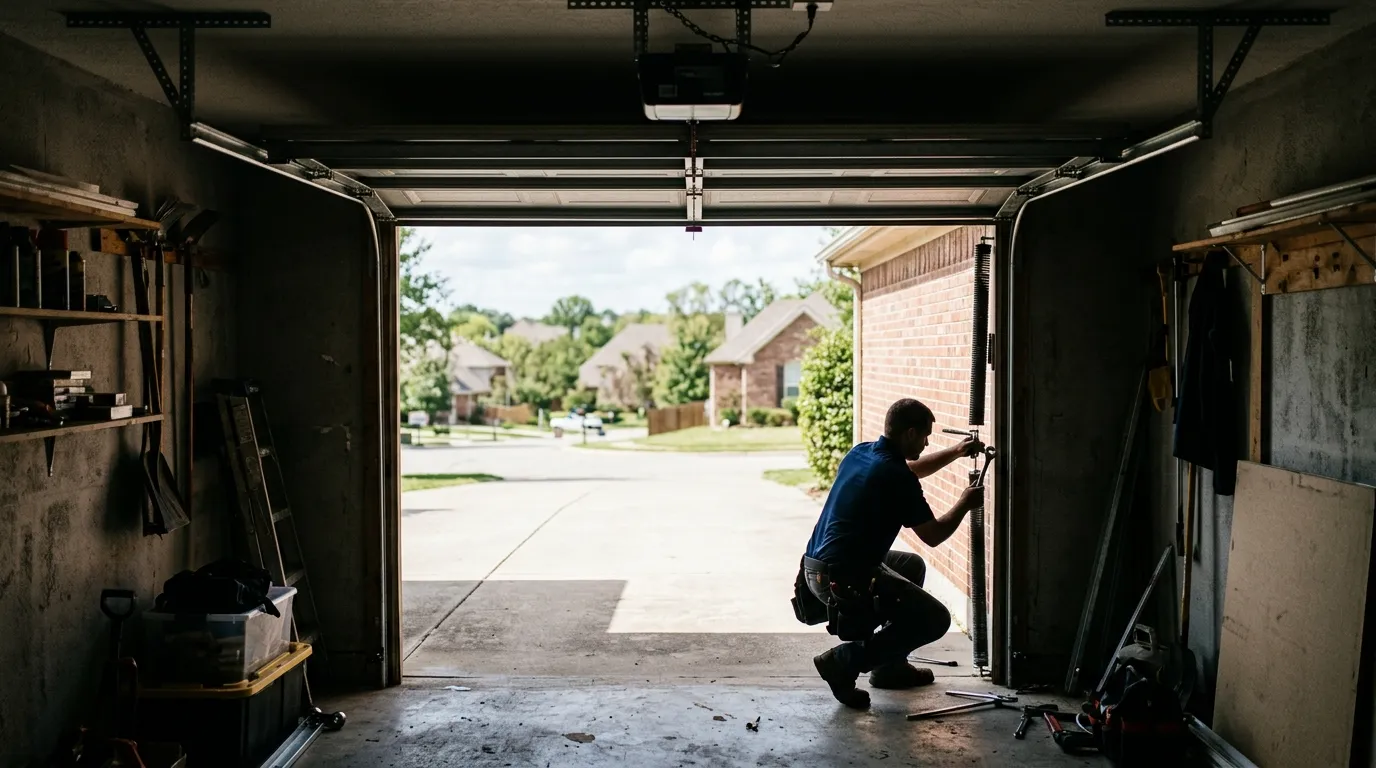
A cracked panel or a slipped cable off a drum is something a lot of owners can look at safely. A torsion spring under tension is not. If your door came down hard, or one side sags while the other holds, or the opener strains and reverses, that's a wound spring or a bent track, and both take a bar and a clamp, not a YouTube tutorial. We also see openers original to a 1970s build still running on the same rail - by the time that motor fails, the rest of the hardware is usually past due too.
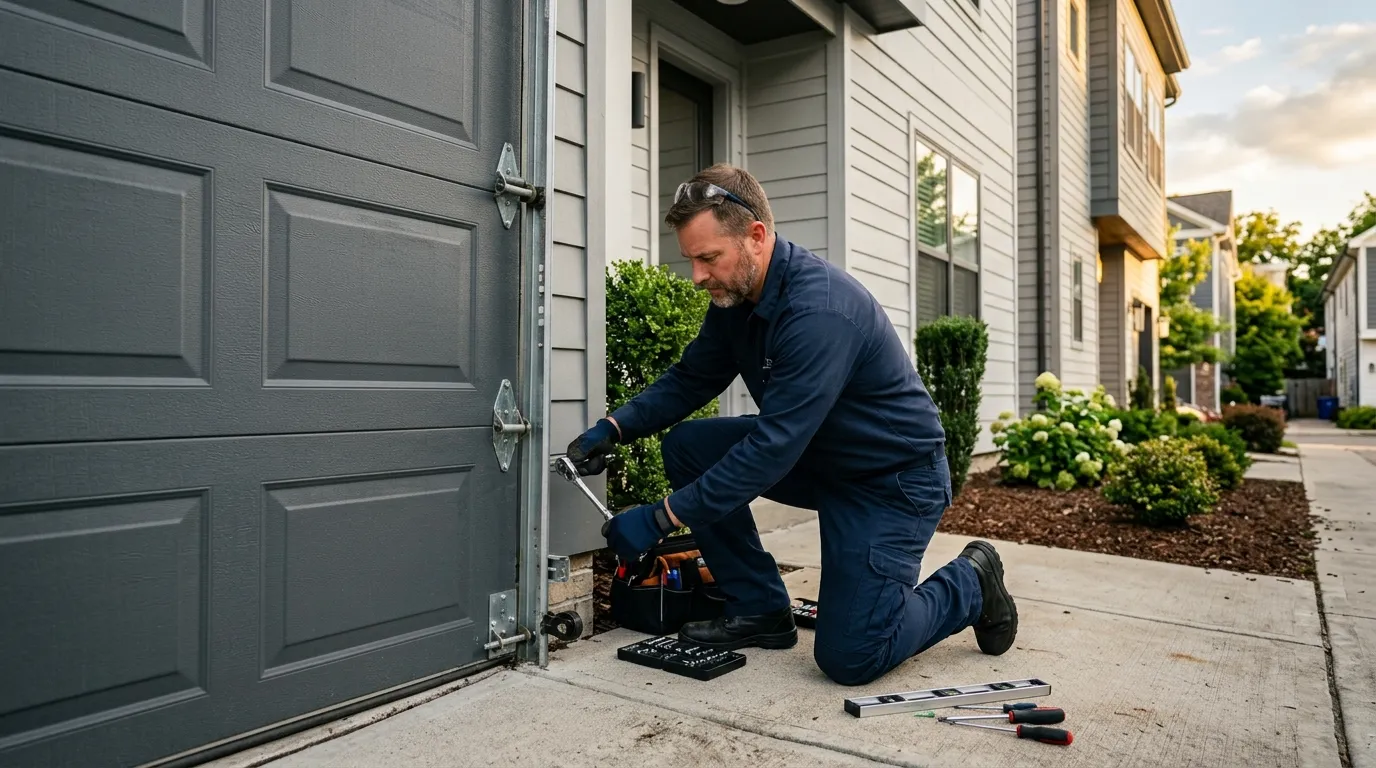
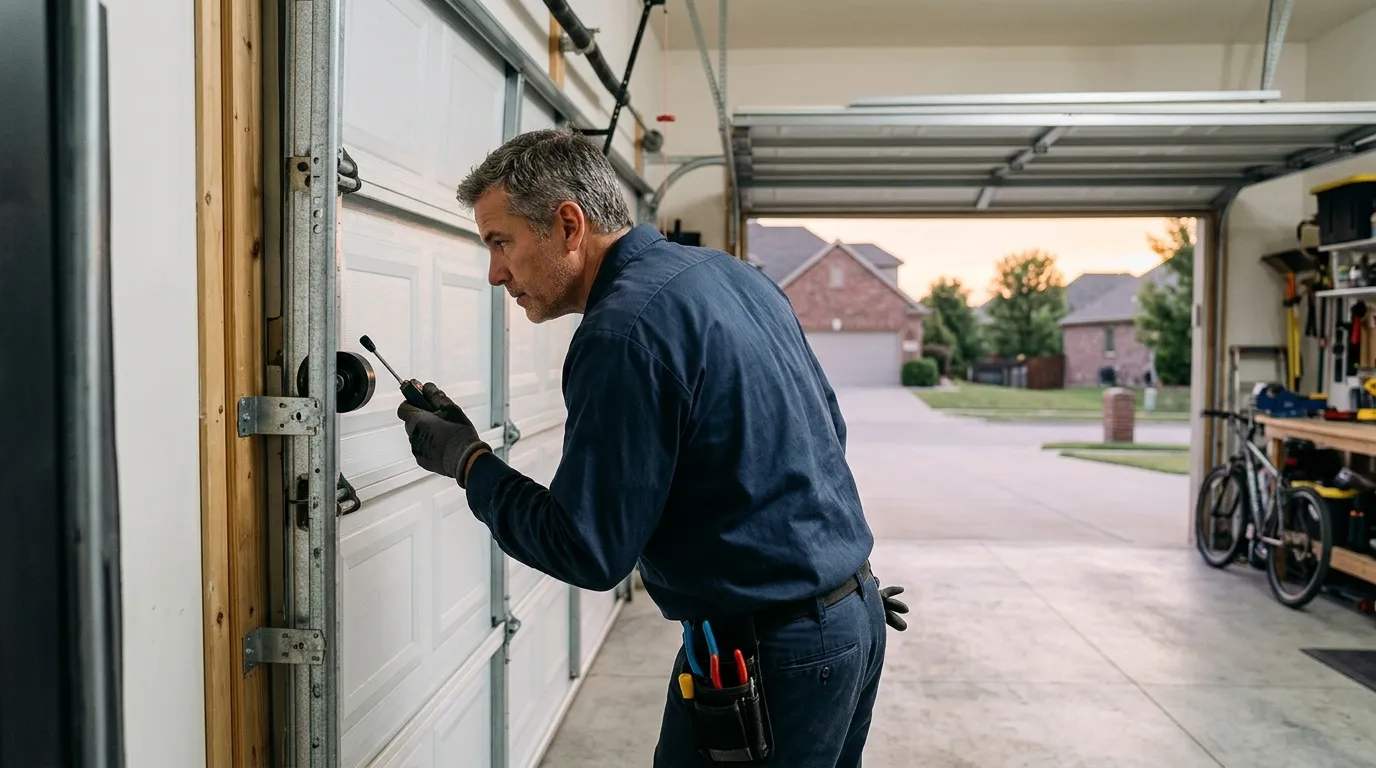
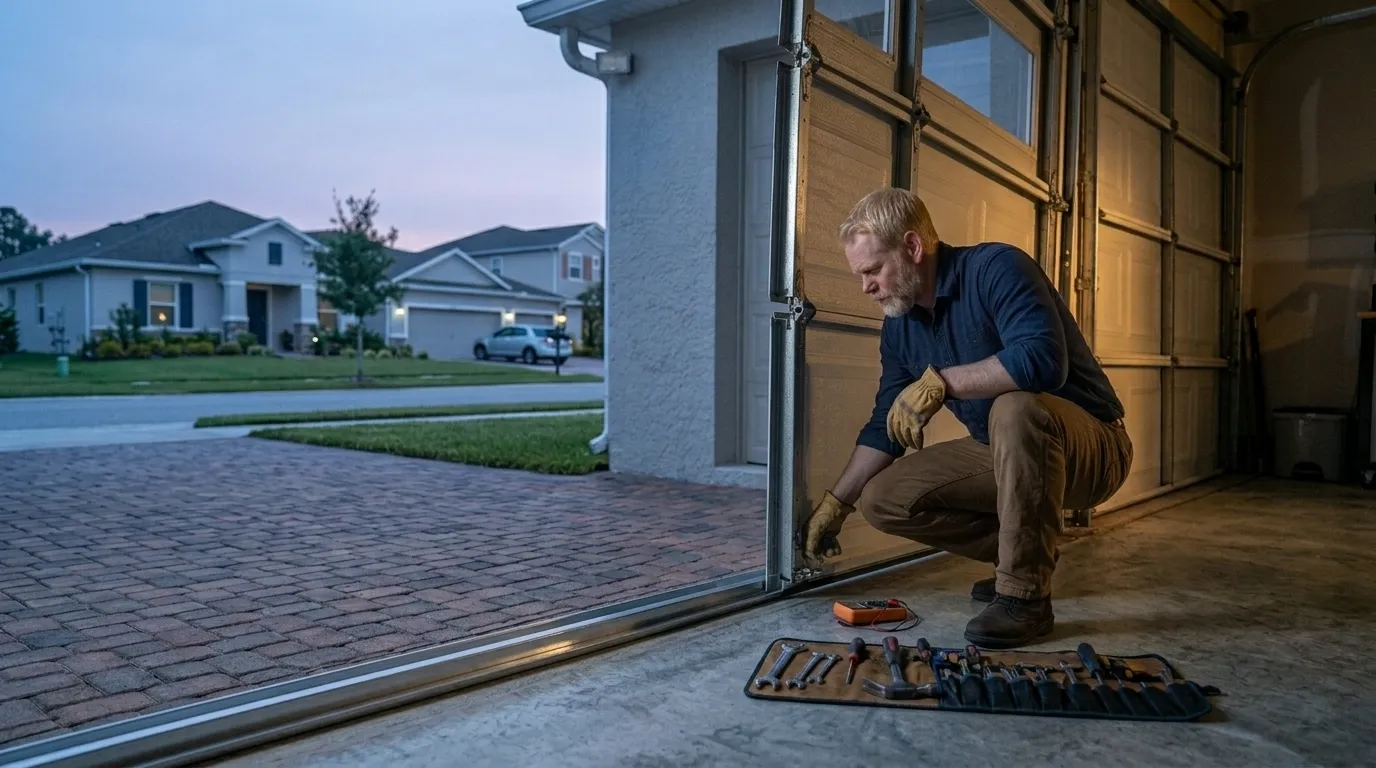
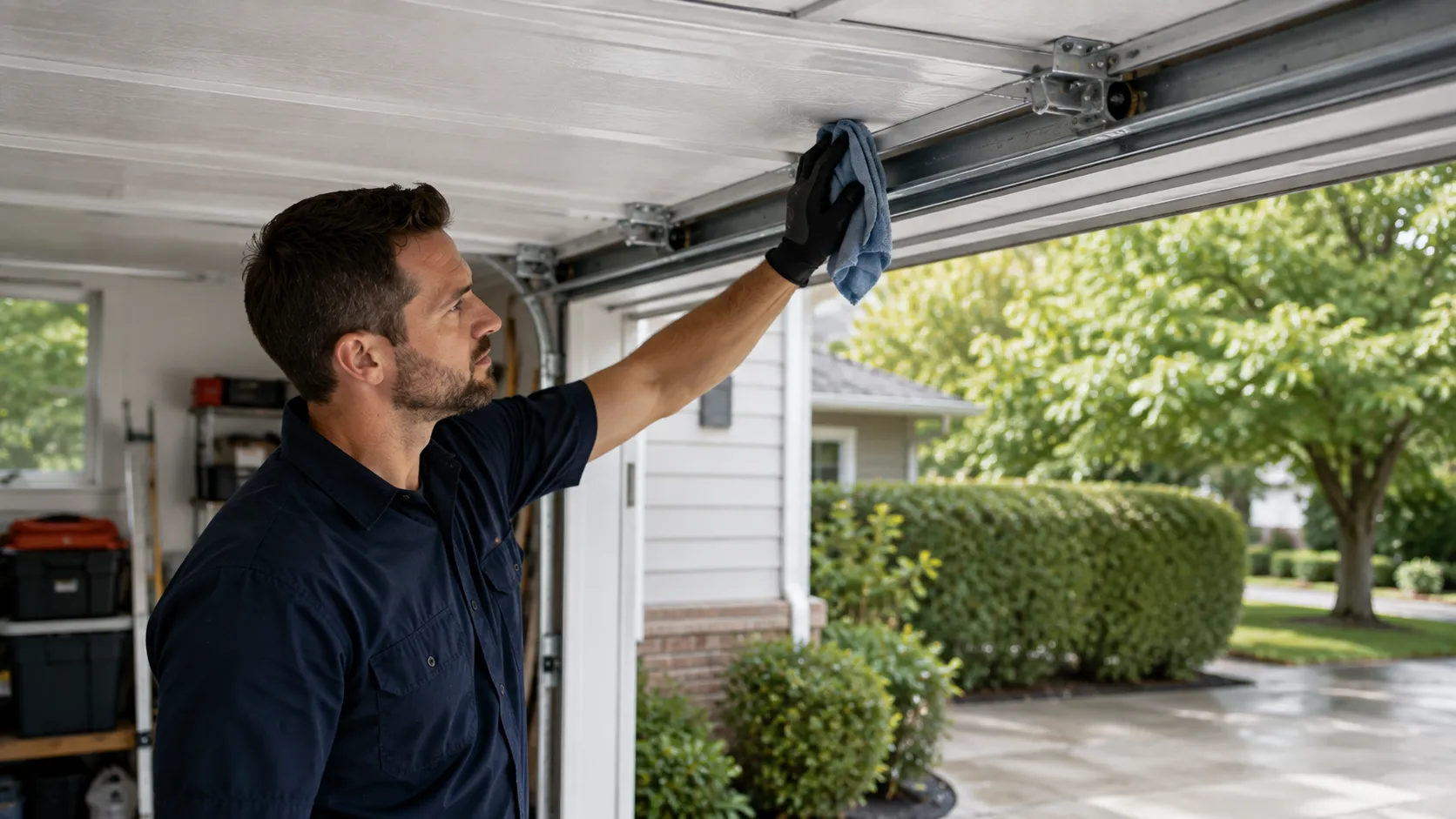
A service call starts with pulling the door manually, checking spring wind and cable seating, and looking at track alignment before anything gets replaced. That diagnosis is the part that gets skipped when someone just swaps a part and hopes.
The Situation
Across the roughly 103,053 households in this service area, 52,855 are owner-occupied houses, and that's the bulk of what a call like this actually involves - not new construction, but doors and openers installed decades ago on houses that are still standing and still lived. With a median household income of $69,680 here, most owners we talk to want a straight diagnosis before they commit to a full opener or door replacement, not an upsell.
We run calls from North Kansas City a mile out to places like Smithville nearly twenty miles north, and the hardware changes by decade the farther you get from the urban core - closer in, near you get older housing stock and older track systems; farther out toward Lee's Summit, you get more of the newer builds mixed.
That range means a service call isn't a script. What we bring to a house in isn't the same kit we'd expect to need in and the first ten minutes on site - checking the build era, the spring type, the track condition - decides what happens next more than any standard checklist would.
What Most People Get Wrong
The most common mistake is assuming a noisy door means the opener is dying. Nine times out of ten on an older house it's the rollers or the track, not the motor - and replacing an opener doesn't fix a bent rail or a spring that's lost its wind. We'll say plainly that not every noisy door needs a new opener, and we won't sell you one if the fix is a $30 roller set.
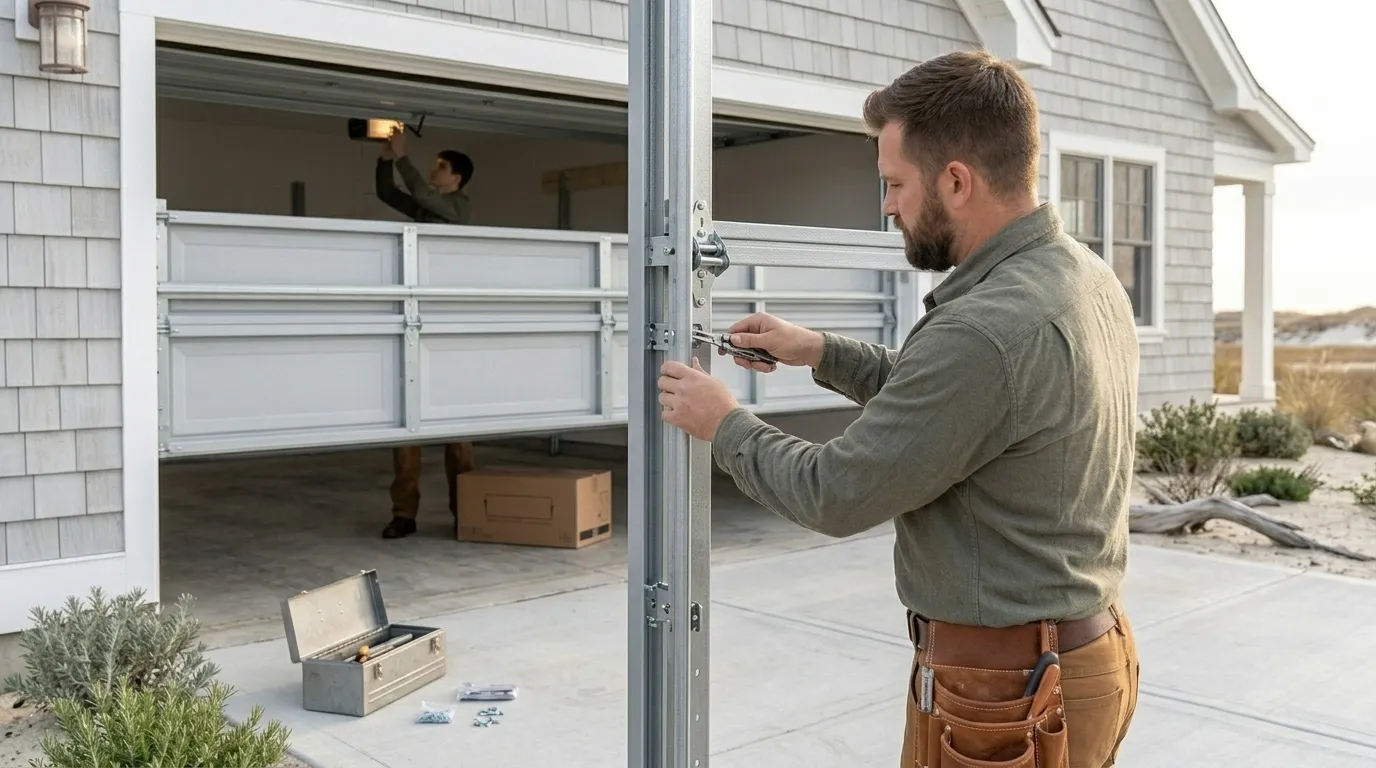
The other one: owners think a service call means someone shows up and swaps whatever's obviously broken. It should mean someone checks spring balance, cable tension, track alignment, and hinge wear before touching anything, because on a house from this era those four things fail together more often than alone.
Here's the honest limit - if a door's track is bent badly enough, or the section panels are rusted through, replacement is usually cheaper than chasing repairs on a door that's fighting you the whole way. We'll tell you that instead of billing you for three separate visits. And if a part needs to come from a manufacturer that's slow to ship, we'll say that up front rather than guess at a date.