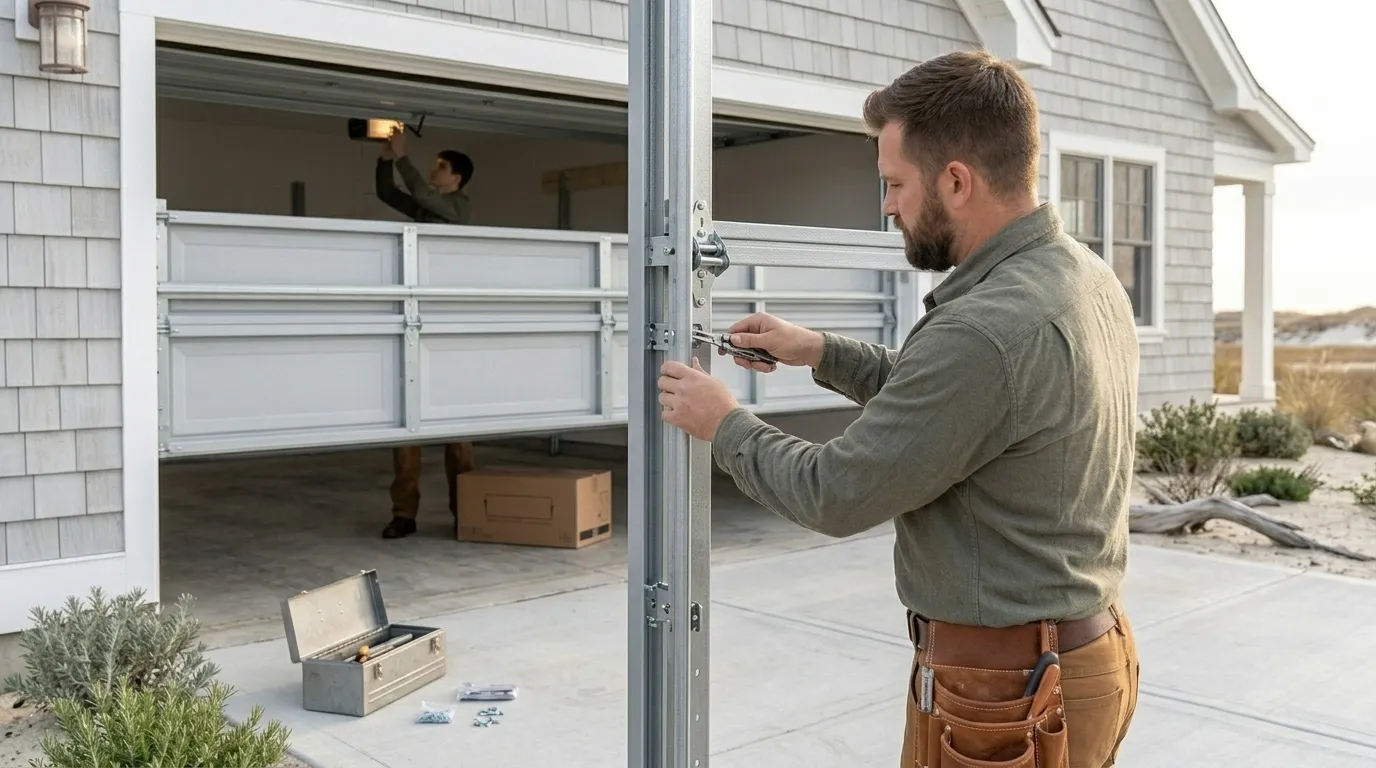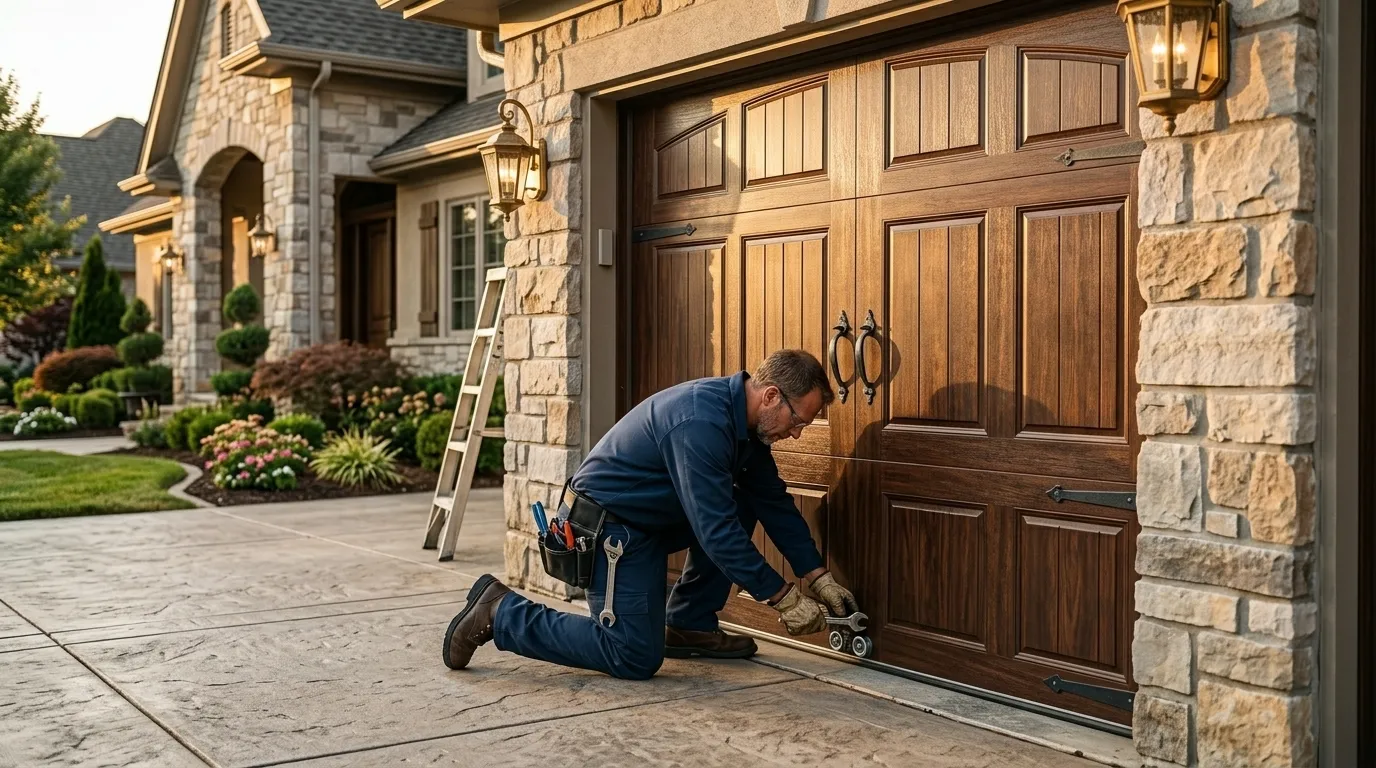
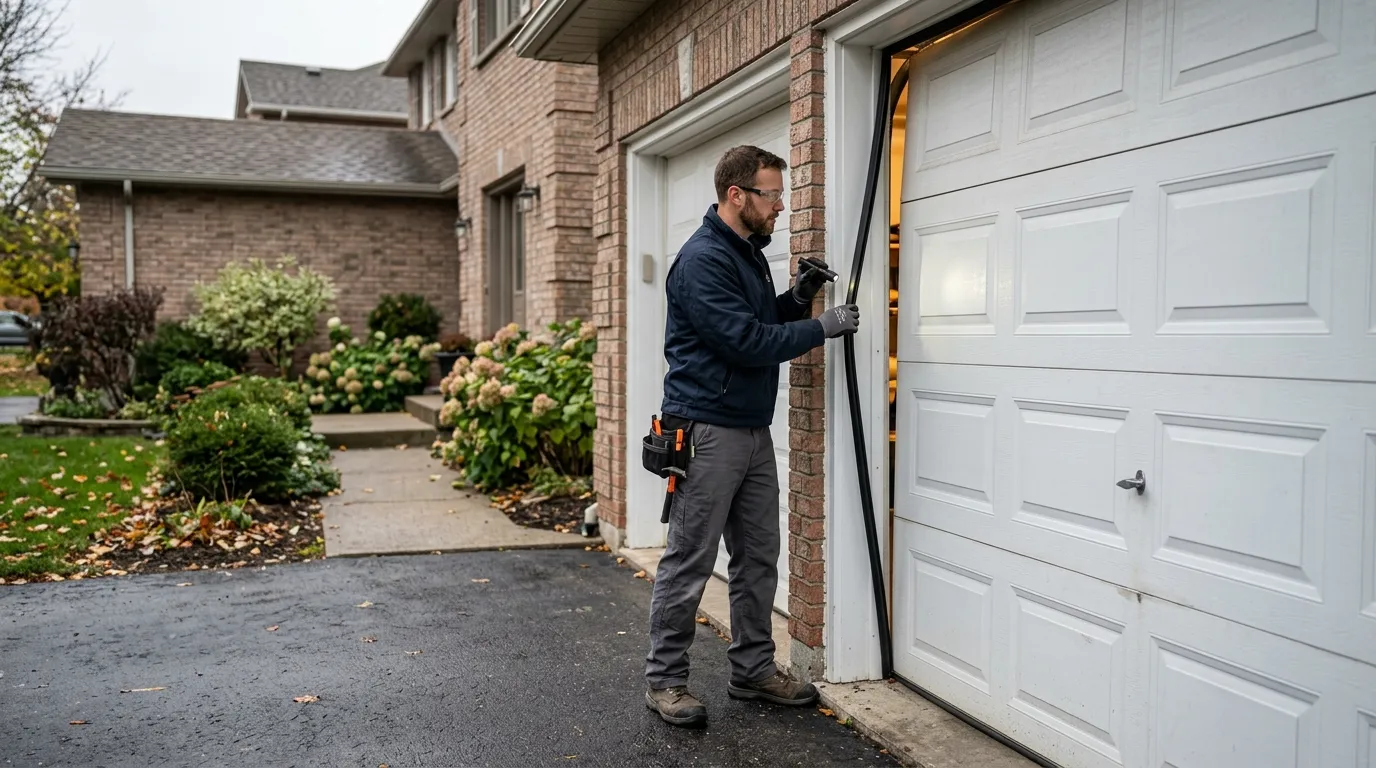
How It Shows Up
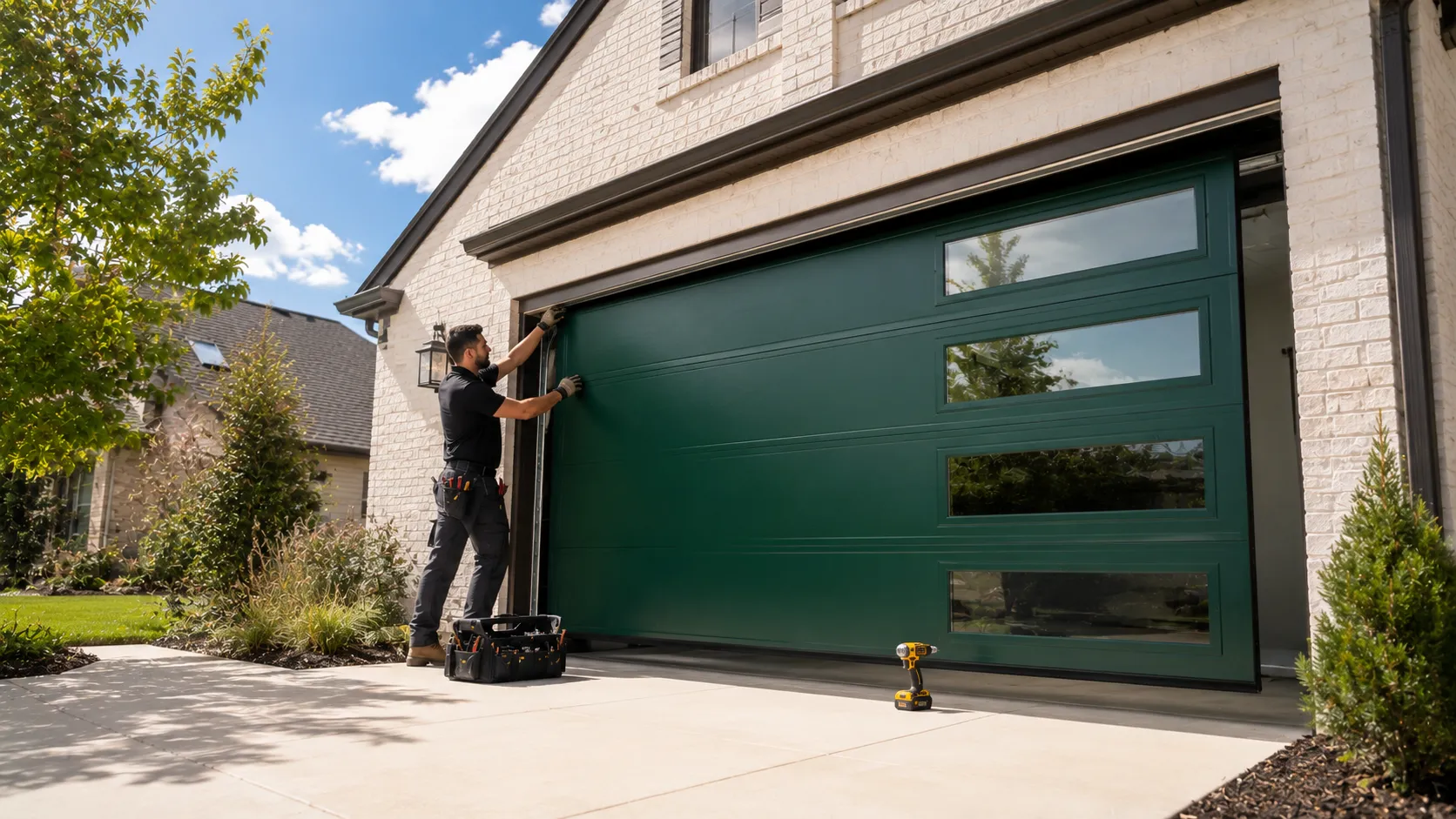
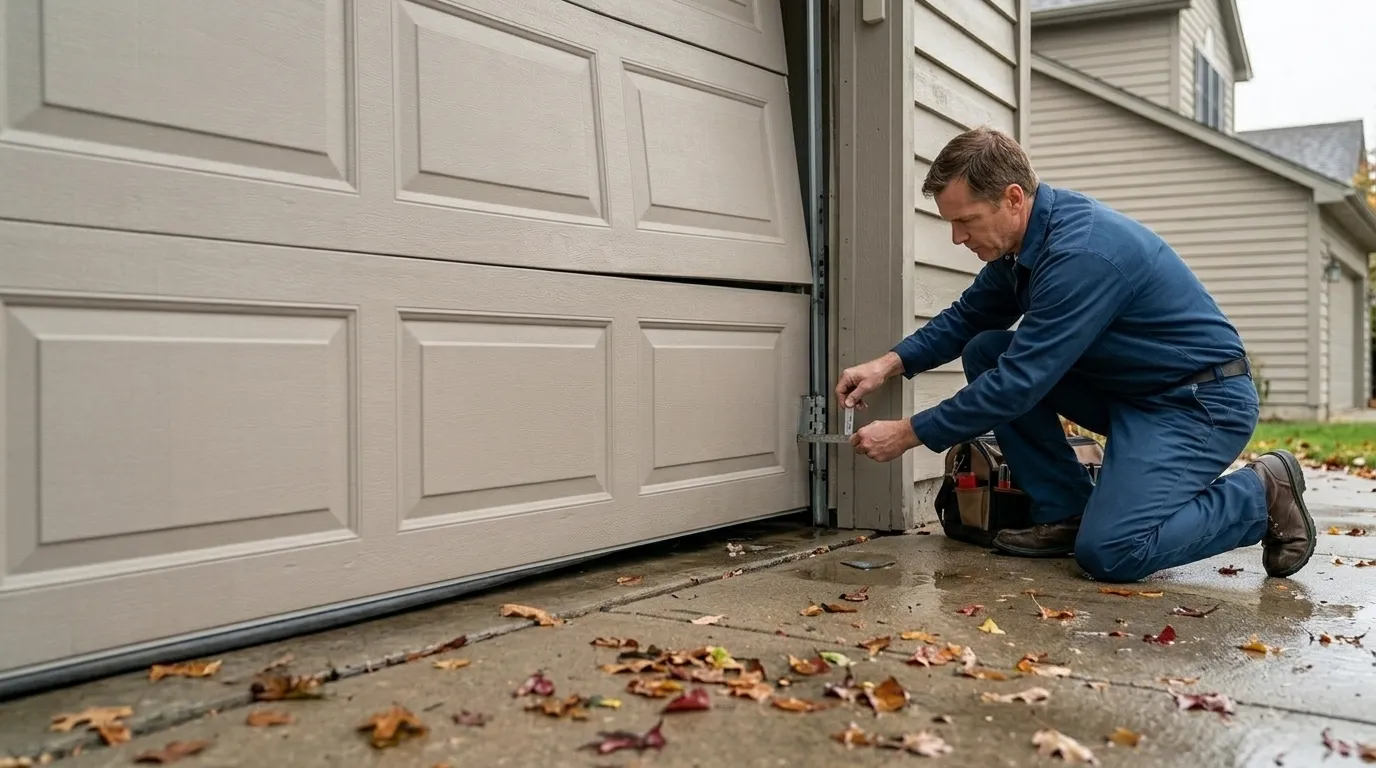
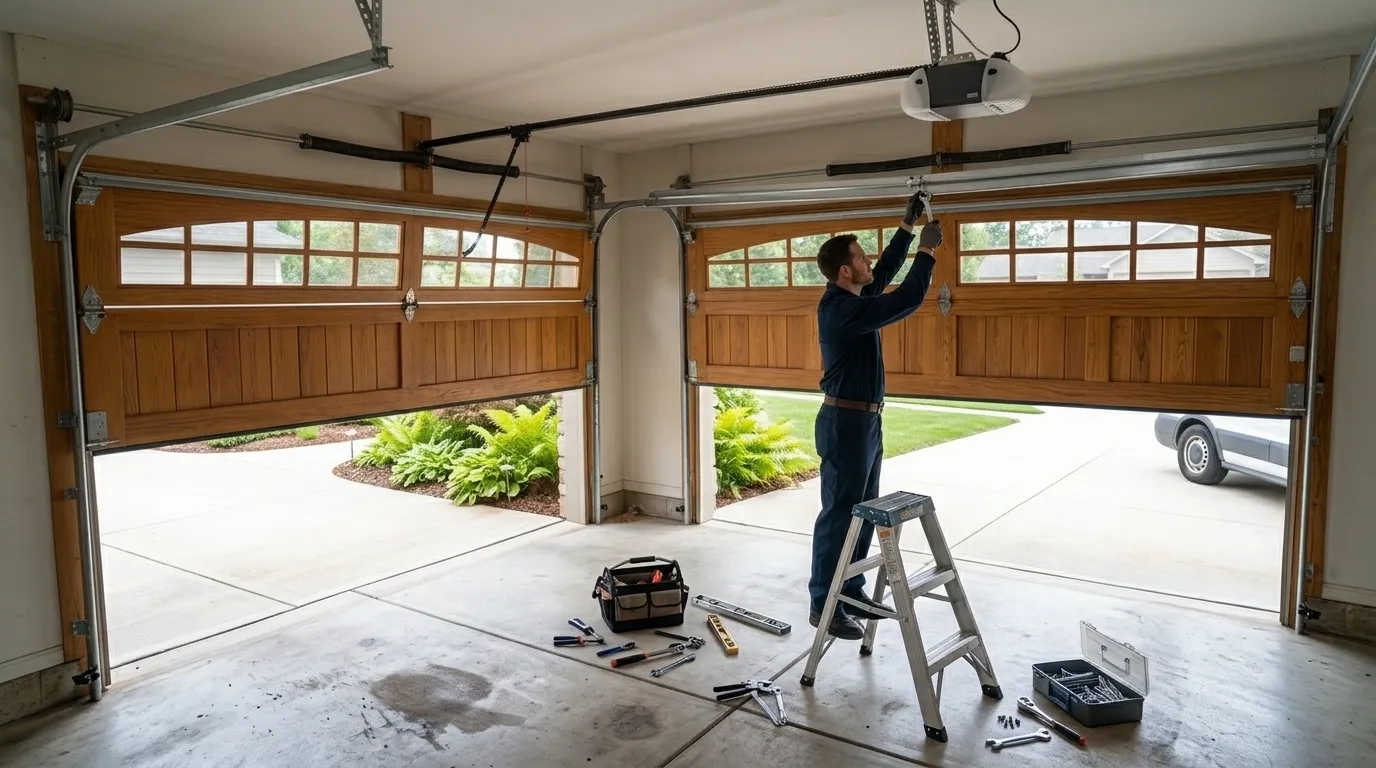
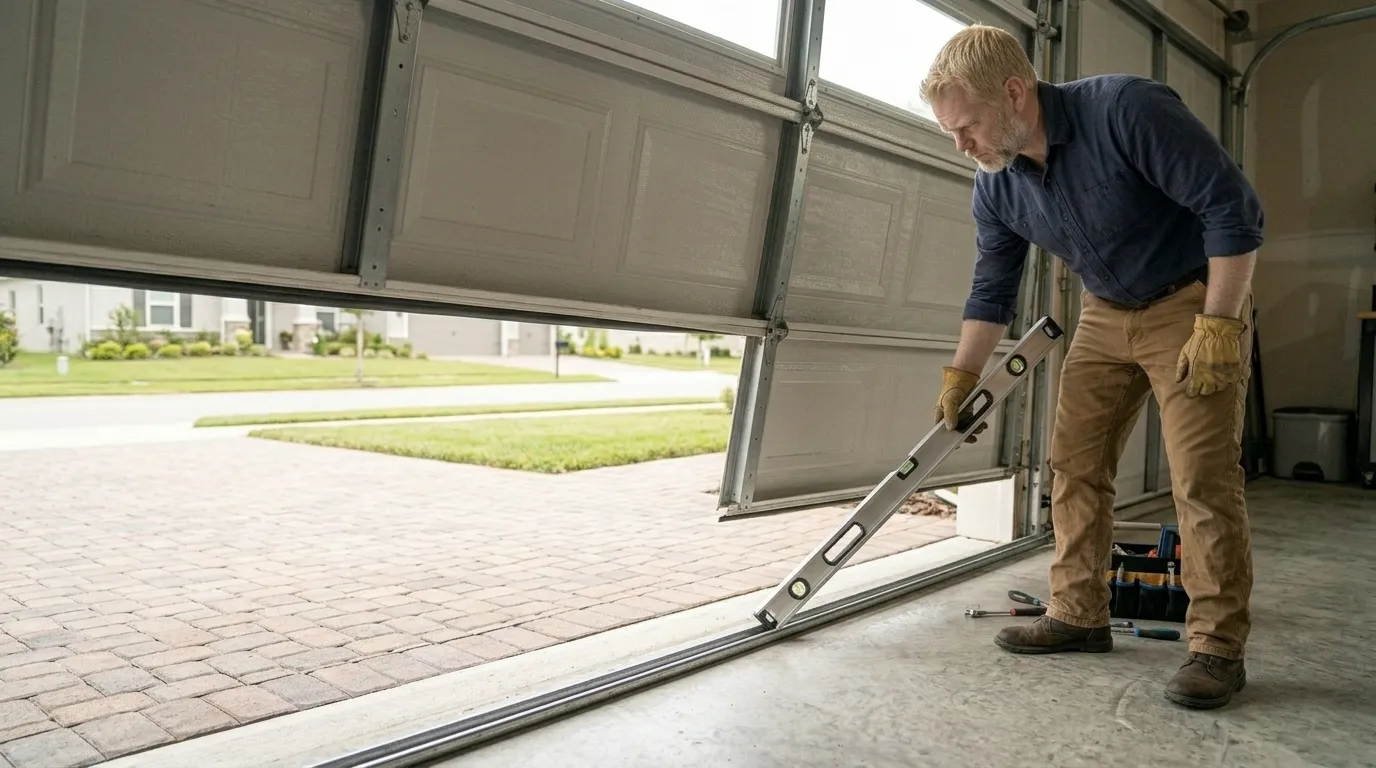
A door that's come off track usually announces itself before it jams all the way. You'll see one bottom corner sitting lower than the other, hear a scrape or a bang as the rollers catch the edge of the track instead of riding inside it, or watch the panel visibly bow when it's halfway up. Sometimes it stops dead a foot off the floor and won't go further in either direction.
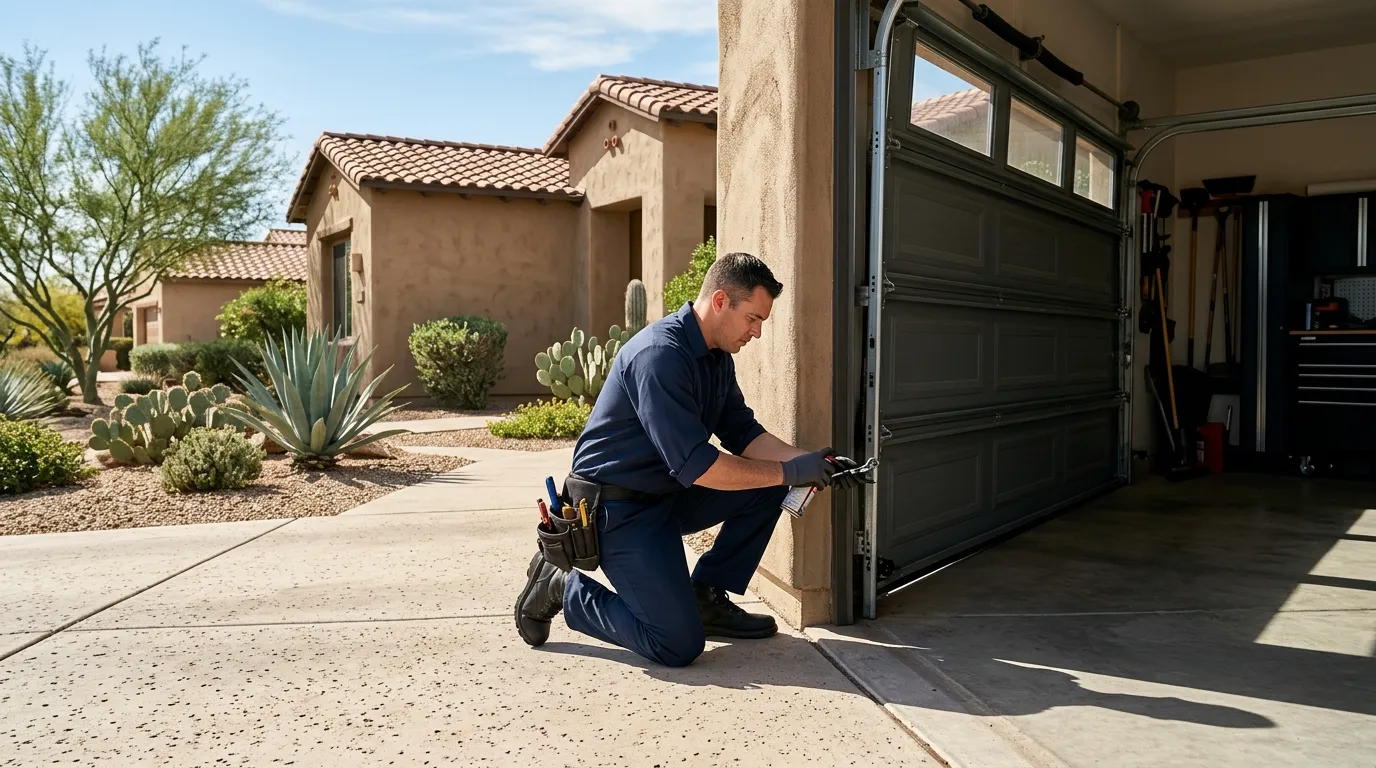
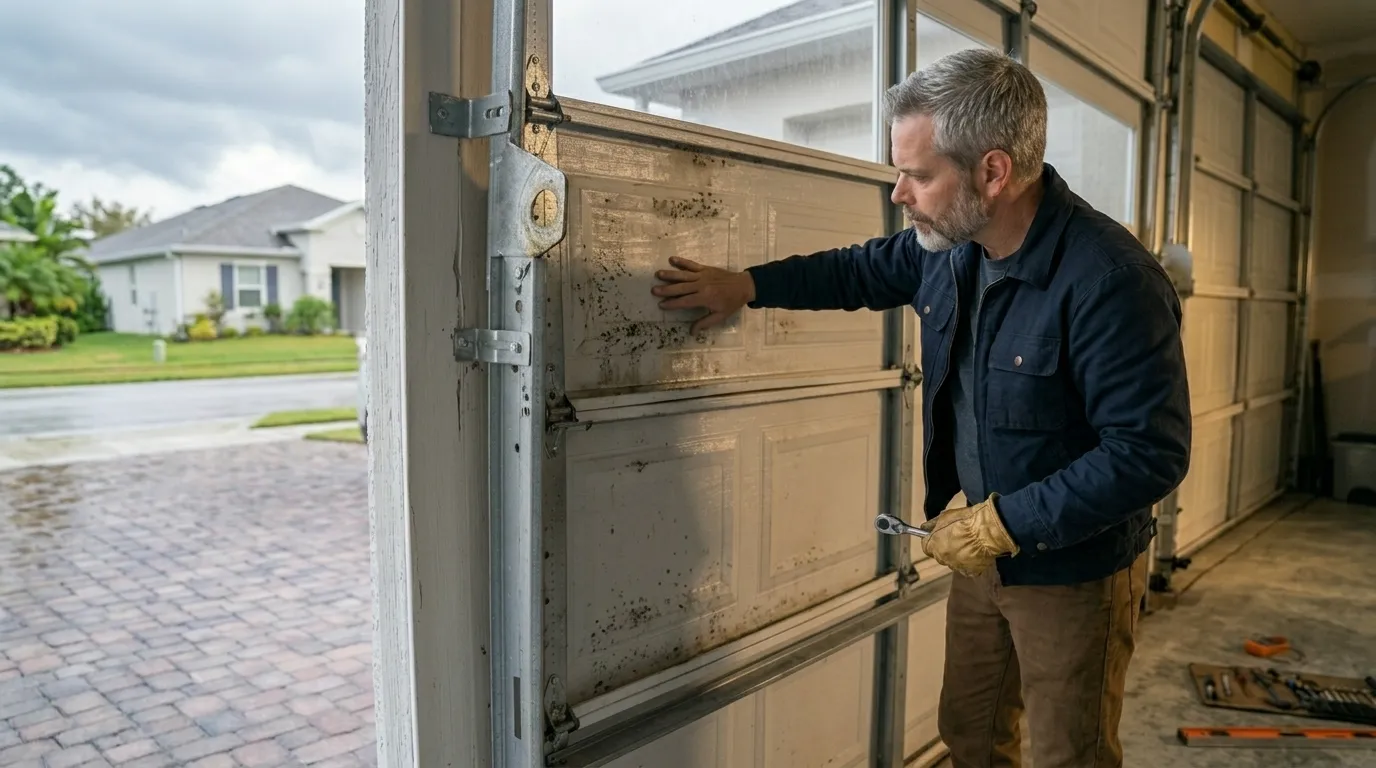
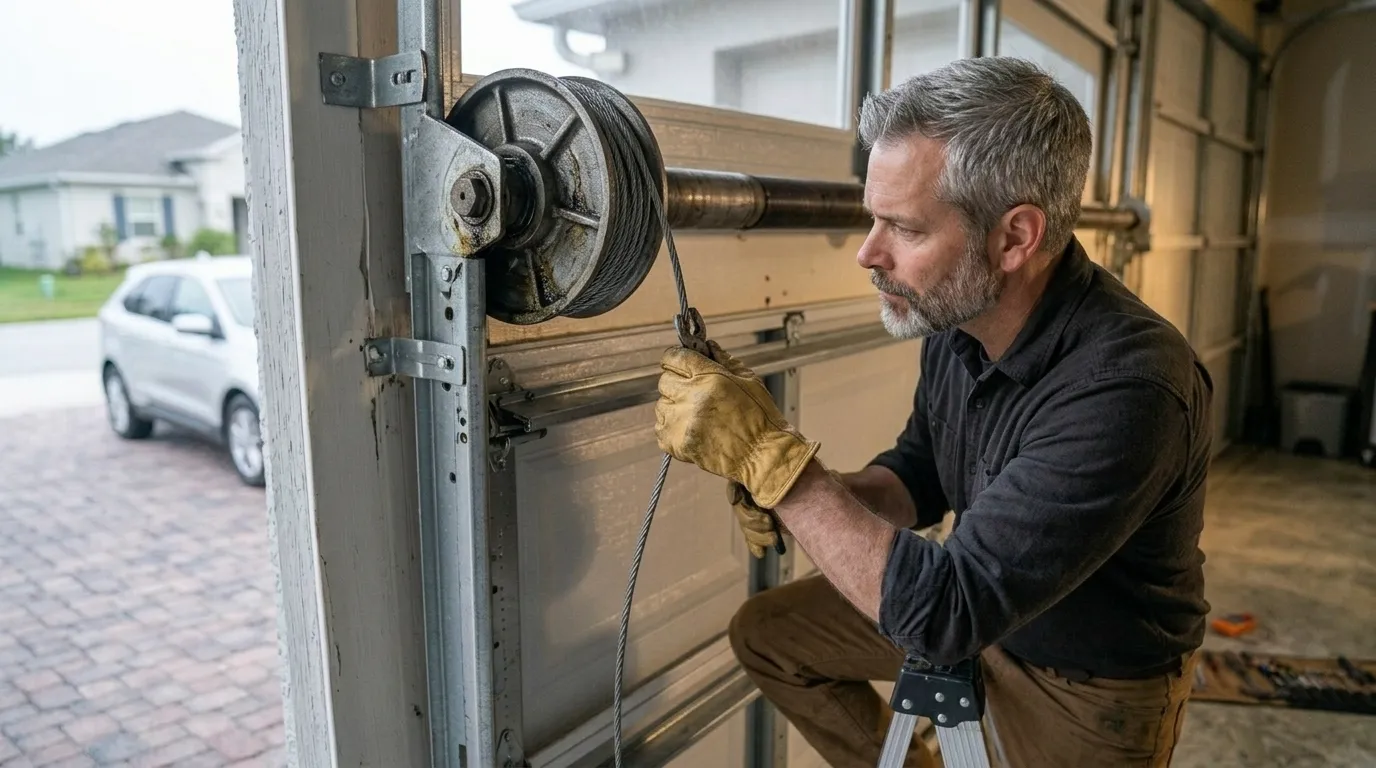
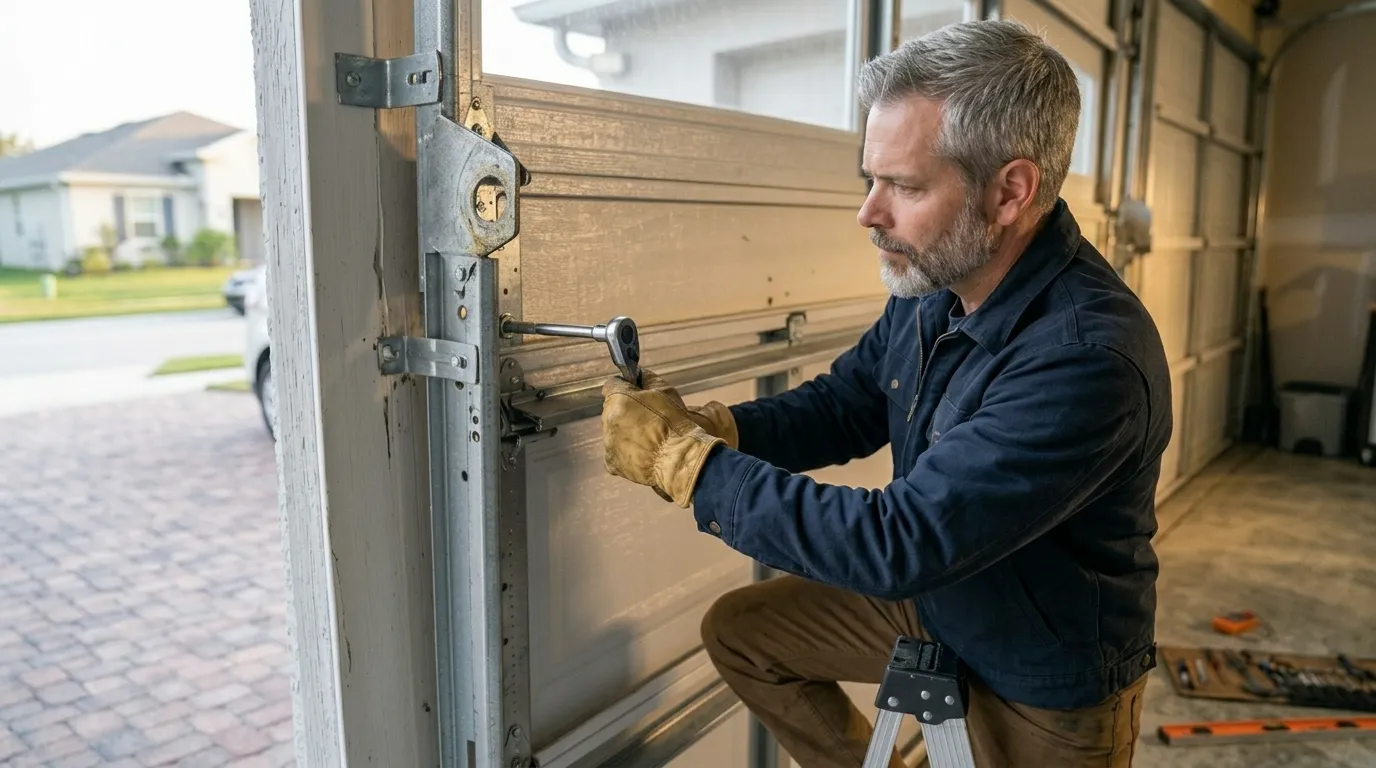
Most of the time this isn't one dramatic event. It's a roller that's been working loose for months, or a track bracket that's been pulling away from the framing a little at a time. By the time the door actually jumps the rail, the hardware has usually been telling you something for a while - a door that used to glide now shudders, or one side lags behind the other on the way up.
In Kansas City's service area, this shows up on both old original hardware and newer doors that got hung on tracks that were never quite plumb to begin with. Either way, once a door is off track, don't force it with the opener. Running the motor against a jammed panel is how a bent track becomes a bent track plus a stripped gear or a snapped cable.
Why This Fails Locally
This fault tracks closely with what's actually hanging in garage openings across the Kansas City area. Housing here mostly went up between 1951 and 2002, with the bulk of it - across the eighteen named areas in this service area - dating to the 1960s and '70s. That's original steel track, original brackets, and in a lot of cases hardware that's been repainted or patched instead of replaced since it went in.
The climate does the rest. Kansas City sits in a severe cold band, and track brackets anchored into framing that swells and contracts through hard freezes and summer heat cycles year after year work themselves loose faster than they would somewhere milder. A bracket that's fine in October can have an eighth-inch of play by February, and that's often the difference between a door that runs true and one that jumps the rail on a cold morning when the steel's stiff and the grease has thickened.
Put those two together - fifty-year-old hardware and a climate that keeps working the fasteners loose - and off-track calls cluster in exactly the pattern you'd expect: older sections of the metro, older doors, worse in winter.
What It Costs
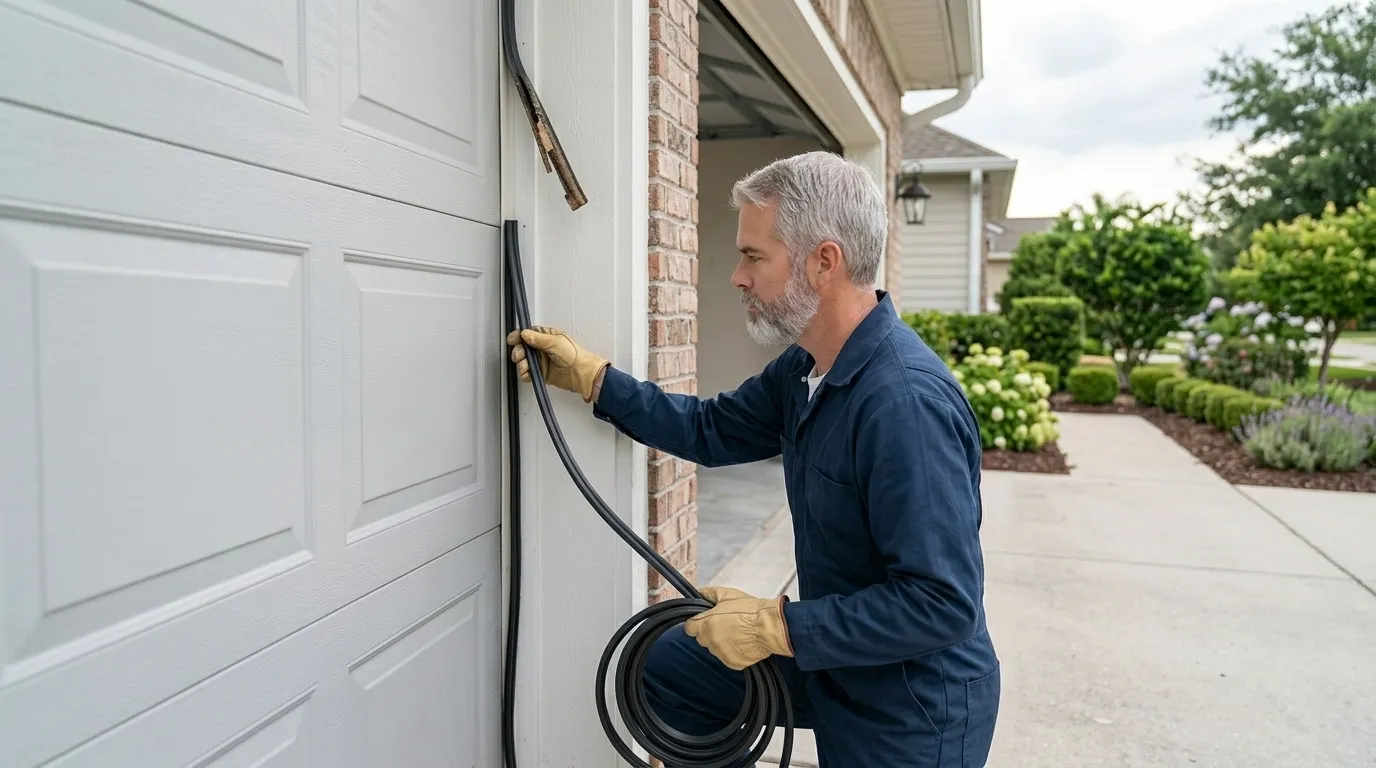
What you pay depends on which of the three problems above you actually have. A roller swap is a different job from re-anchoring a track bracket into solid framing, and both are a different job from replacing a bent section of track outright. We don't quote a number over the phone before someone's looked at the hardware, because guessing at it either lowballs you into a surprise or scares you off a job that's actually simple.
What we can tell you: the household income and housing numbers across this service area put most jobs here in line with what you'd expect for routine hardware repair, not full door replacement, unless the panel itself got bent in the jam. If it's just rollers and a bracket, that's a short call. If the track's cracked or the door's warped, that's a bigger conversation, and we'll say so before we start rather than after.