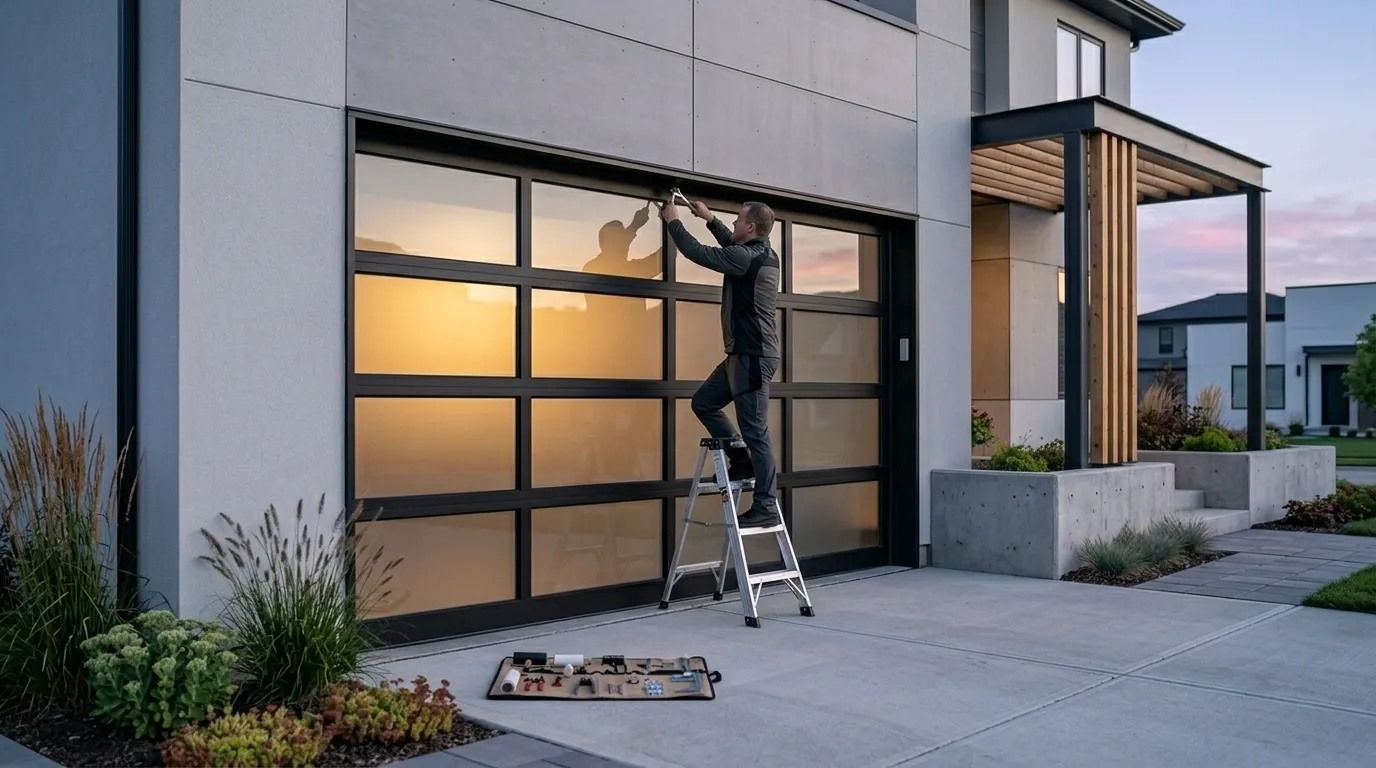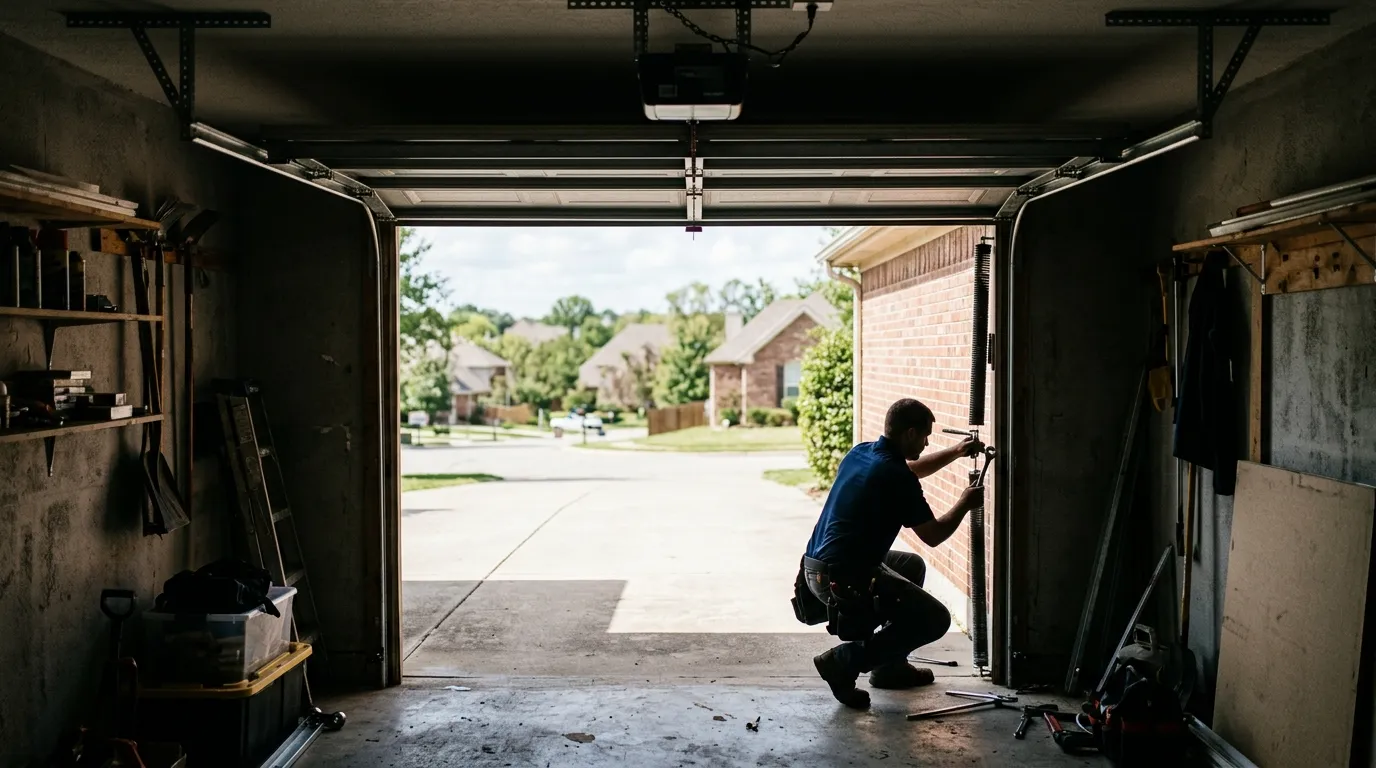
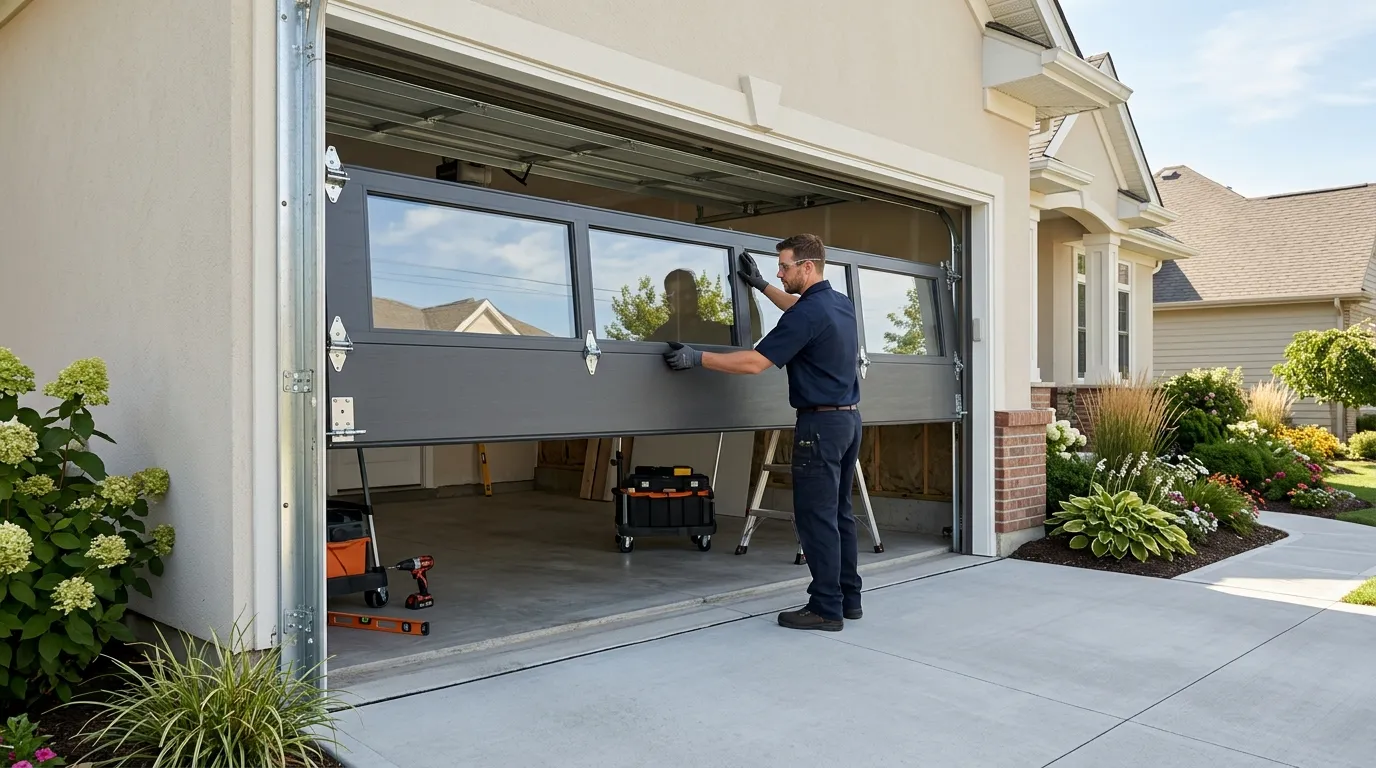
How It Shows Up
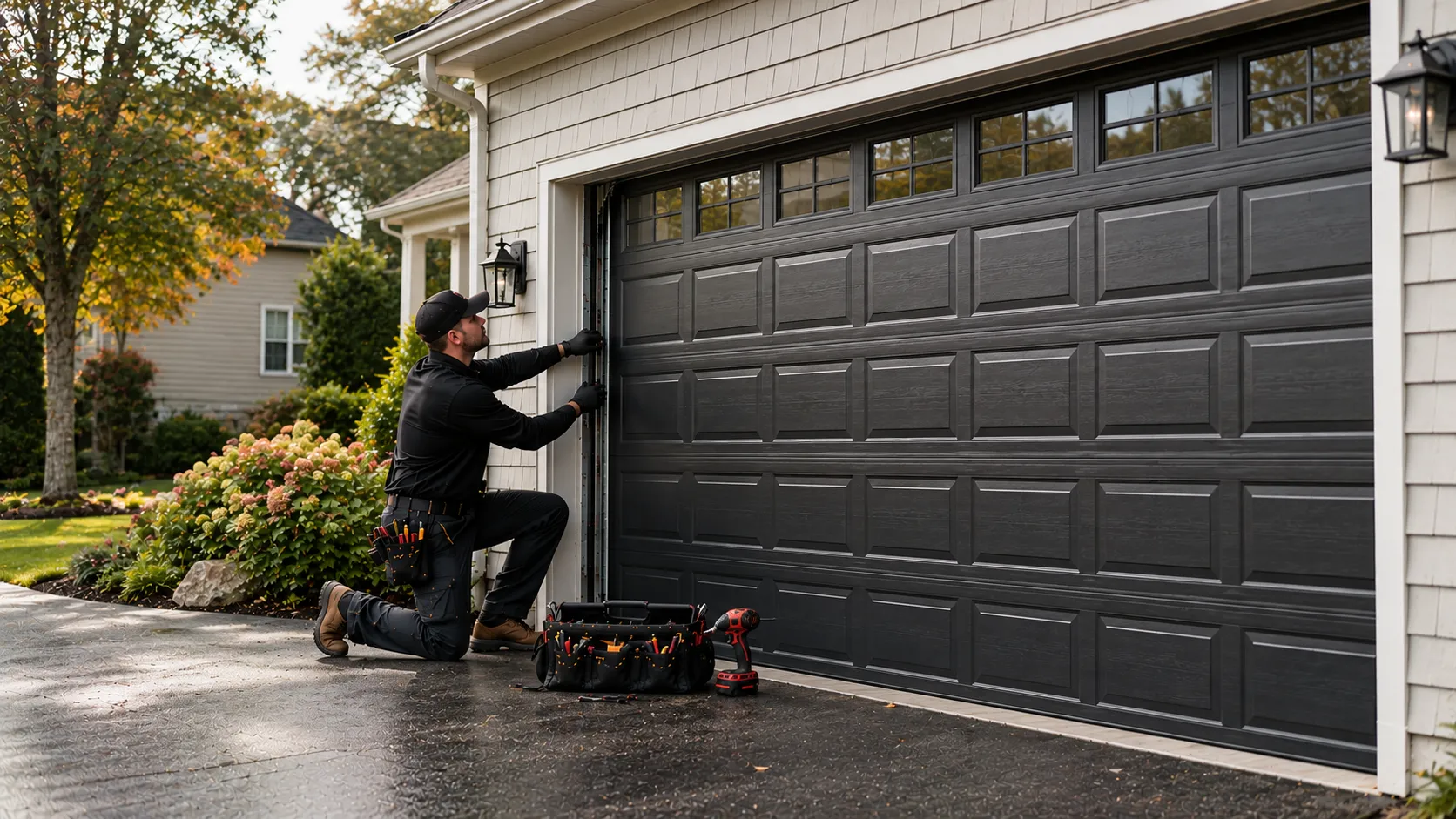
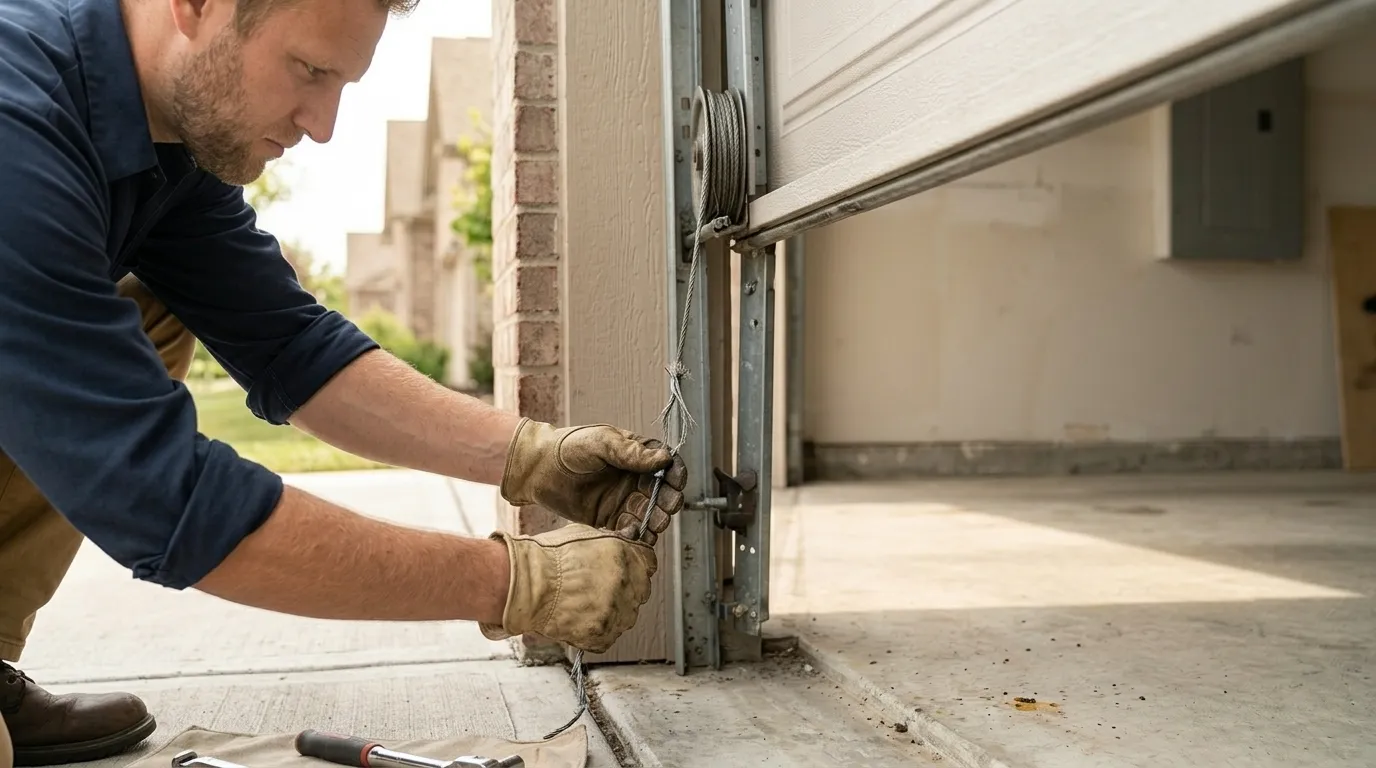
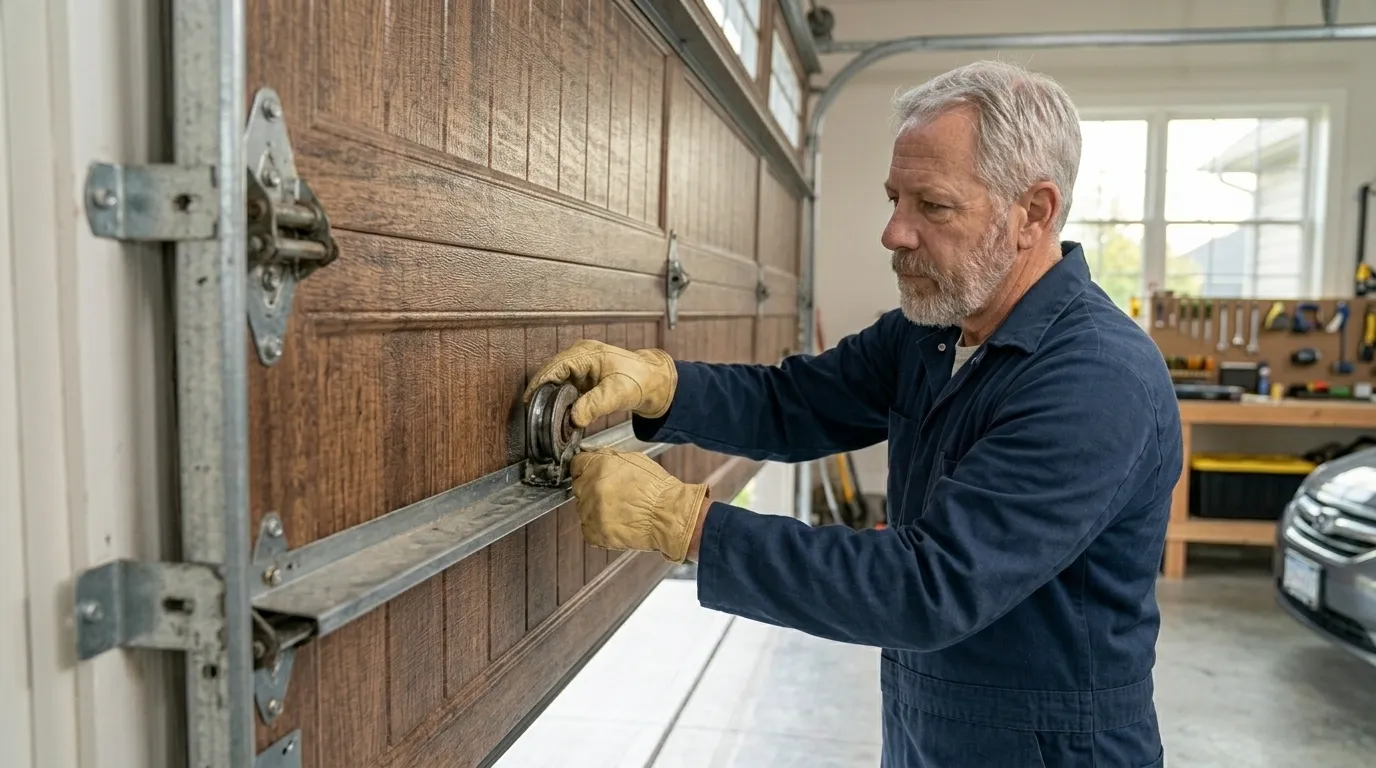
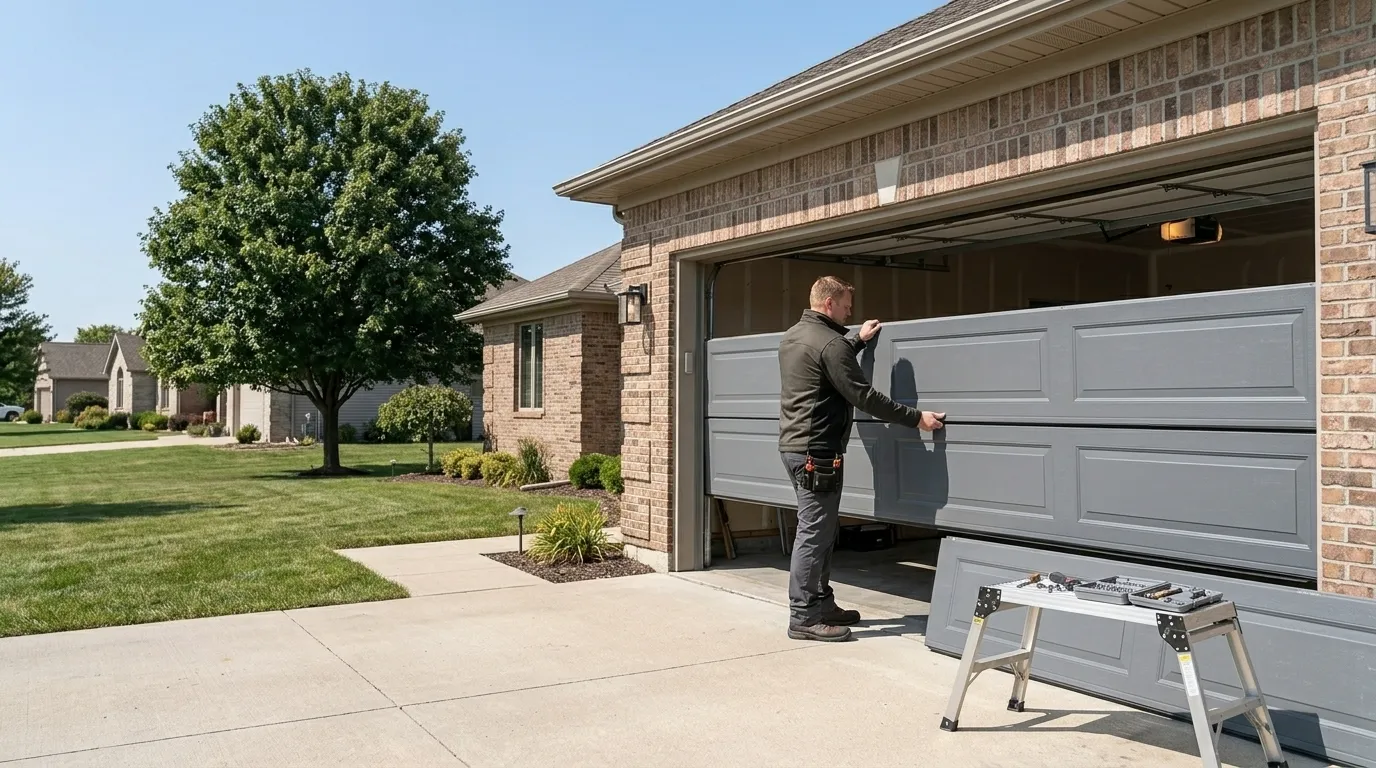
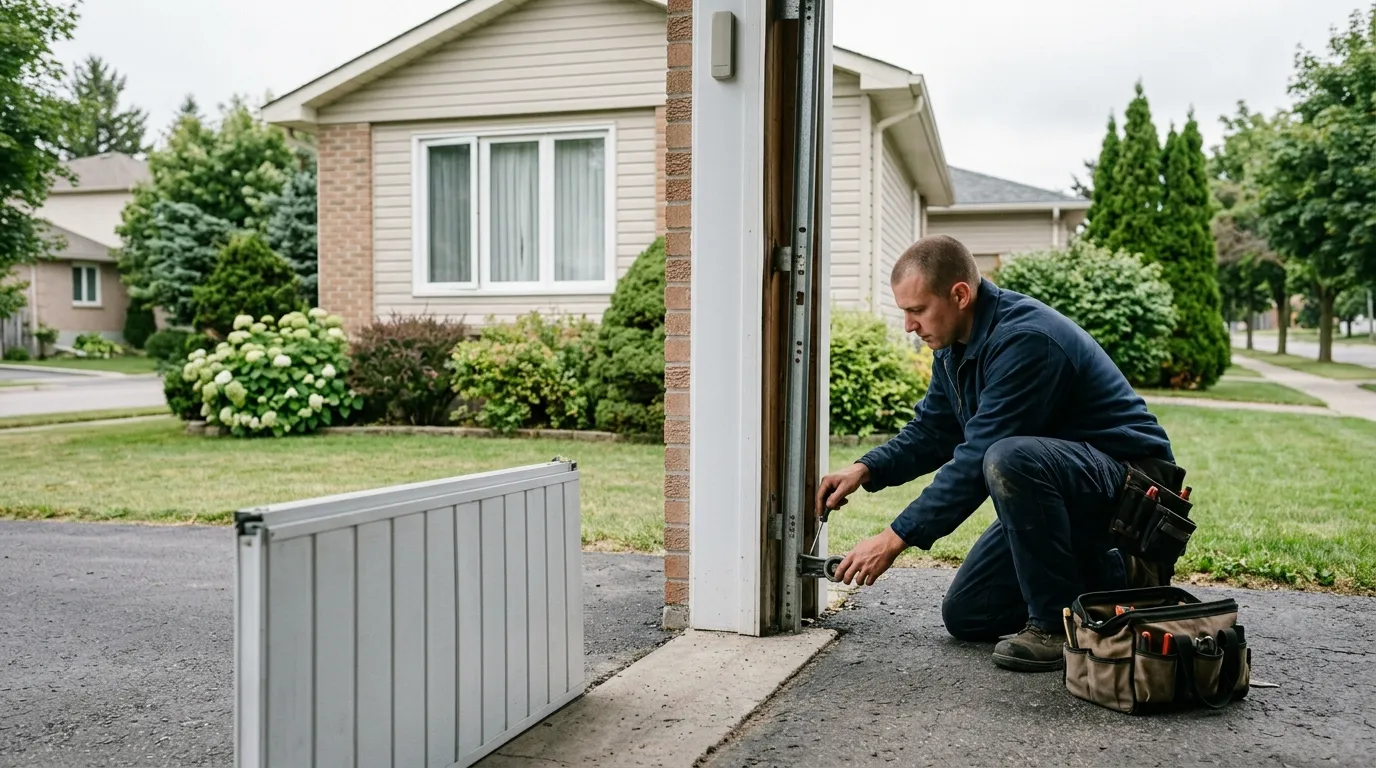
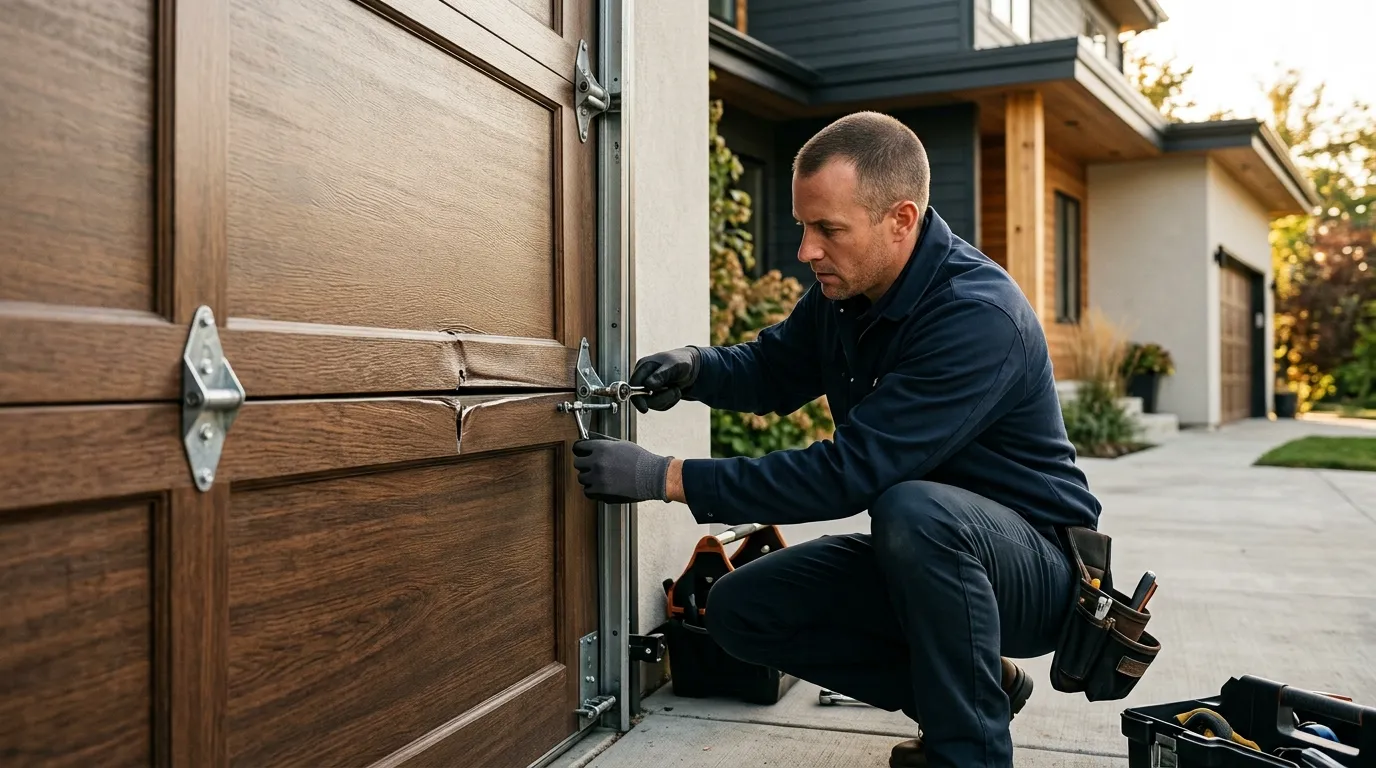
A cable failure on a garage door almost never happens quietly. You hit the opener button and the door drops crooked, hangs at an angle, or stops a foot off the ground with one side lower than the other. Sometimes you'll see it before it fails completely - frayed strands poking out near the bottom bracket, or a cable that's slipped off its drum and bunched up in a loose coil. On a two-car door, a single snapped cable usually means the other side is still under load and trying to lift a door that's no longer balanced, which is how a door gets bent or a track gets pulled off the wall in the same afternoon.
Across Kansas City's housing stock - most of it built between 1951 and 2002, with a lot of neighborhoods still running 1960s and '70s-era hardware - the cables we pull off jobs are often the originals, or a mismatched replacement from a prior repair that didn't match gauge or length. That's the pattern we see across the service area, not just one house type: an aging cable that's been carrying an aging spring's load for decades finally lets go.
If your door only came down partway and stopped, or came down fast and hit the floor, that's cable failure territory, not just an opener glitch. Don't run the opener again once you notice sag or a crooked drop - that's how a cable finishes fraying and takes a finger or a bracket with it.
Why This Fails Locally
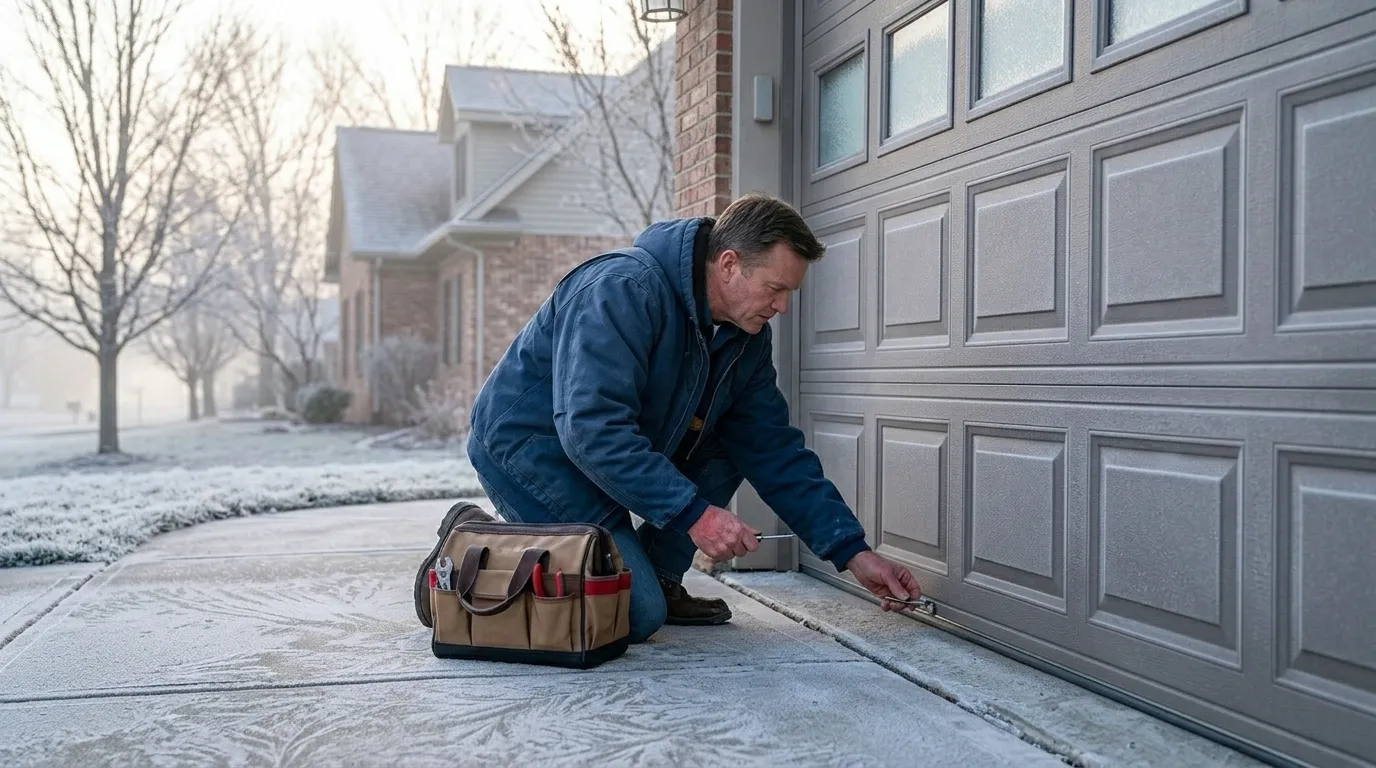
Kansas City sits in a severe cold climate band, and that matters for cable life more than most homeowners realize. Steel cable and the galvanized coating on it contract and expand through hard freeze-thaw cycles every winter, and moisture that gets into a cable's core during a thaw and then freezes again works the strands apart from the inside. On a door that's already 20, 30, or 40 years old - common across this housing stock, where the median build year sits around 1973 - that cycle has had decades to do its work.
Add to that the sheer number of houses running original or near-original hardware. With over 52,000 owner-occupied houses across this service area built mostly in the 1950s through the 1970s, a lot of garages are still on the cable gauge and drum size that shipped from the factory, sized for a door that's since had insulation or a heavier replacement panel added - extra weight the original cable was never rated for. That mismatch, combined with cold-cycle fatigue, is why cable failure shows up as a seasonal pattern here rather than a random one.
What It Costs
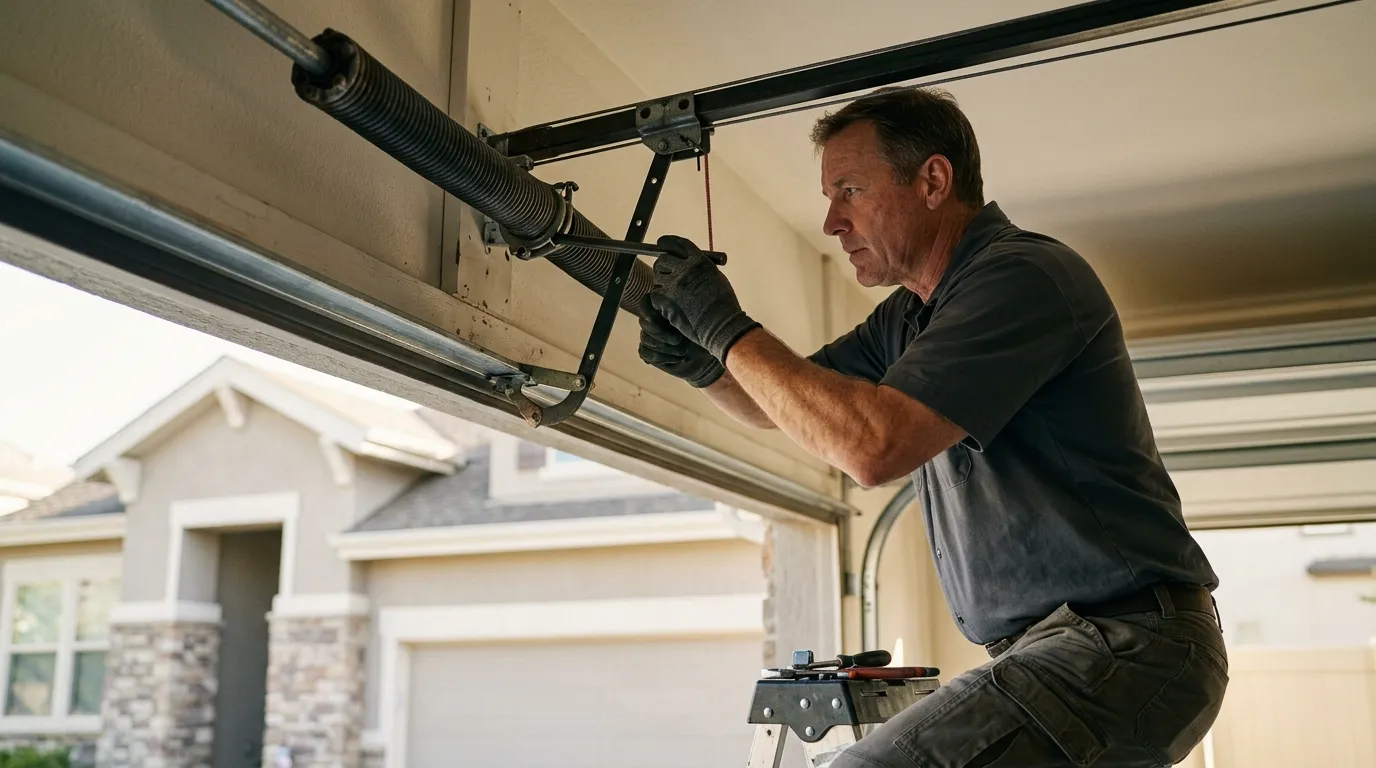
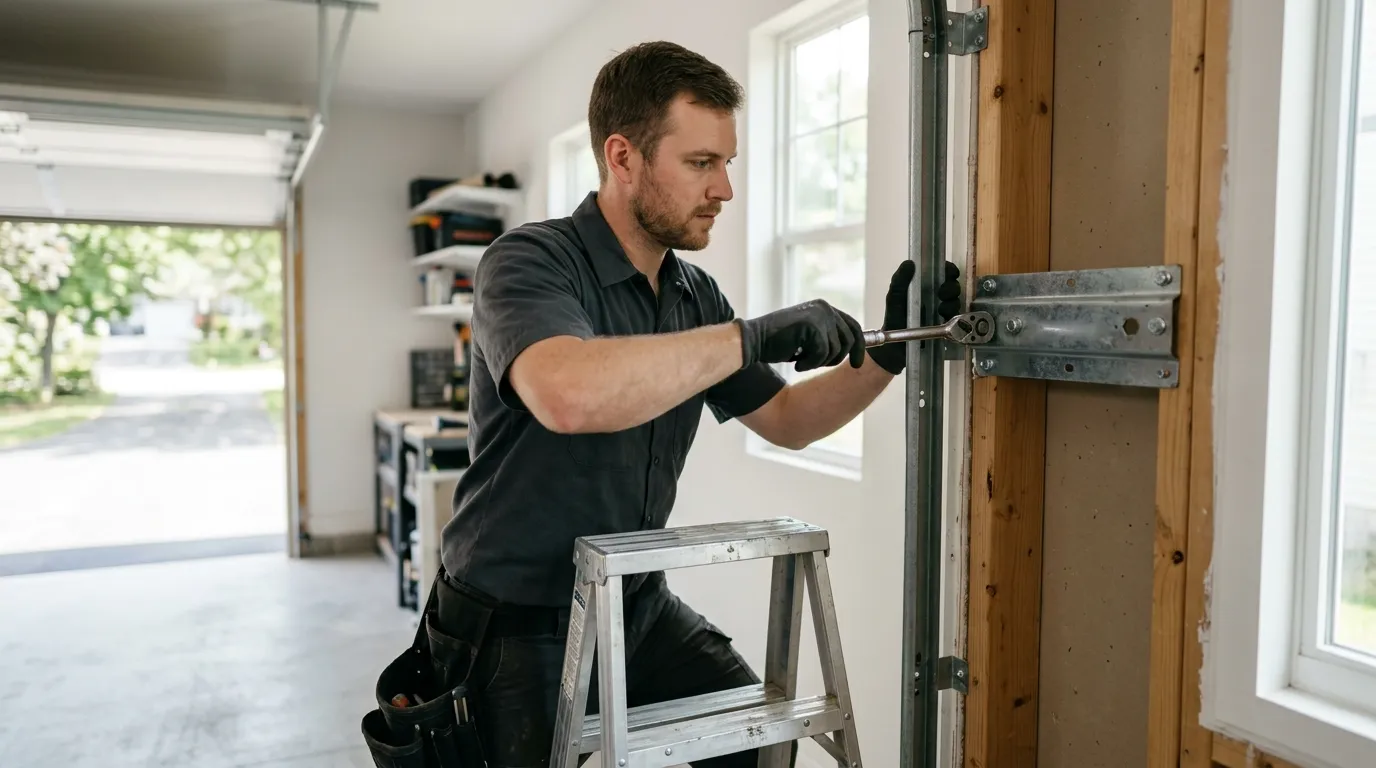
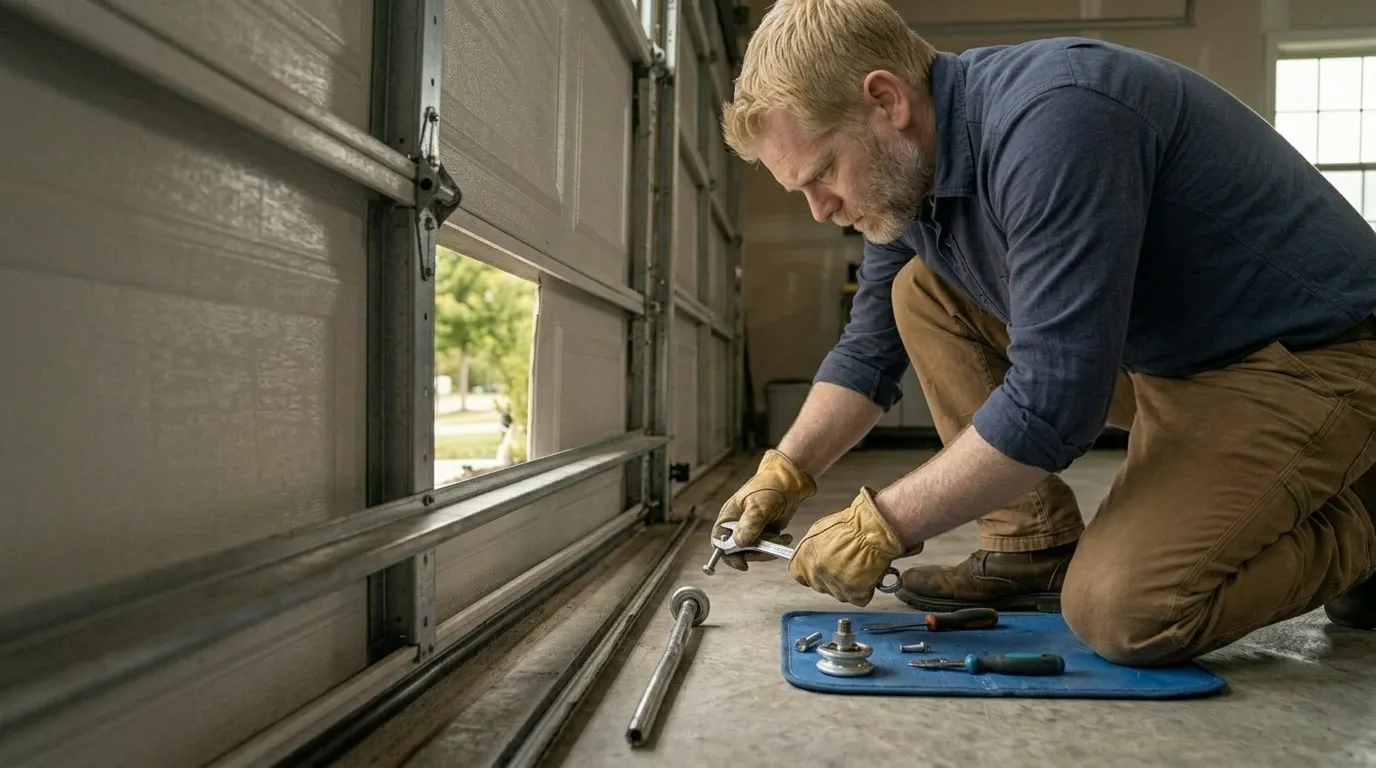
Cable repair cost depends mostly on three things: whether it's a single-car or double-car door, whether the drums or bottom brackets need replacing along with the cable, and whether the spring that was under load when the cable broke also needs attention. A clean cable-and-drum job on one door is a different job than one where a bent track or a fatigued spring got pulled into it at the same time.
We won't quote a number over the phone without seeing the door, because guessing low and then adding to it once we're on-site is how homeowners get burned on this kind of repair. What we will tell you upfront: if your door is original to a house built in the 1950s through '70s, budget for drum or bracket wear in addition to the cable itself - reusing worn hardware under a new cable is a repair that doesn't last.