When It Stops Being a DIY Job
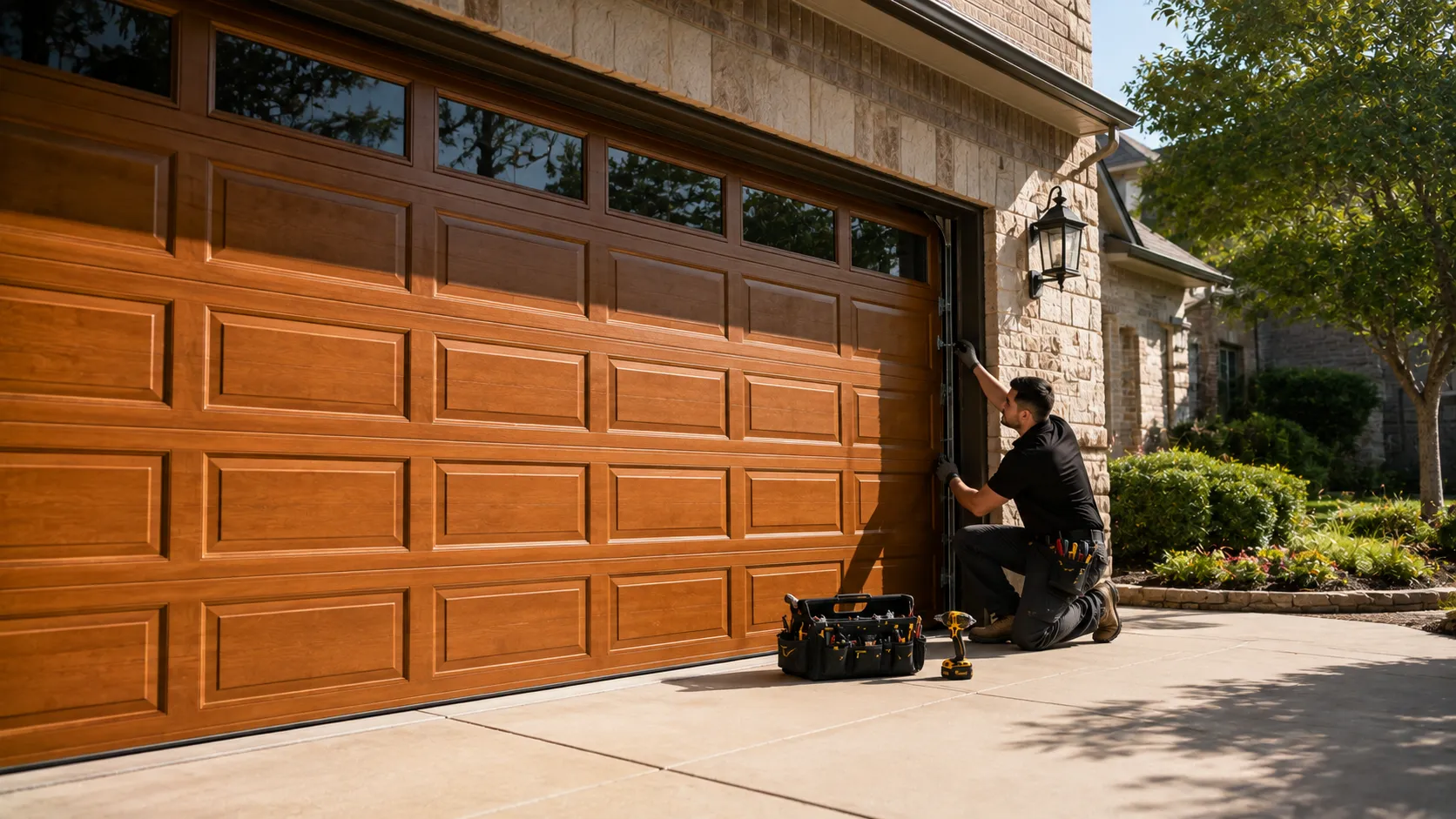
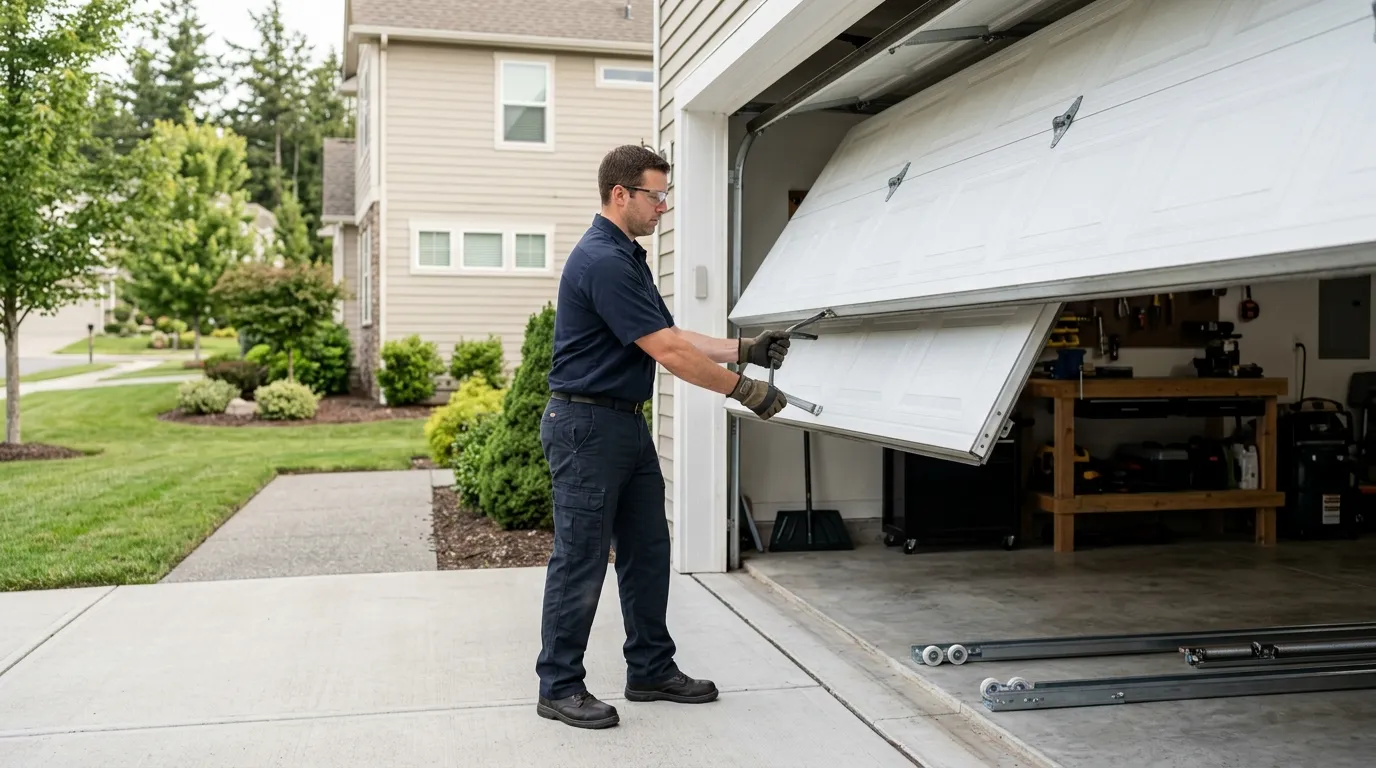
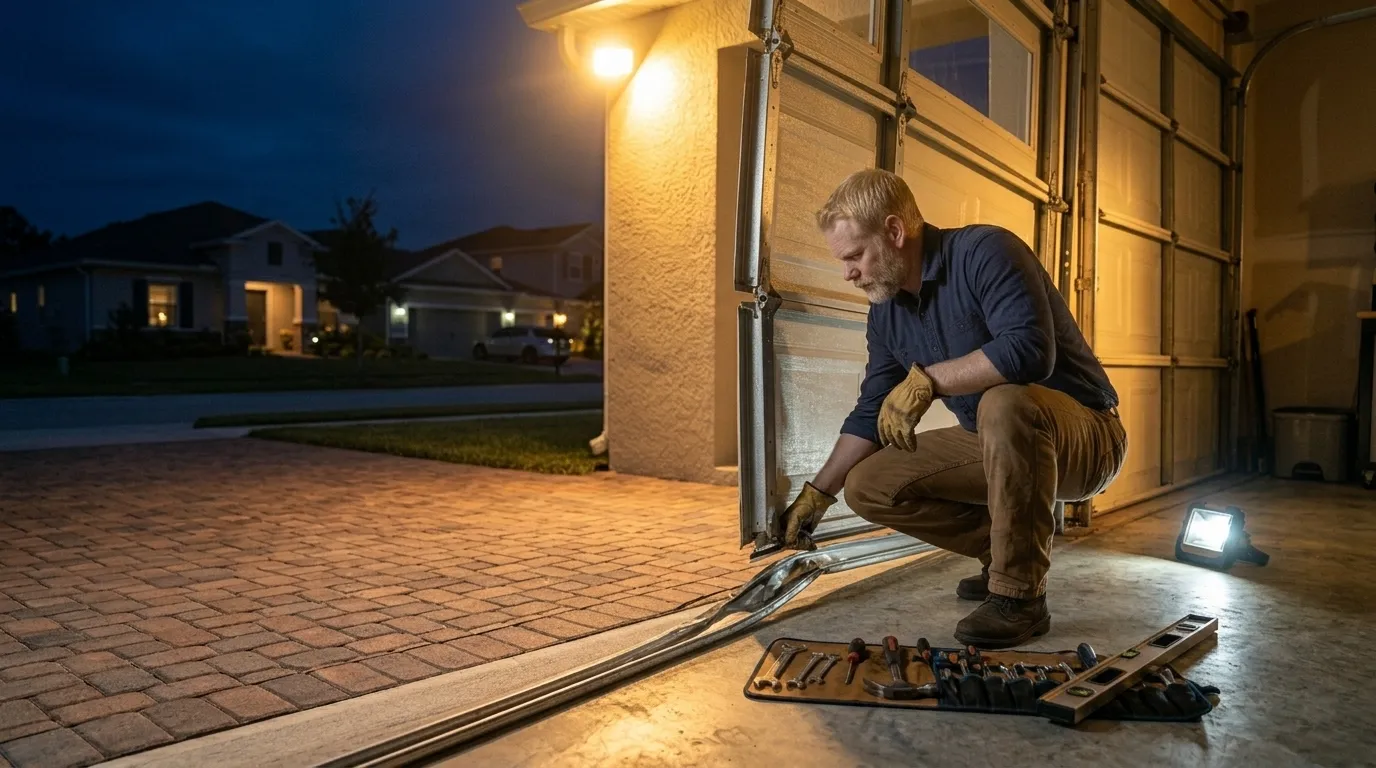
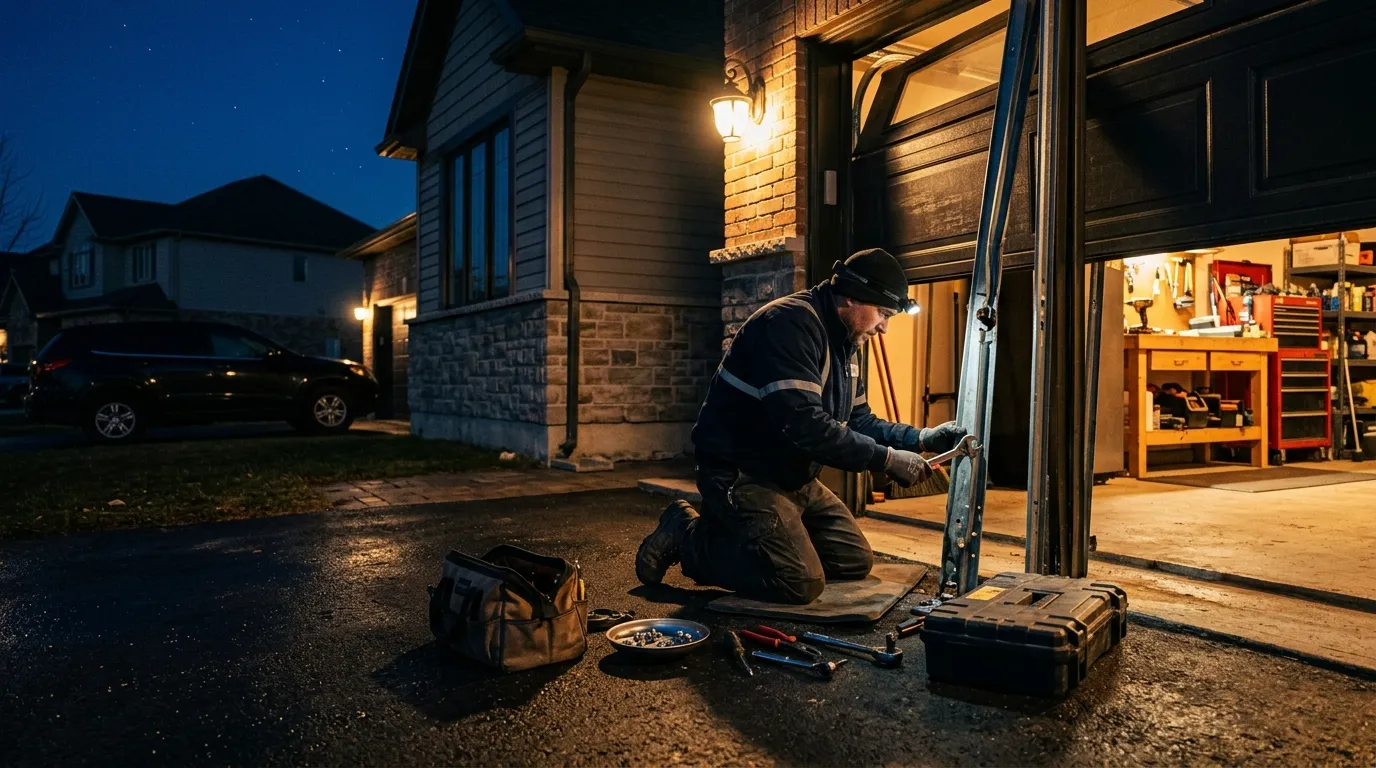
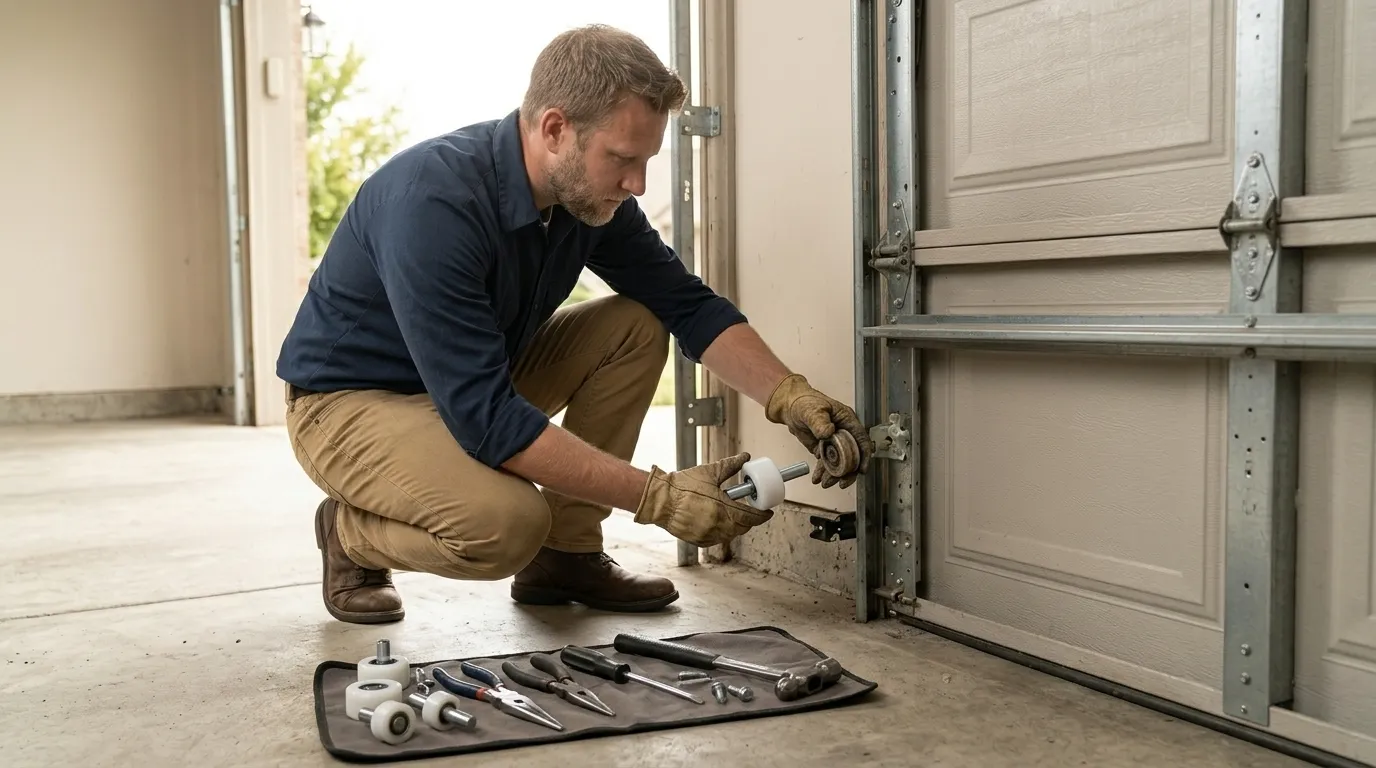
A squeak you can fix with a can of lithium grease is one thing. A grind, a bang, or a loud pop when the door starts moving is another. Kansas City area homes mostly date to between 1951 and 2002, with the median build year sitting around 1973, and a lot of that stock clustered in the 1960s and 70s across the neighborhoods this company covers. That matters because a house built in 1965, on the older end of that range, is more likely to have a torsion spring sized for a door that's since been replaced with a heavier insulated one, or original rollers that were never swapped for nylon. Grinding usually means metal on metal where there shouldn't be any - a roller worn down to its bearing, or a spring coil rubbing the shaft. That's not a lubricant problem. Popping when the door lifts, especially on a double door, is often a spring under the wrong tension for its current load, and that's a two-person job with a winding bar, not a Saturday project. If the noise happens right as the door starts or stops rather than the whole time it moves, that's usually the opener's gears, not the door itself - different repair, different cost. Anything involving the torsion spring assembly on top of the door is where DIY stops making sense; the stored force in that spring can put someone in the hospital.
The Situation
Across the areas this company covers - from North Kansas City a mile out to twenty miles east, and through Gladstone, Raytown, and the closer-in neighborhoods like Midtown-Westport - the housing stock is overwhelmingly 1960s and 70s construction. With 52,855 owner-occupied houses spread across roughly 103,053 households in the service area, most of them sitting on garage door hardware installed well before 2002, a grinding or popping noise is rarely a one-off. It's usually the predictable end of a spring's lifespan or a roller that's finally worn through, on a door that's been doing its job quietly for decades until now. The variety of build eras across these 18 named areas means the fix isn't uniform: a house in one of the newer pockets might just need a lube job and a tension adjustment, while a place with its original 1960s door assembly might need the spring, the cable, and the rollers replaced together, because parts that age tend to fail in sequence, not isolation. There's no single average repair here - the housing age varies enough across this footprint that the right move depends on what's actually on the door, not on a general rule of thumb.
What Most People Get Wrong
The most common mistake is spraying WD-40 on a noisy spring or track. It quiets things down for a week and then attracts dust, which grinds into the coils and makes the noise worse than before - a garage door needs a silicone or lithium-based grease made for the job, not a water displacer. The second mistake is waiting. A popping or grinding noise on an older torsion spring, common on the 1960s and 70s doors that make up so much of this area's housing, tends to get louder for weeks before the spring actually breaks, and by then the door is stuck shut or dangerously easy to slam down. A median household income of $69,680 here means most owners are weighing a modest tune-up against a much larger spring or panel job, not writing a blank check, so putting off a look at a noisy door often turns a $150 fix into a $500 one. Here's the honest limit: not every noisy door is worth fixing. If the panels are rusted through or the track is bent beyond adjustment on a door that's already fifty years old, replacement is usually cheaper over five years than chasing repairs on a frame that keeps failing in new places.