How It Shows Up
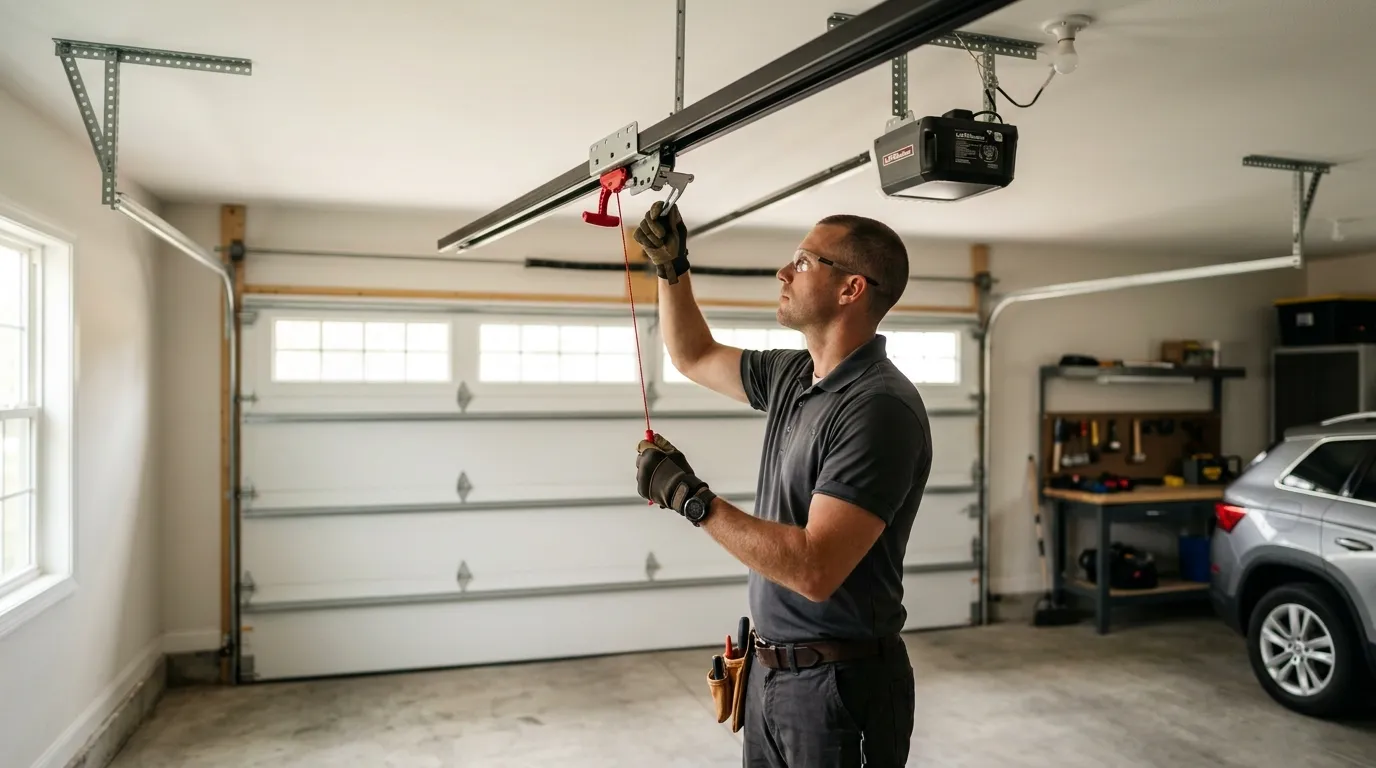
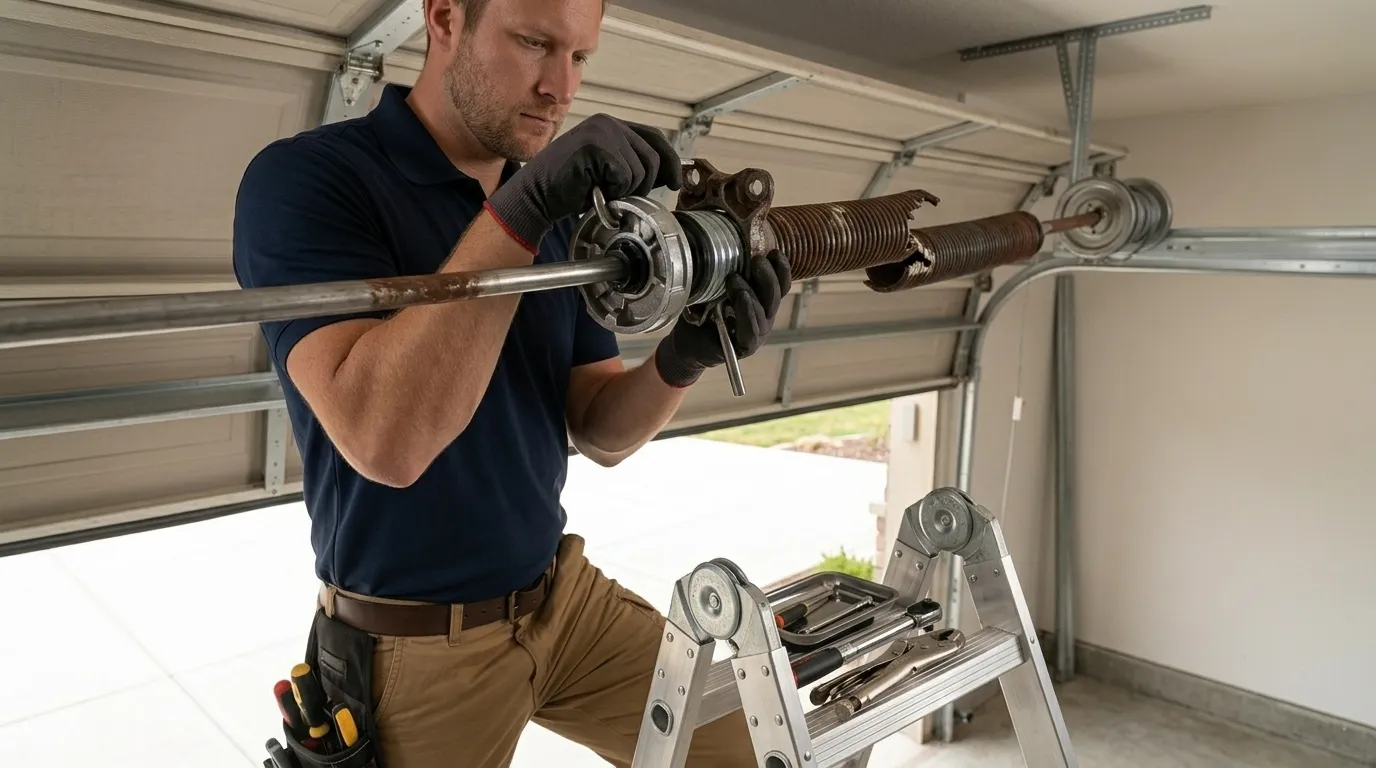
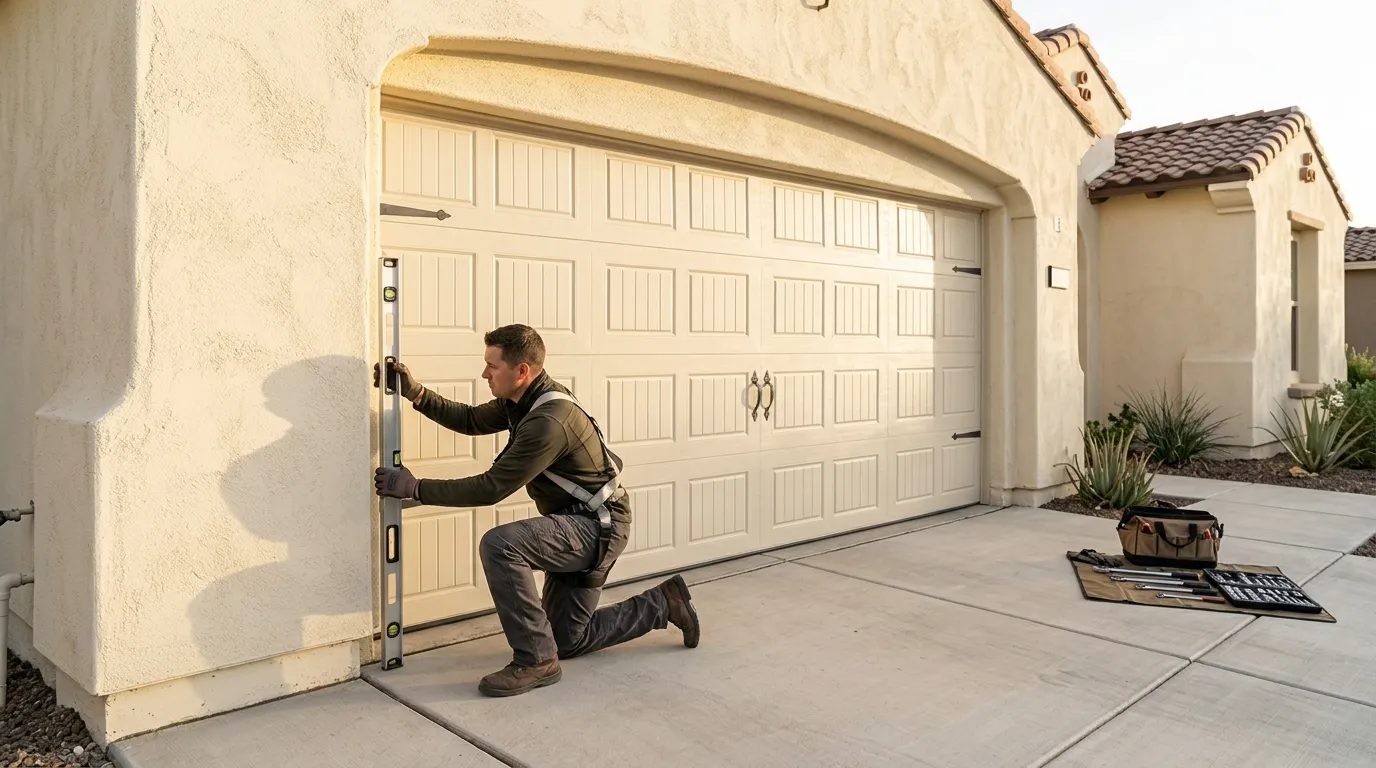
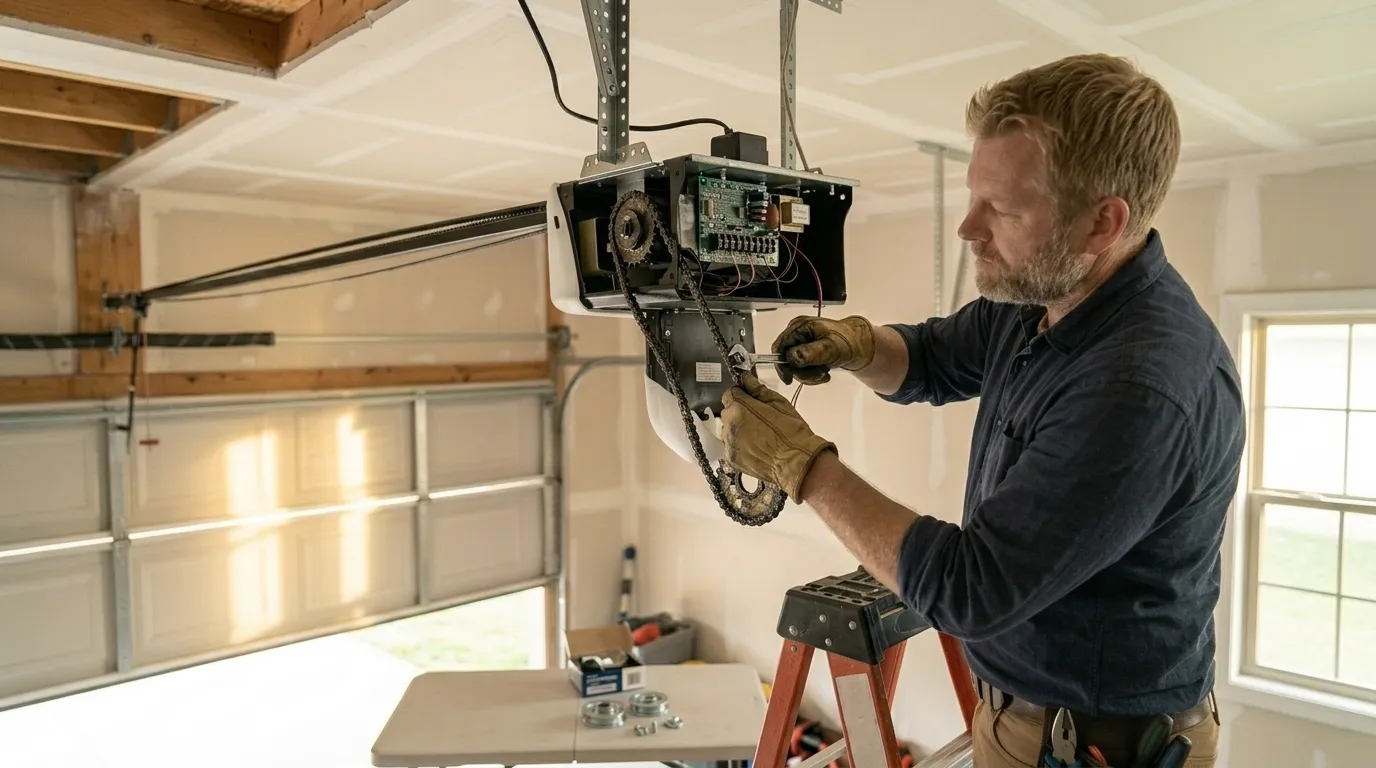
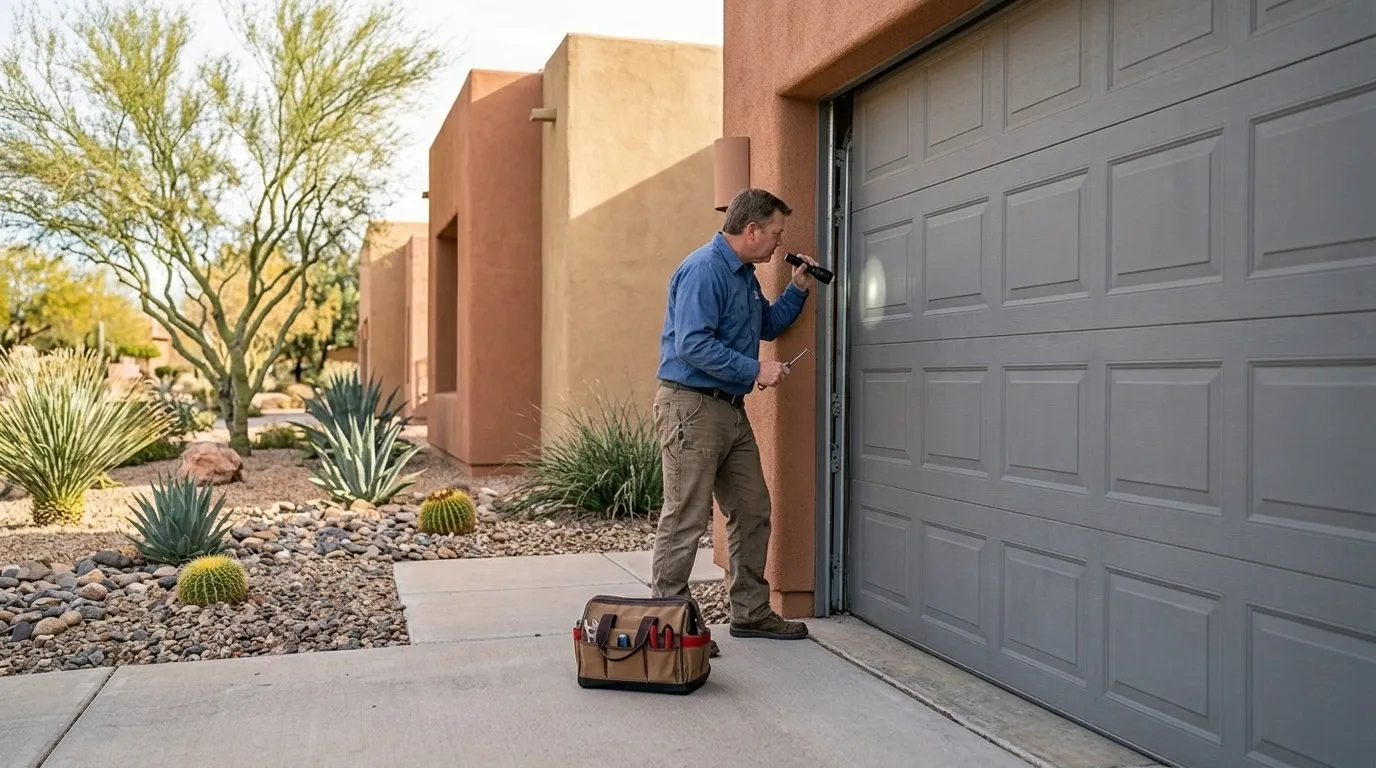
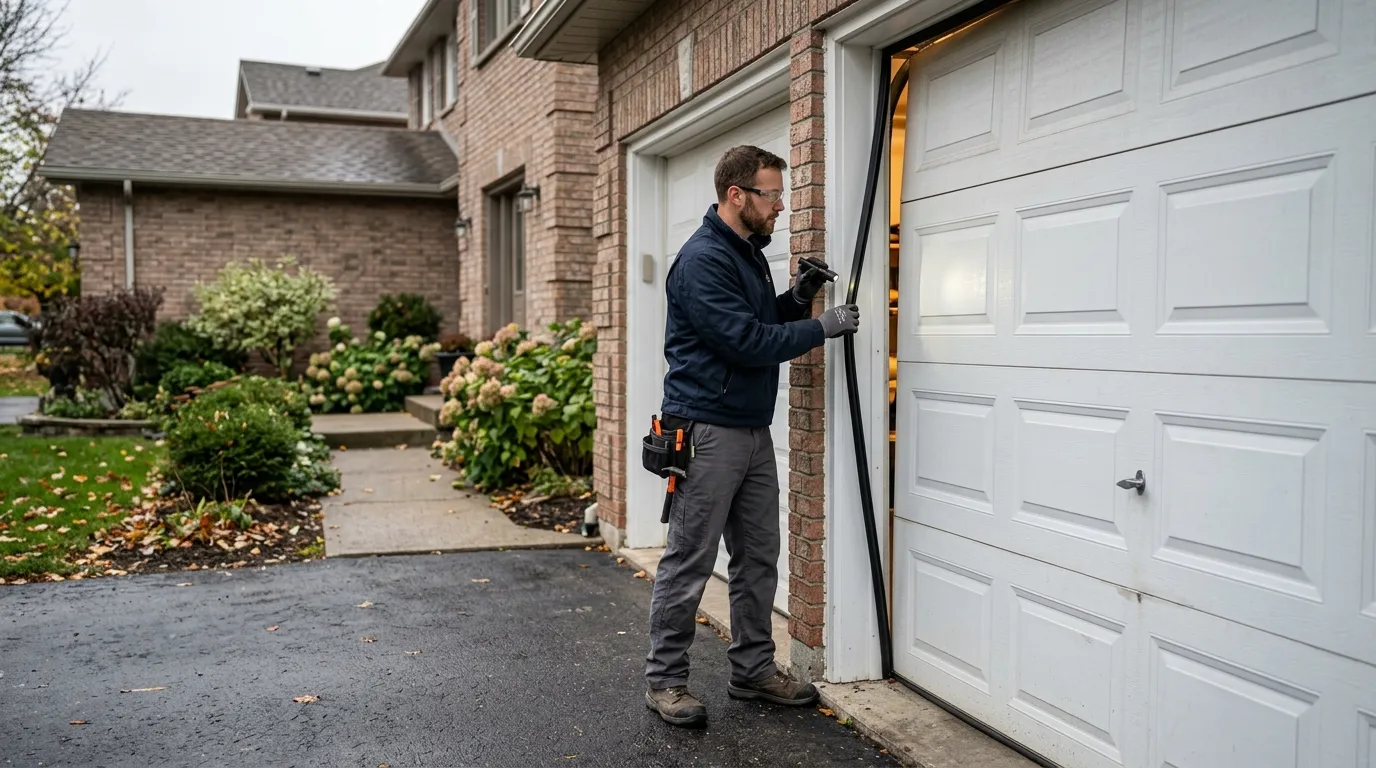
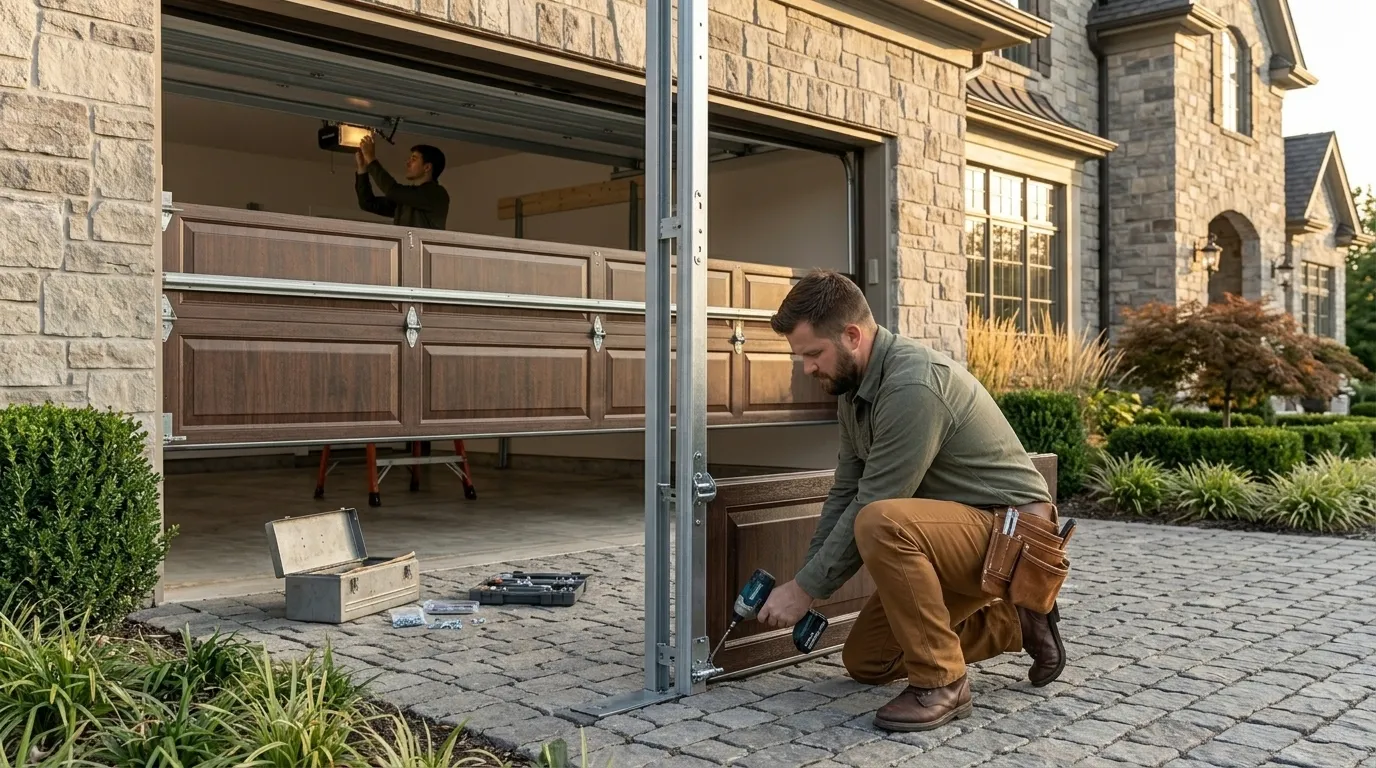
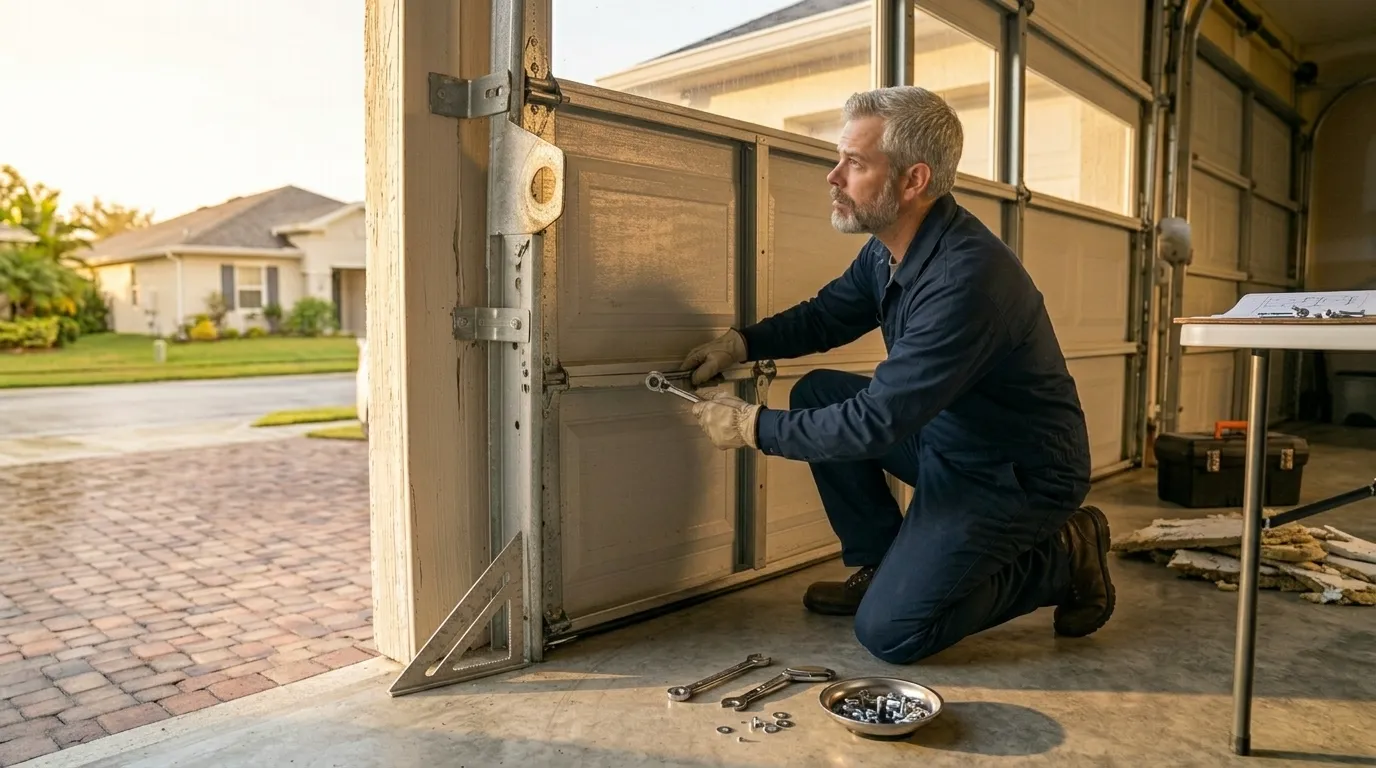
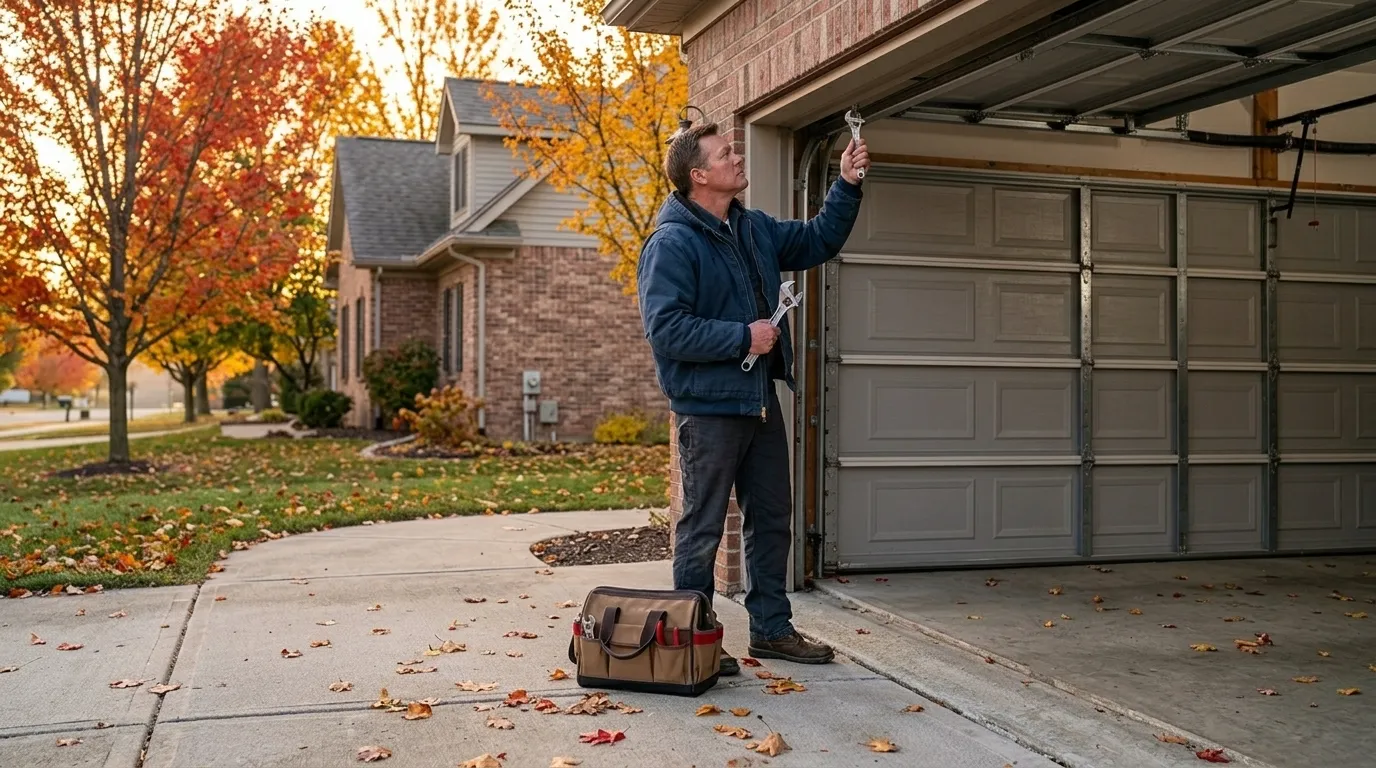
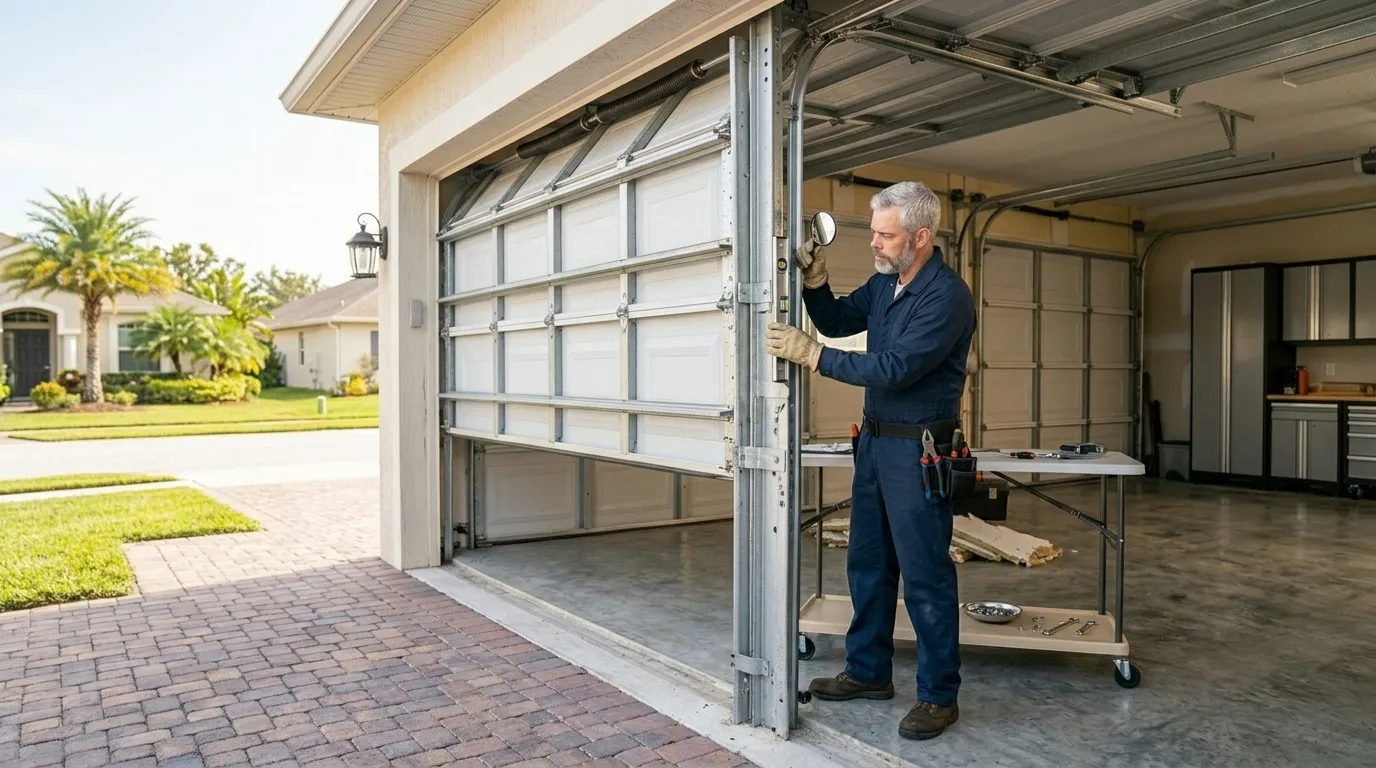
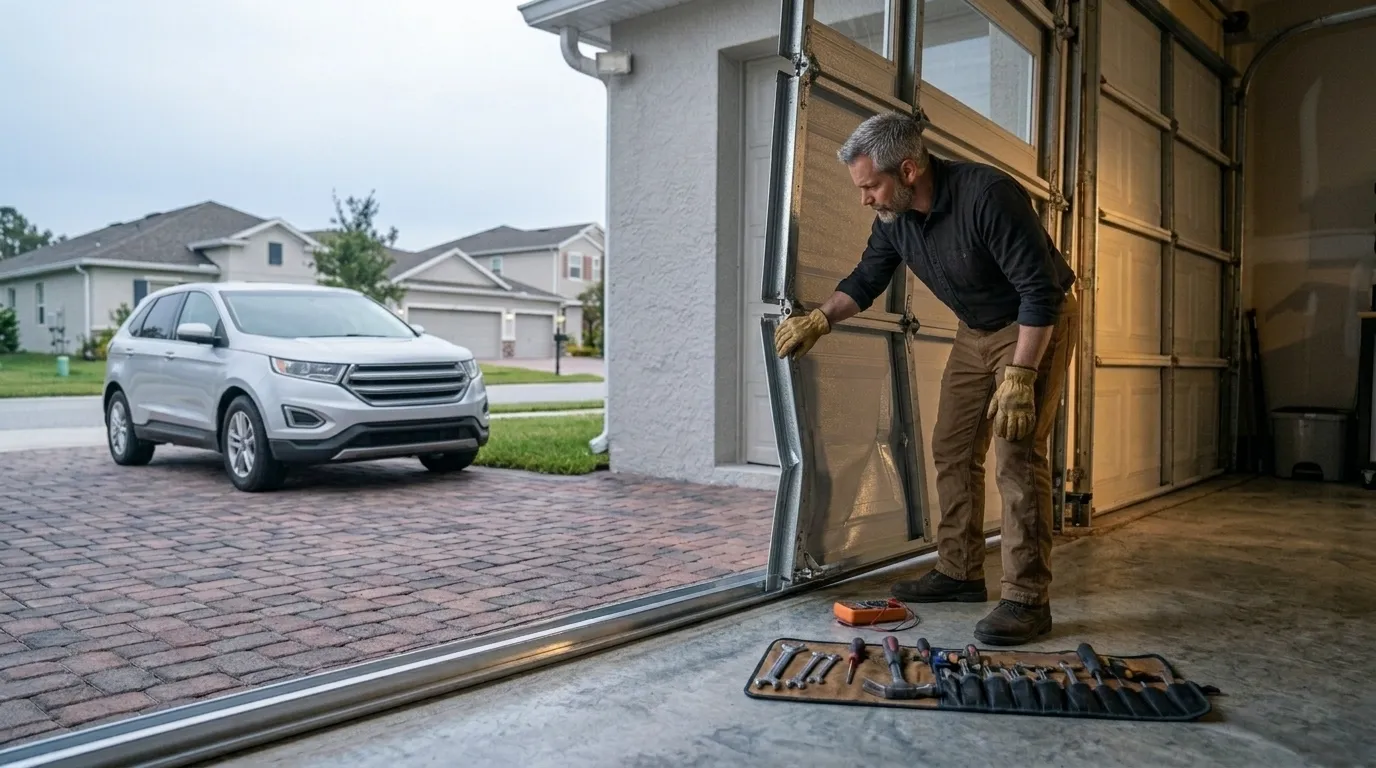
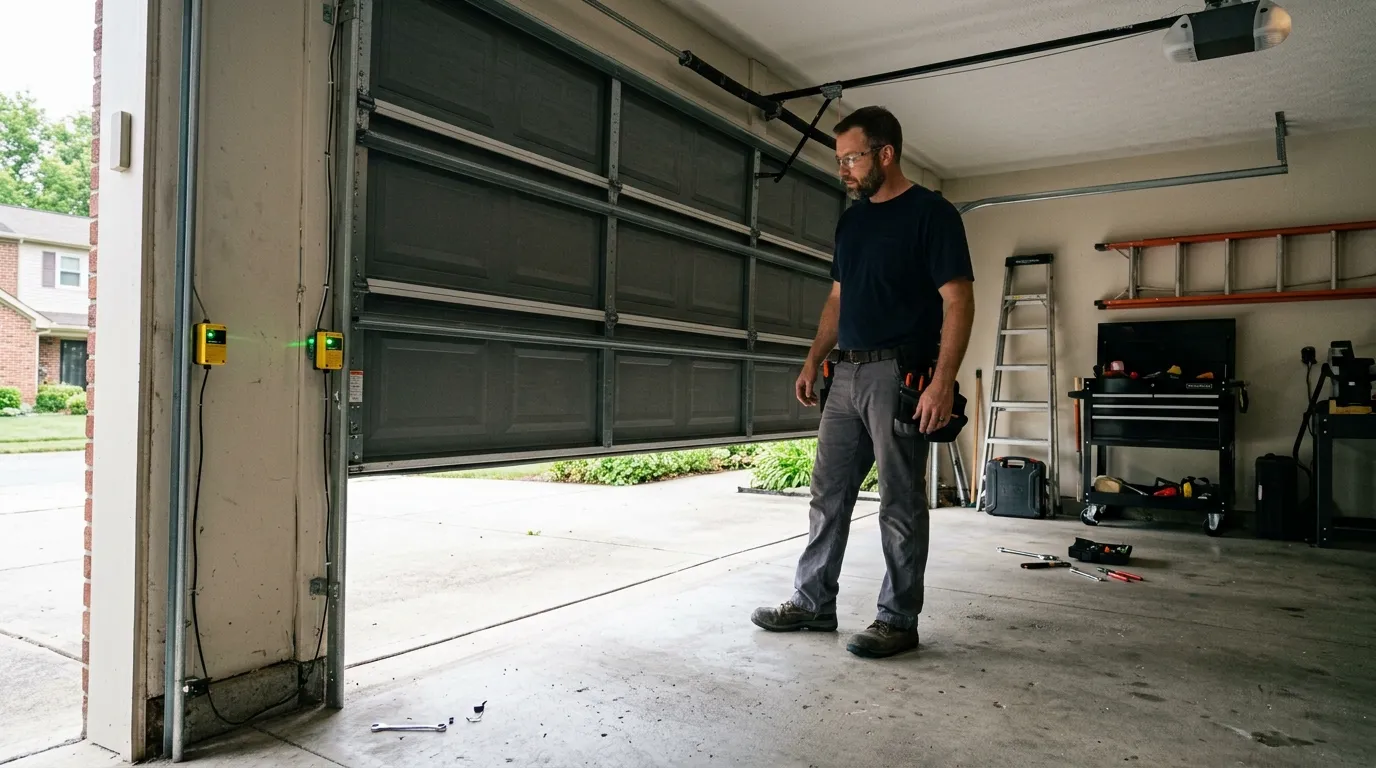
Most emergency calls we get start the same way: the door won't open, or it opens halfway and stops dead. Sometimes it's a snapped torsion spring - you'll hear a bang from the garage, often first thing on a cold morning. Sometimes it's a cable that's jumped the drum, leaving one side of the door hanging lower than the other. Openers fail too, usually the drive gear stripping out or the logic board losing track of the door's position after a power blip. In houses built through the 1960s and 70s - which describes a lot of the stock across this service area - the failure is often the original hardware finally giving out after decades of use, not something new gone wrong. A door that's off its tracks after a bent roller is another common one, especially on doors with steel rollers instead of nylon. None of these are 'wait until Monday' problems. A door stuck open is a break-in risk and a heat-loss problem; a door stuck shut with a car trapped inside is worse.
Why This Fails Locally
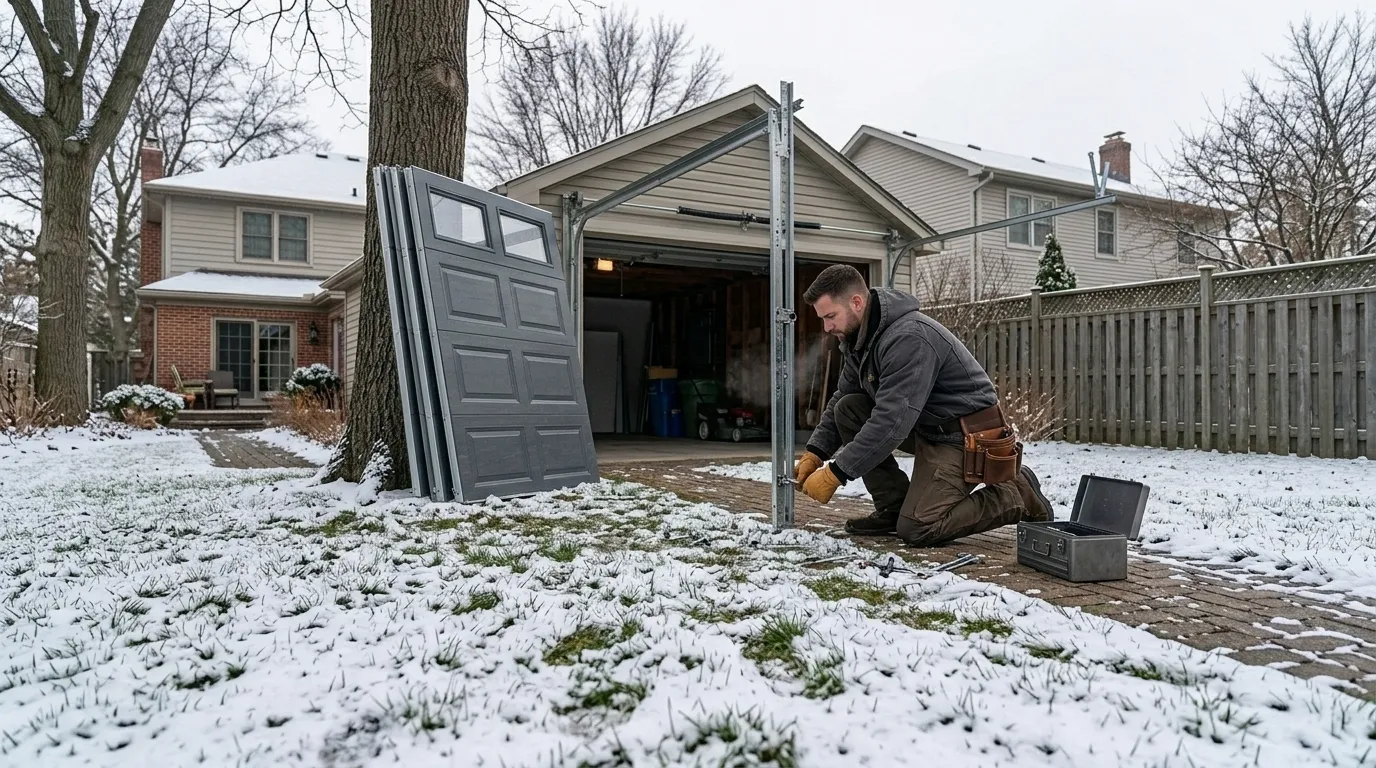
Kansas City sits in a severe cold climate band, and that matters more for garage doors than people expect. Steel contracts in the cold, which changes spring tension slightly and makes a spring that's been marginal for months finally let go on the coldest morning of the week. It's not a coincidence that emergency calls cluster after a hard overnight freeze. Combine that with a housing stock where the median build year is 1973 - old enough that a lot of original torsion hardware, galvanized cable, and single-layer doors are still in service across the 18 areas we work in - and you get a service area where age and cold stack on top of each other. A door that would limp along another few years in a mild climate doesn't get that grace period here. This isn't a sales pitch for replacement; plenty of these doors are fixable. But it's why 'it was fine yesterday' and 'it's January' show up in the same sentence on so many of our calls.
What It Costs
We don't have a flat number to give you here, because the range between a broken cable and a full opener swap is wide, and the honest answer depends on what's actually failed and whether parts are on the truck or need ordering. What we can tell you is that most emergency calls fall into a handful of repeatable jobs - spring, cable, roller, opener gear - and we quote before we start, not after. Across the roughly 103,000 households in this service area, with a median income around $69,680, we see a wide range of what people are willing to spend on repair versus replacement, and we'll walk you through both options honestly rather than push the more expensive one. One limitation worth saying plainly: if a door is old enough that we can't source a matching part locally, replacement sometimes ends up cheaper than chasing down an obsolete piece, and we'll say so instead of running up a bill trying to patch something that's done.