How It Shows Up
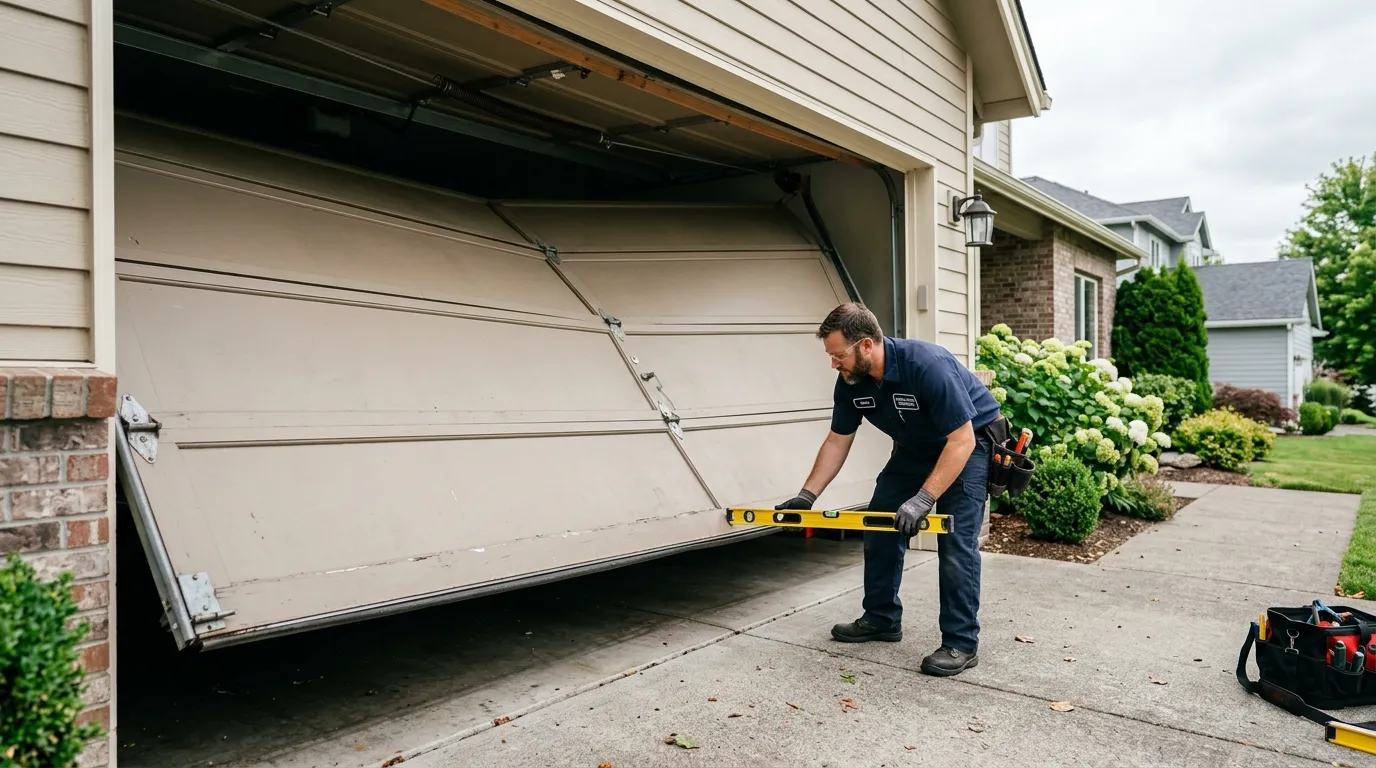
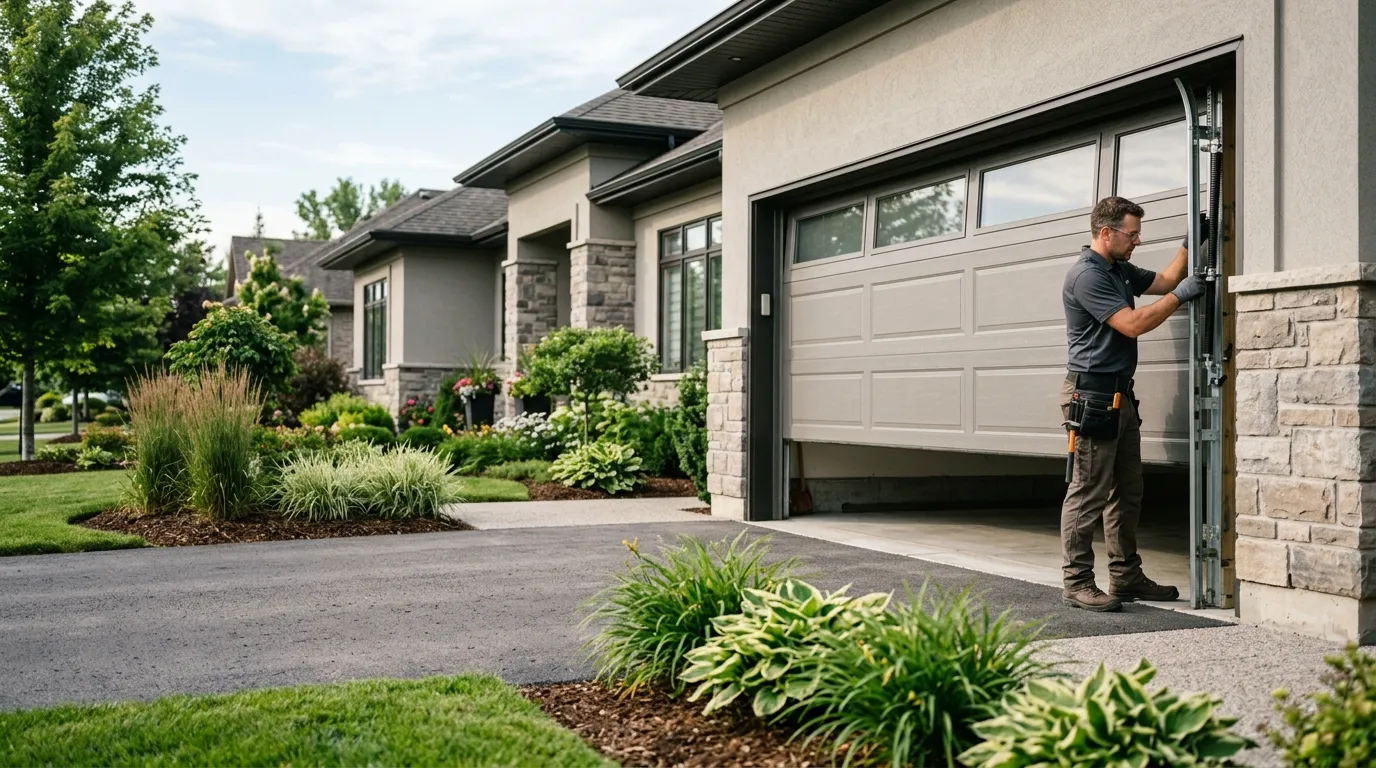
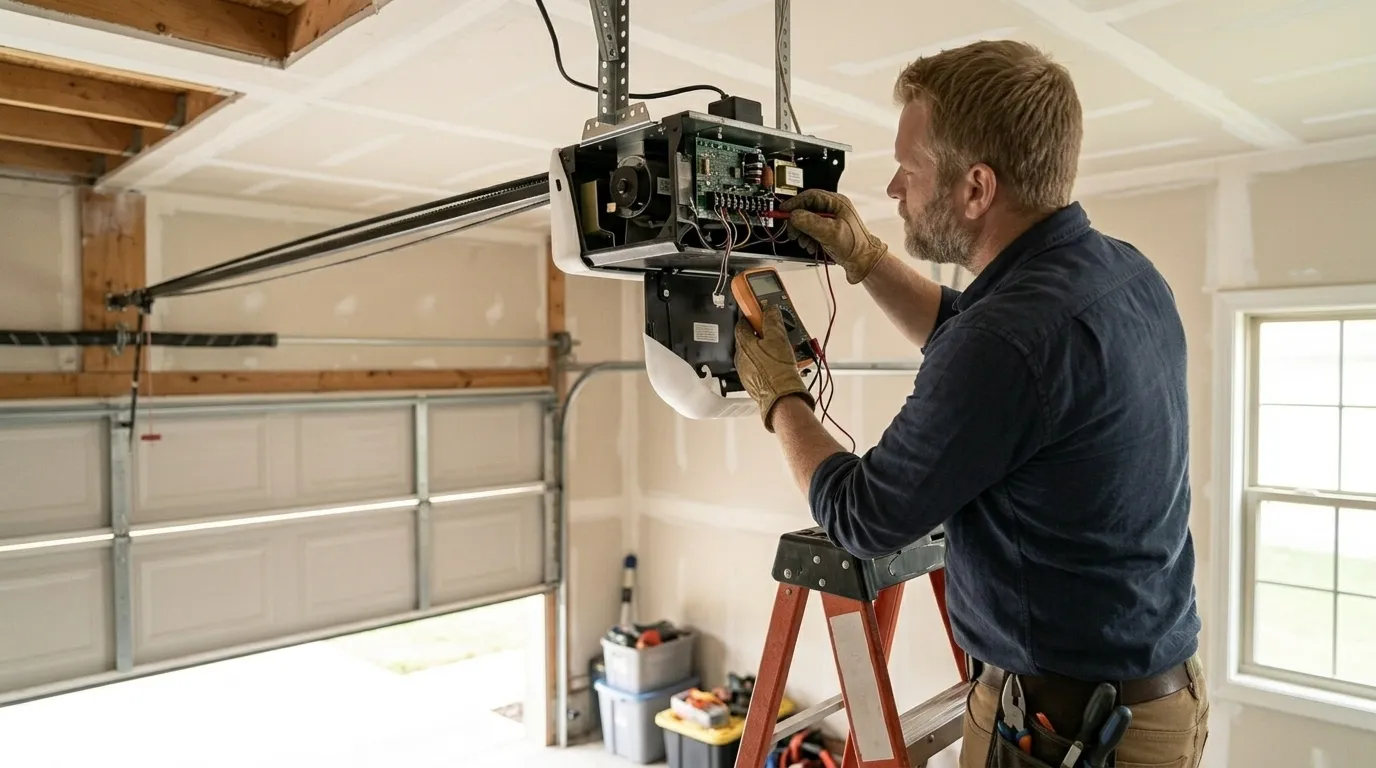
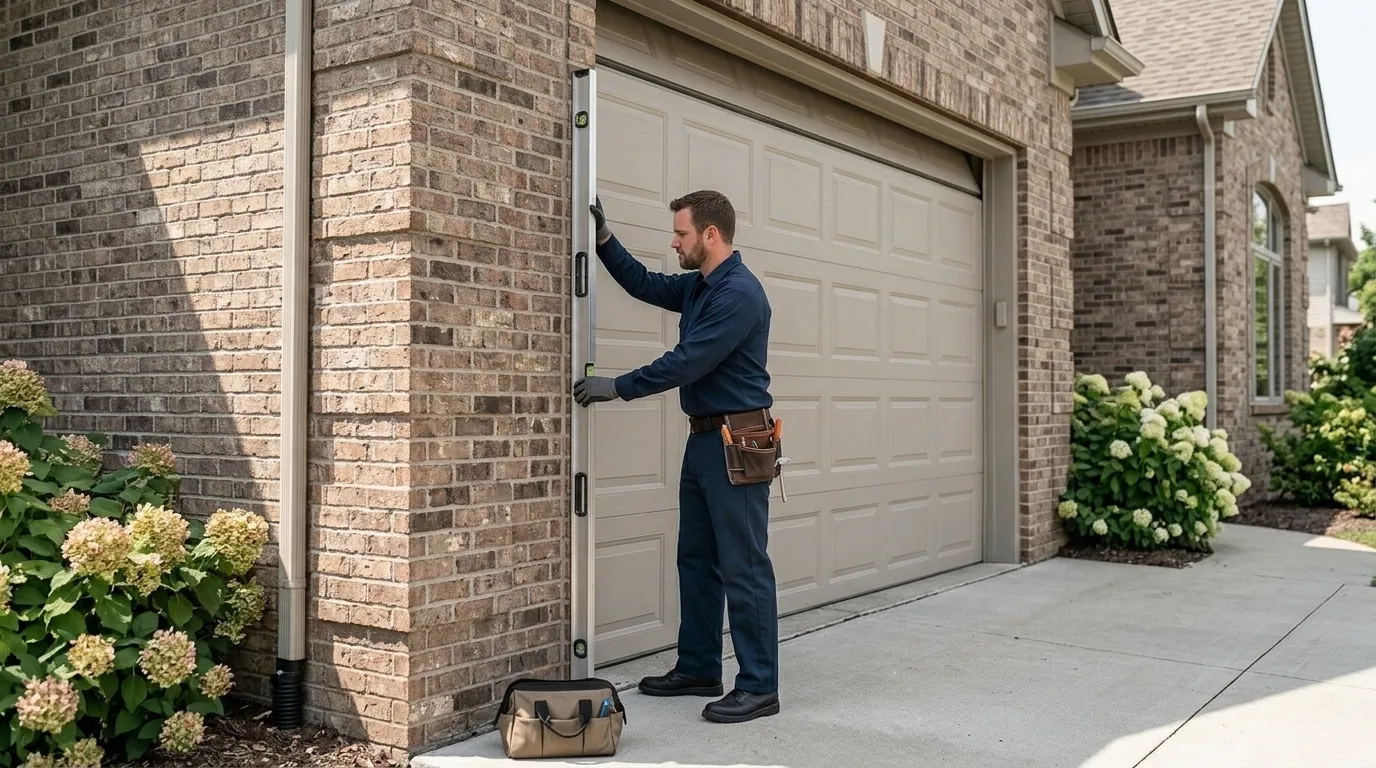
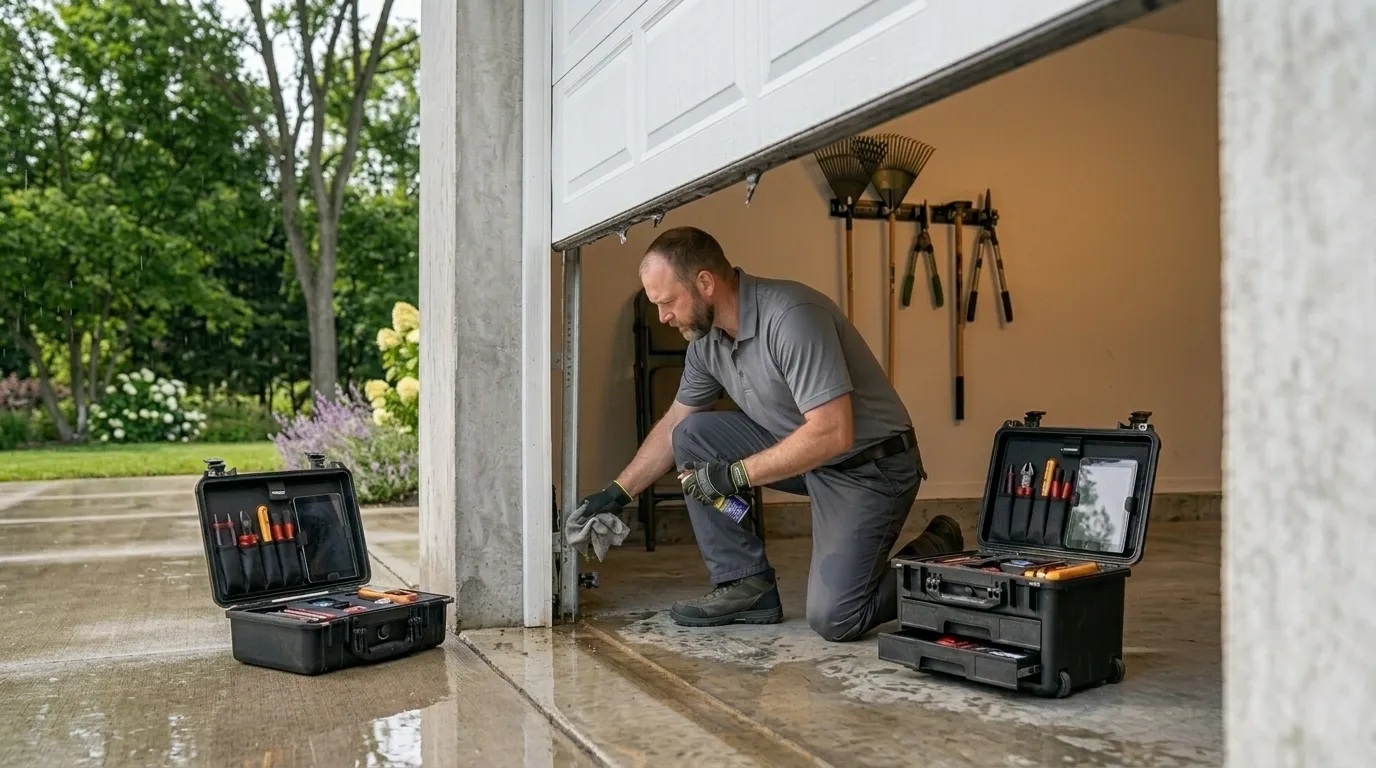
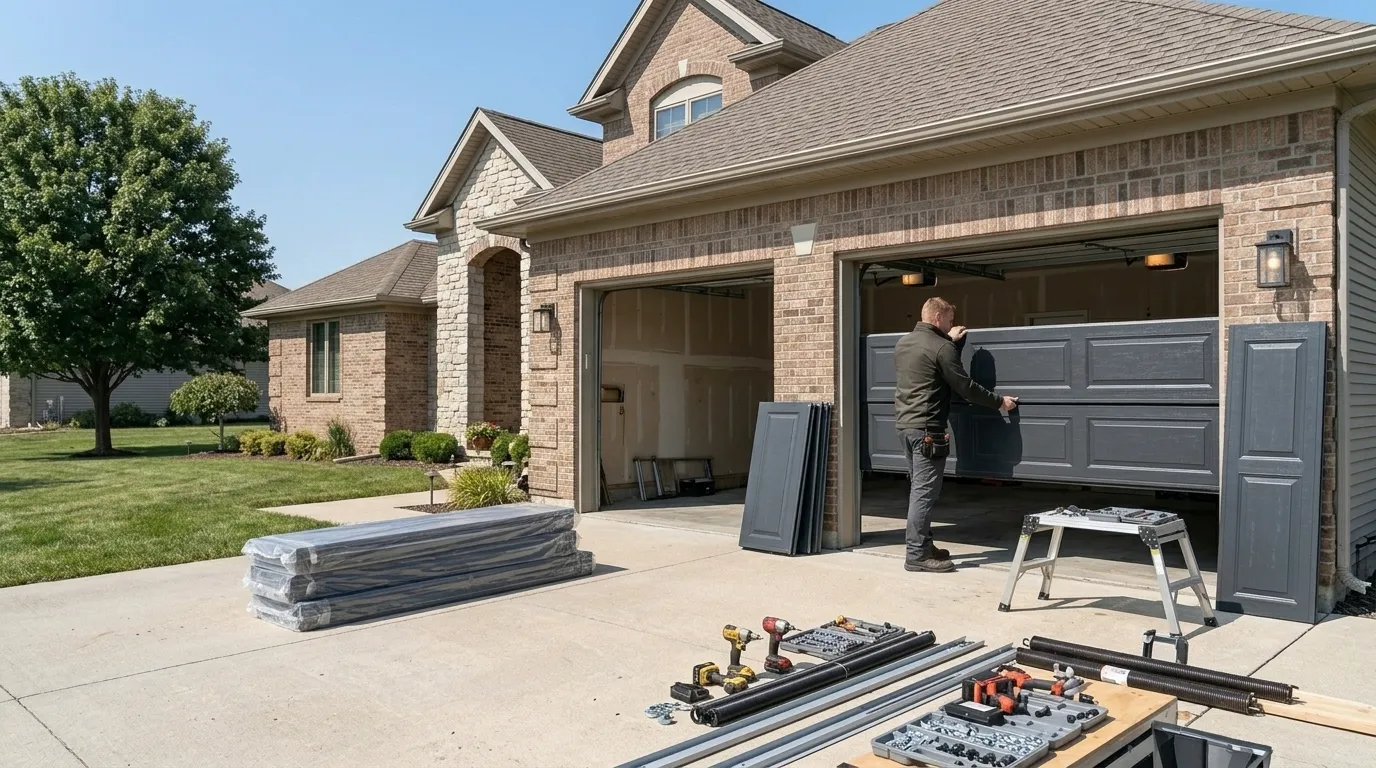
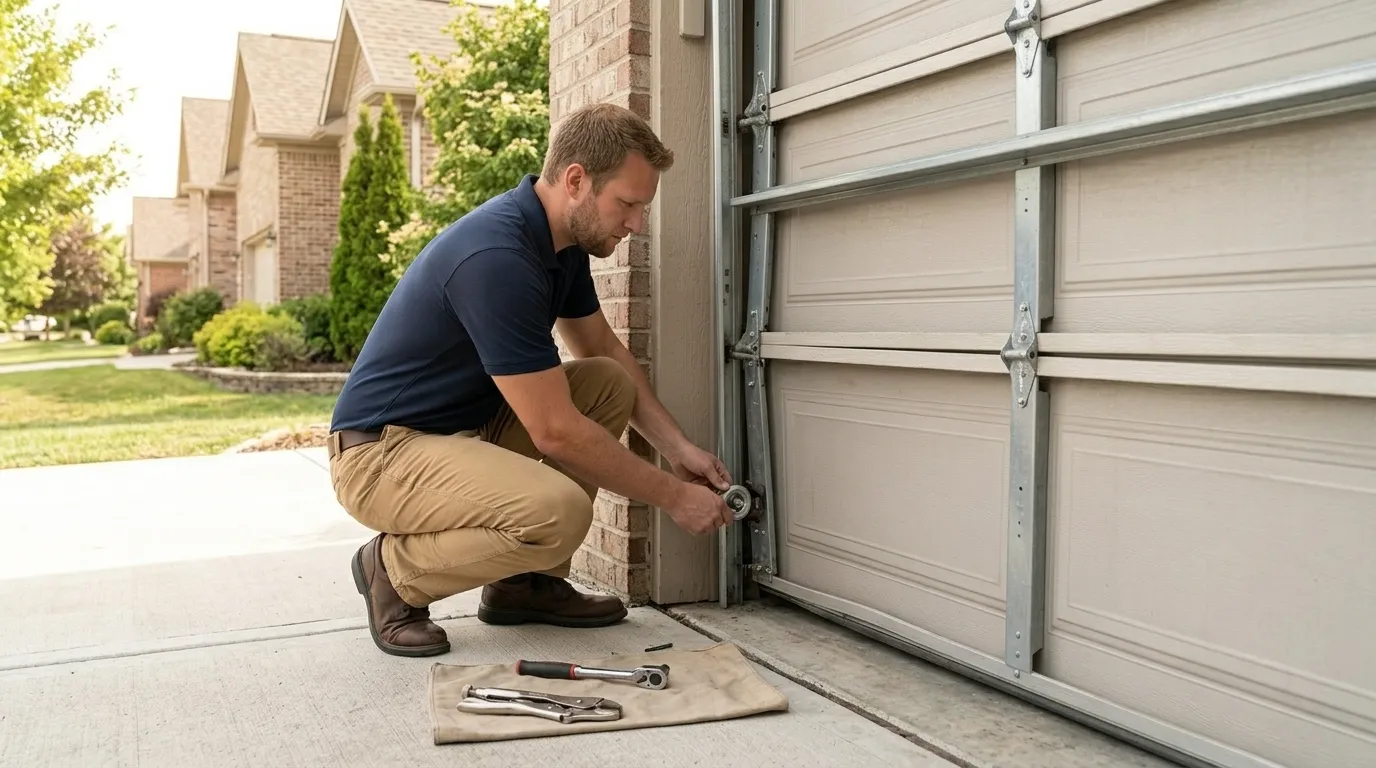
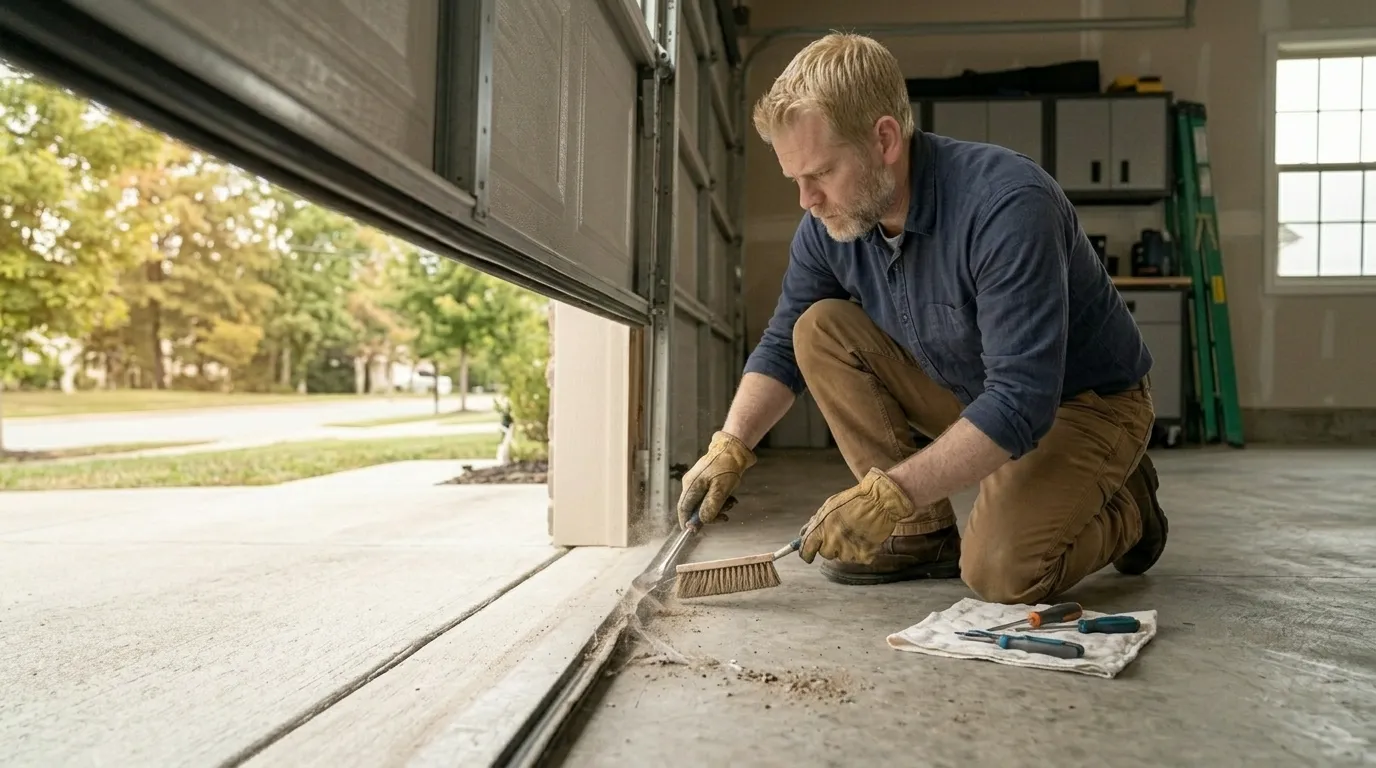
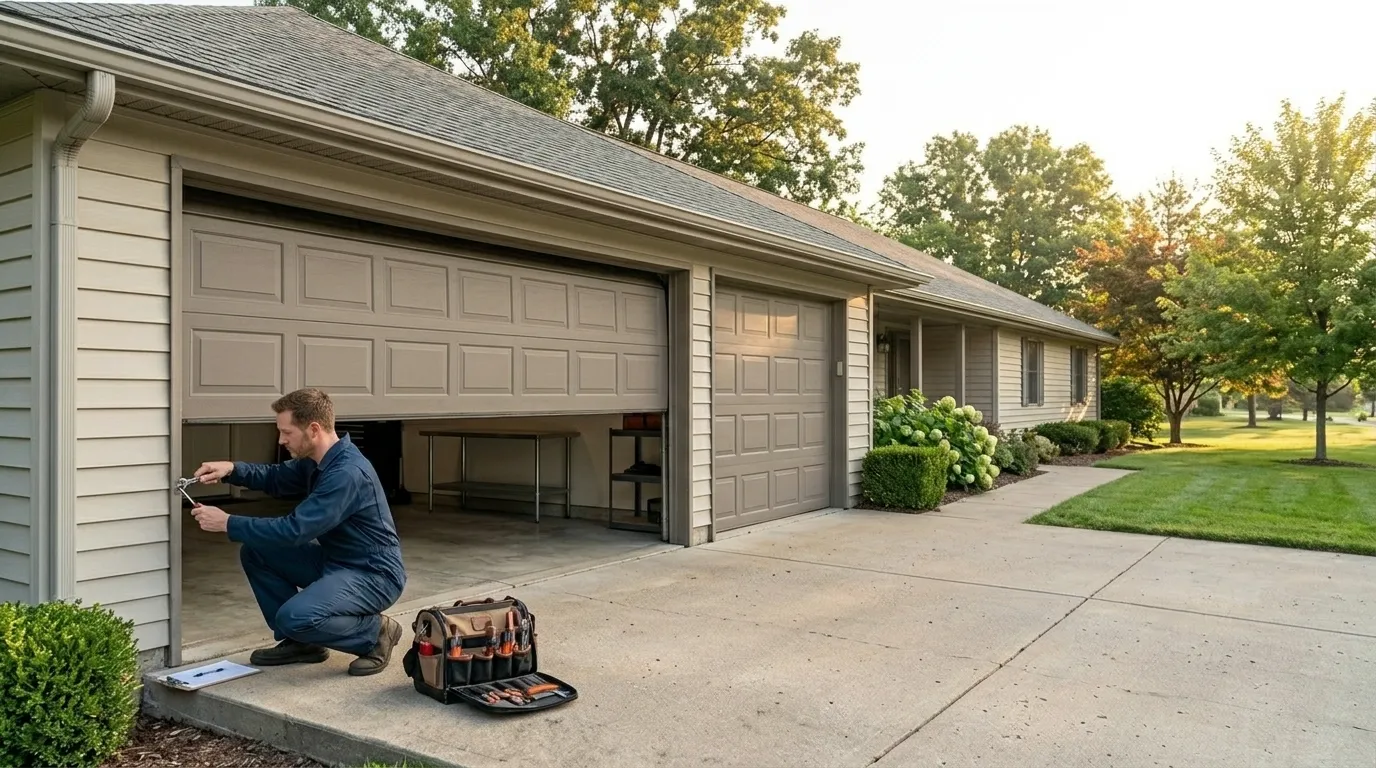
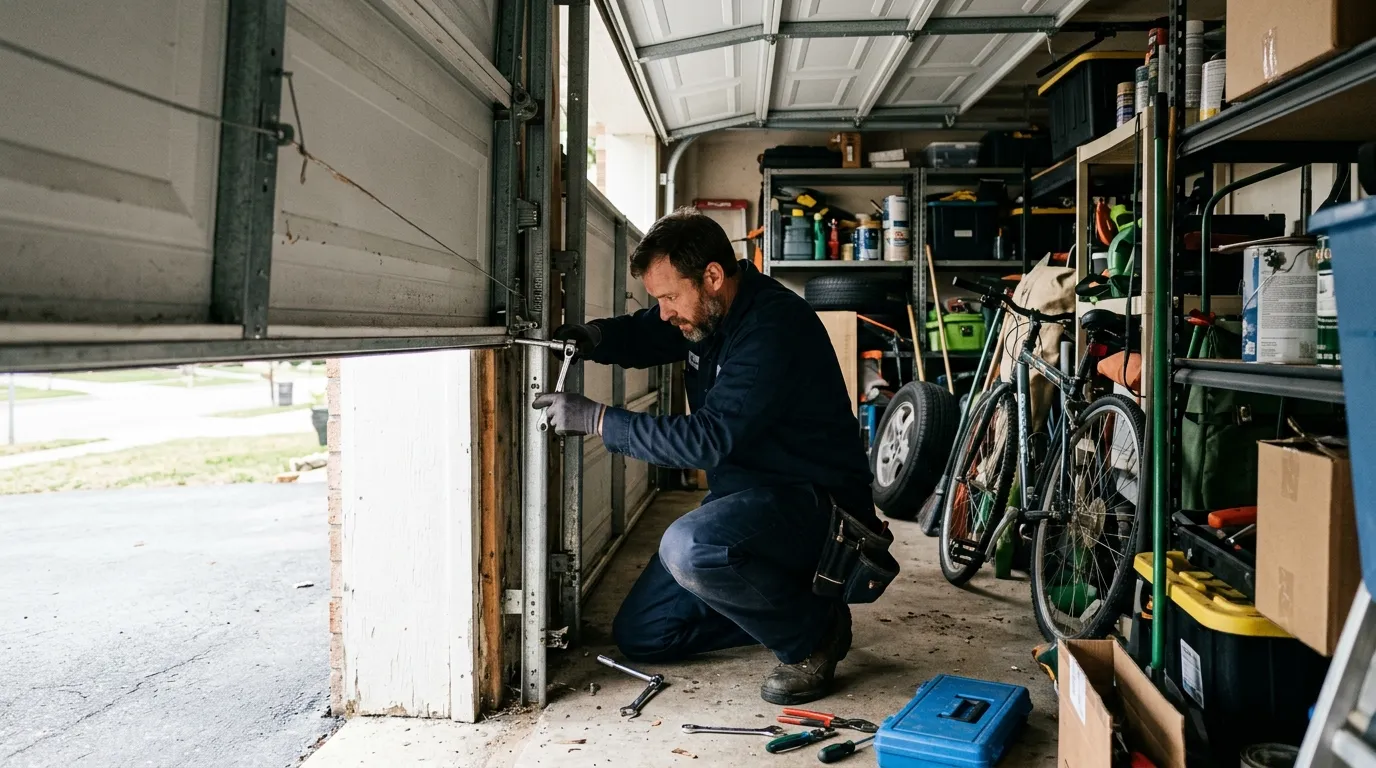
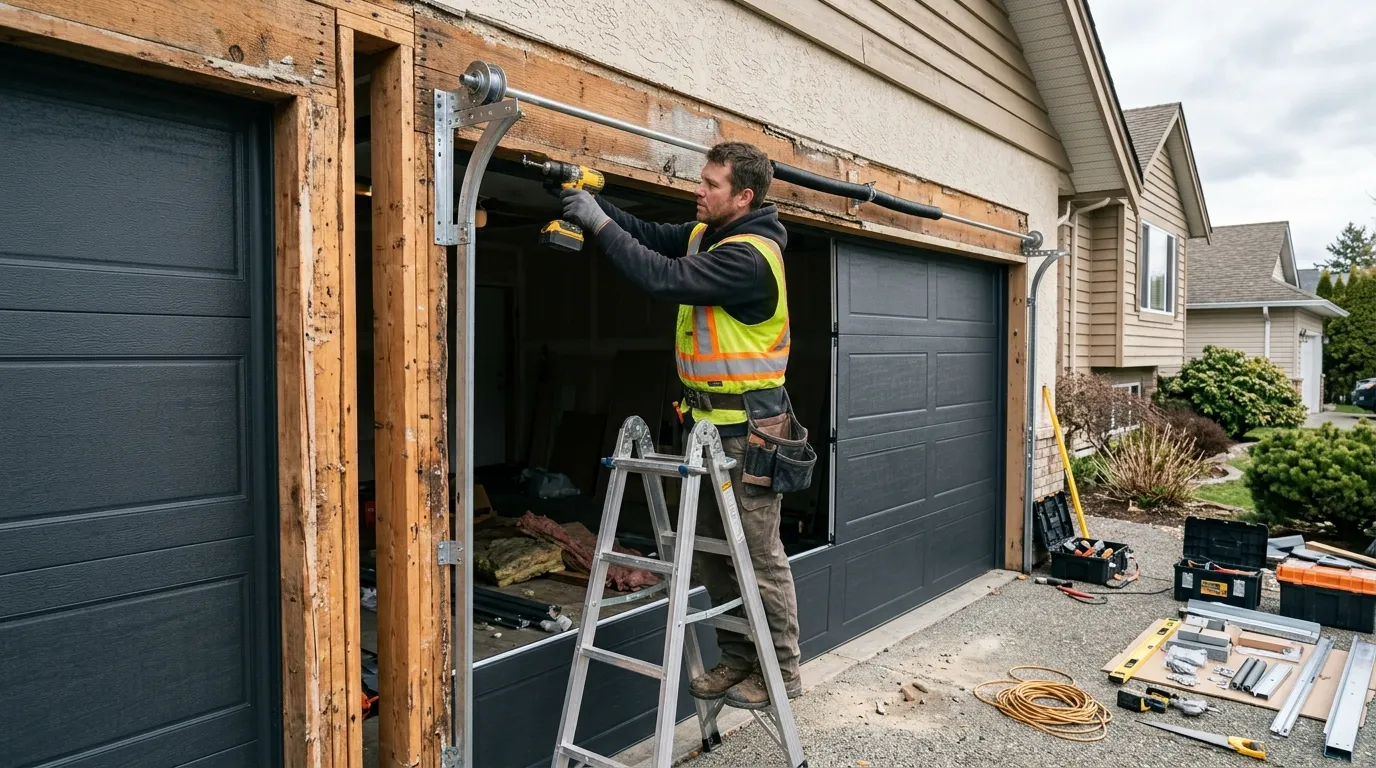
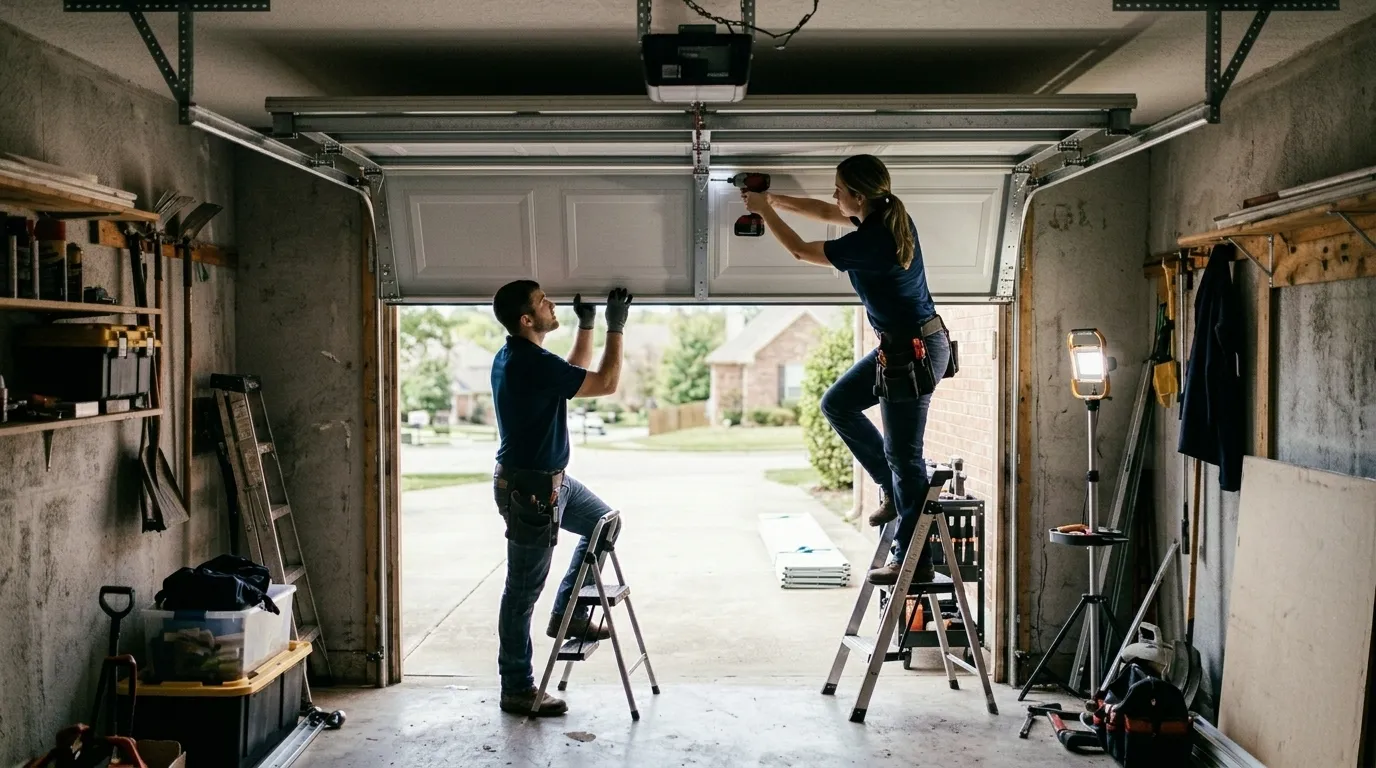
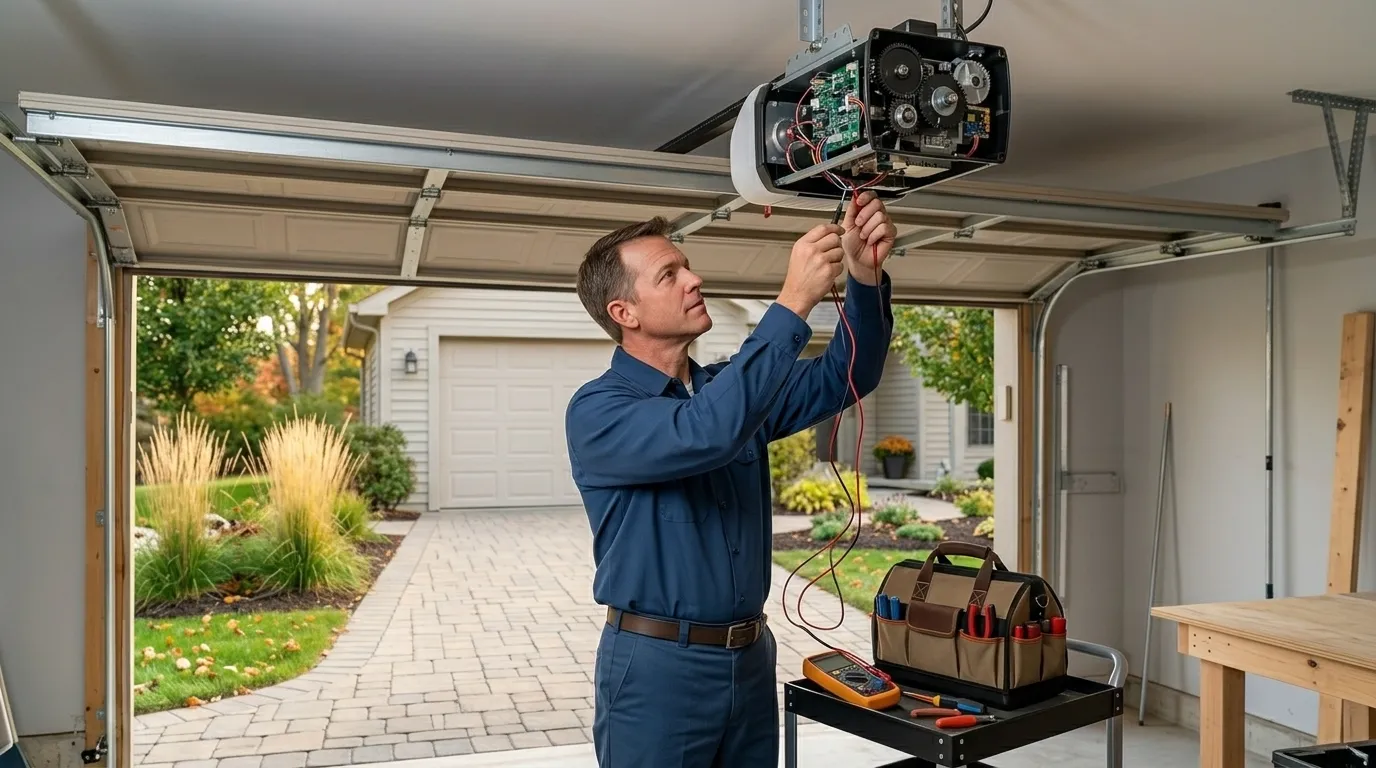
On a commercial door, trouble usually starts as noise or drag before it becomes a full stop. A rollup steel door starts binding partway through its cycle, or the opener strains and clicks off on thermal overload instead of finishing the lift. Sectional panels on loading dock doors develop a visible sag on one side, usually where a cable has stretched or a hinge has worn its bolt hole oval. On older insulated units, you'll see condensation lines on the inside face of the panels during winter mornings - a sign the door isn't sealing at the bottom anymore. Track misalignment shows up as a door that runs fine for eight feet and then jumps or grinds. High-cycle commercial openers, the kind rated for dozens of lifts a day rather than a handful, tend to fail at the gearbox or the limit switch first, not the motor itself. If a shop or warehouse door won't fully close, that's not a call to put off - an open bay door on a commercial building is a liability and a heat-loss problem at the same time. Across the buildings we work on in this service area, the pattern is consistent: the door doesn't fail all at once, it tells you for weeks first.
Why This Fails Locally
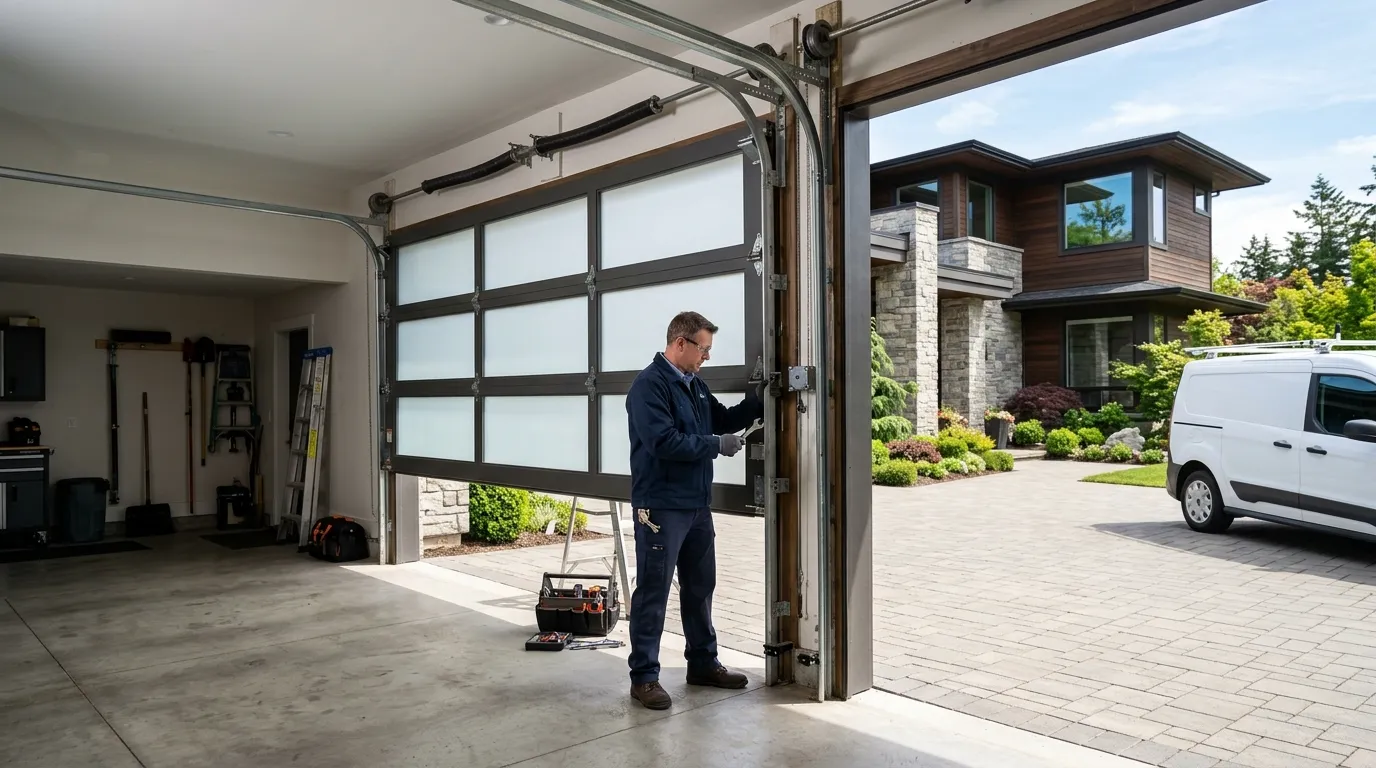
Most commercial buildings and warehouses in this service area went up in the same construction wave as the surrounding houses - built between 1951 and 2002, with the heaviest concentration in the 1960s and 70s. That means a lot of loading dock doors and shop bay doors are original steel sections on hardware that predates the current spring and cable standards, running on openers that were retrofitted decades after the building went up. Kansas City sits in a cold-severe climate band, and that's the second half of the problem. Steel contracts hard in a deep cold snap, which tightens tolerances on tracks that were already slightly out of level from forty years of settling. Torsion springs lose tension faster in repeated freeze-thaw cycles than they do in a mild climate, so a spring rated for a certain cycle count locally wears out sooner than the same spring would somewhere warmer. Put those two things together - 1960s-70s steel doors and severe winters - and you get a service area where commercial door failures cluster hard in December through February, on buildings that haven't had the springs or seals touched since they were installed.
What It Costs
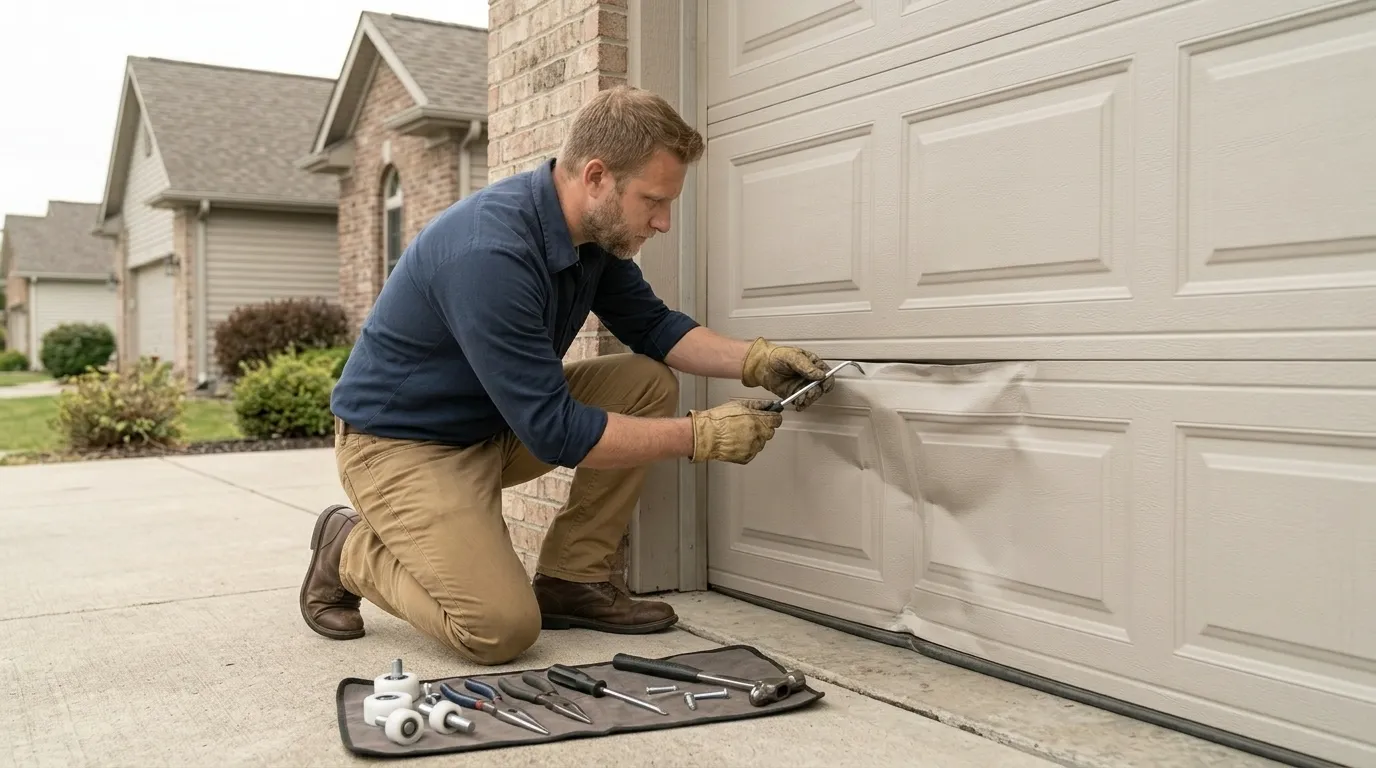
We don't have a published price list to hand out here, because commercial door repairs vary too much by door width, spring configuration, and whether the opener needs a gearbox or a full replacement. What we can say: across a service area with a median household income of $69,680 and roughly 103,053 households, most property owners weigh a repair against replacement the same way - if the door's steel is still straight and the track is salvageable, a spring or opener repair is almost always the cheaper path. Replacement becomes the better call when the panels themselves are rusted through or bent beyond what a hammer and a straightedge can fix, which is more common on doors from the earlier end of the 1951-2002 build range. Get a firm number after we've seen the door and cycled it - quoting a commercial repair over the phone without seeing the spring wind and the track wear is a good way to be wrong in either direction.