How It Shows Up
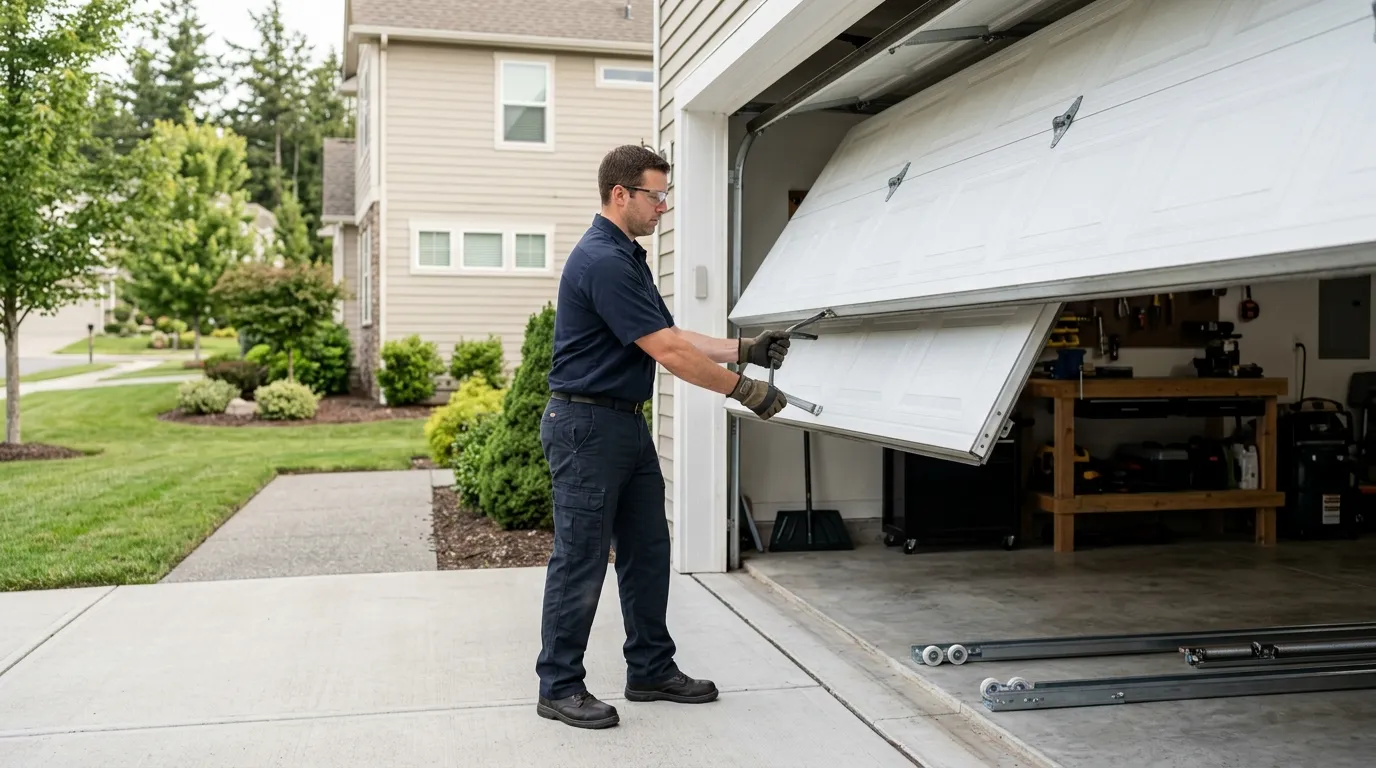
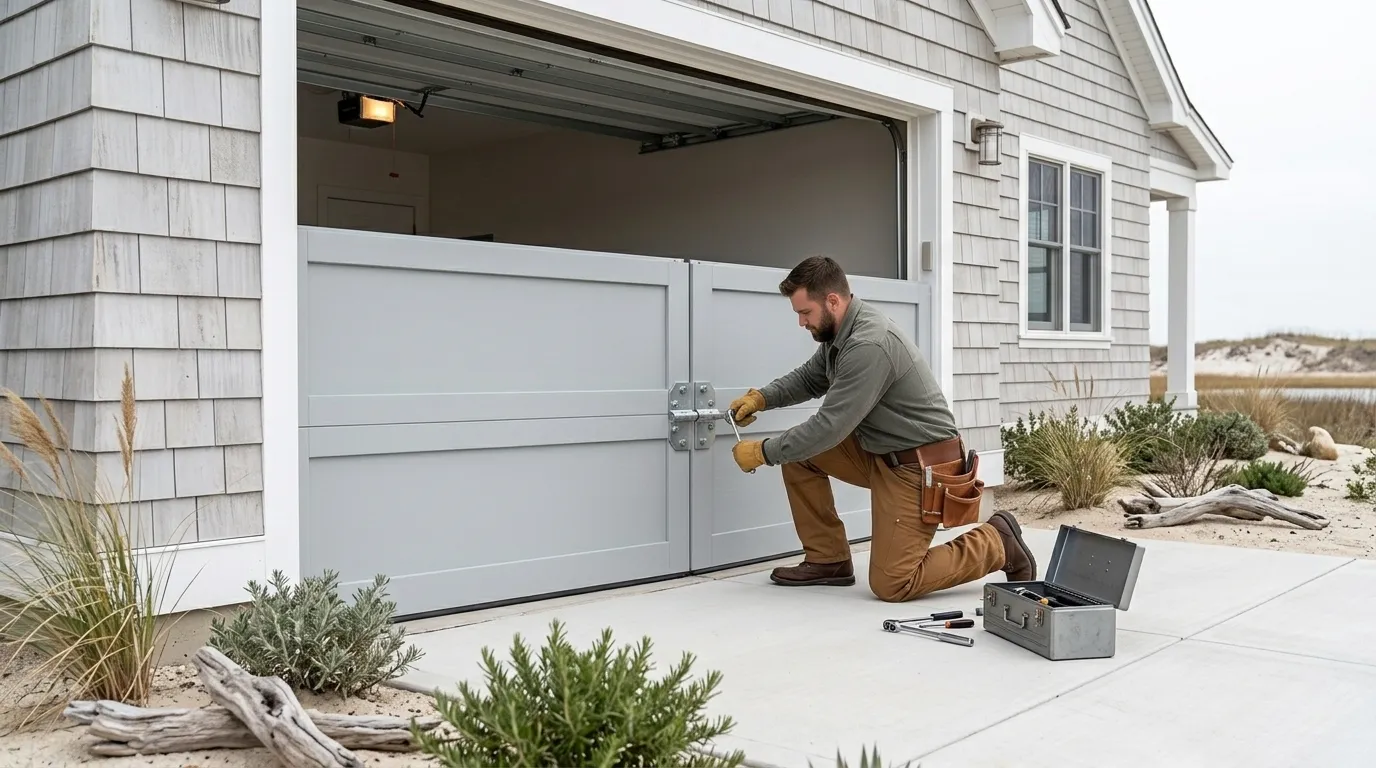
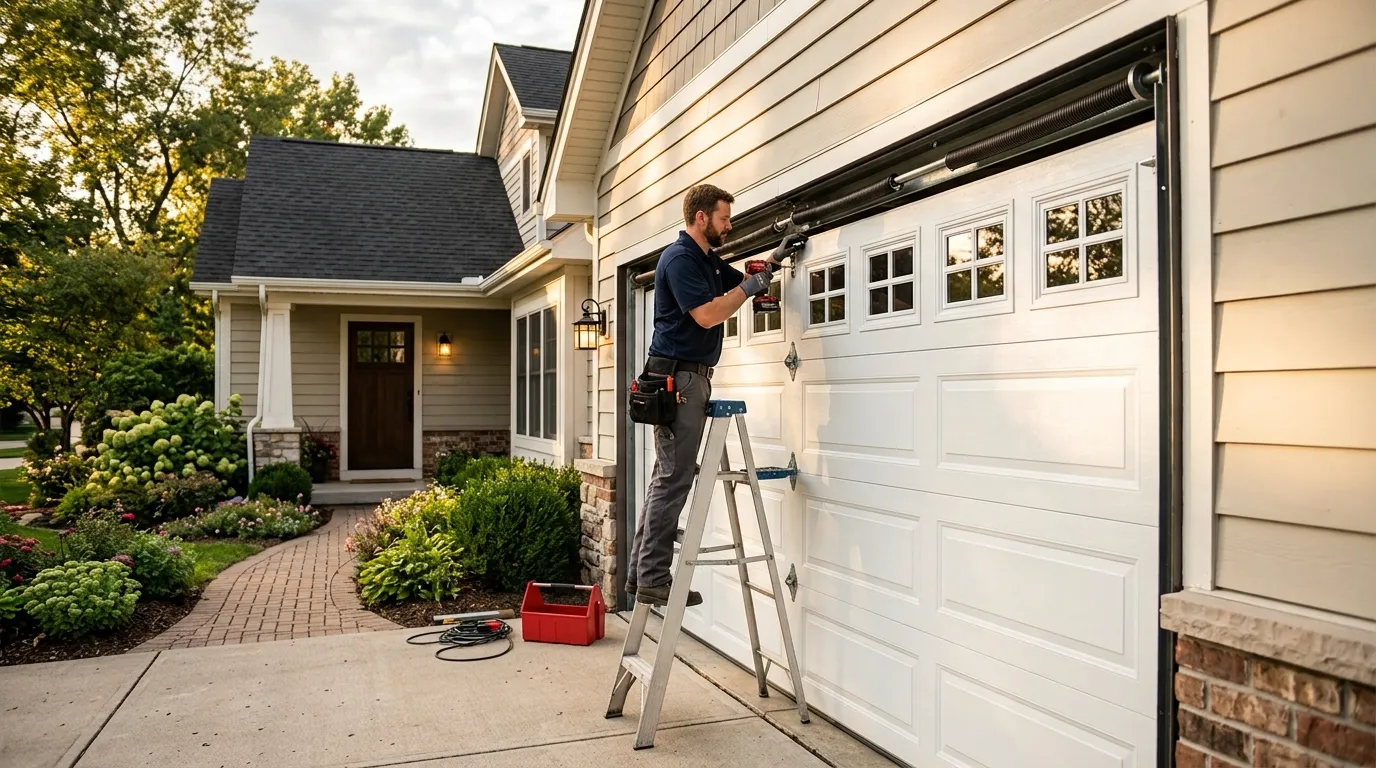
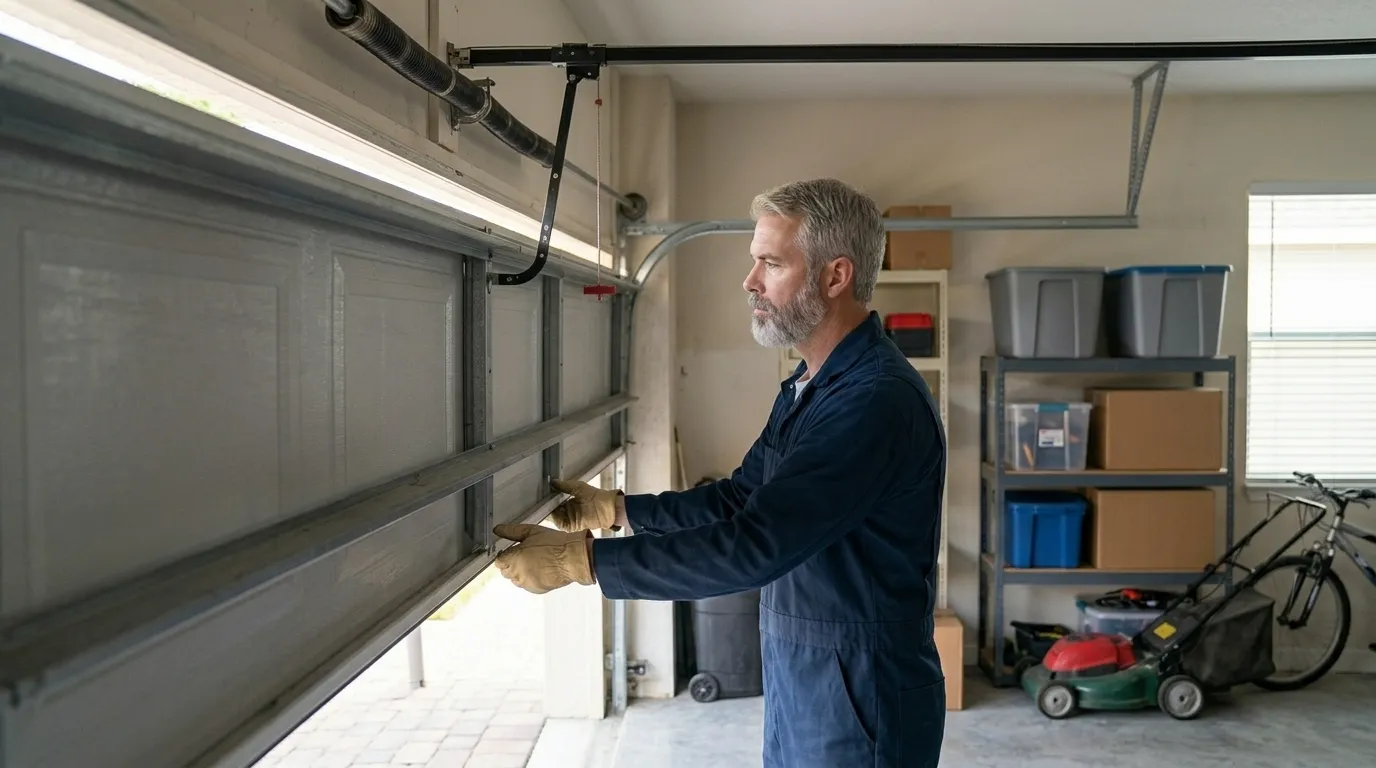
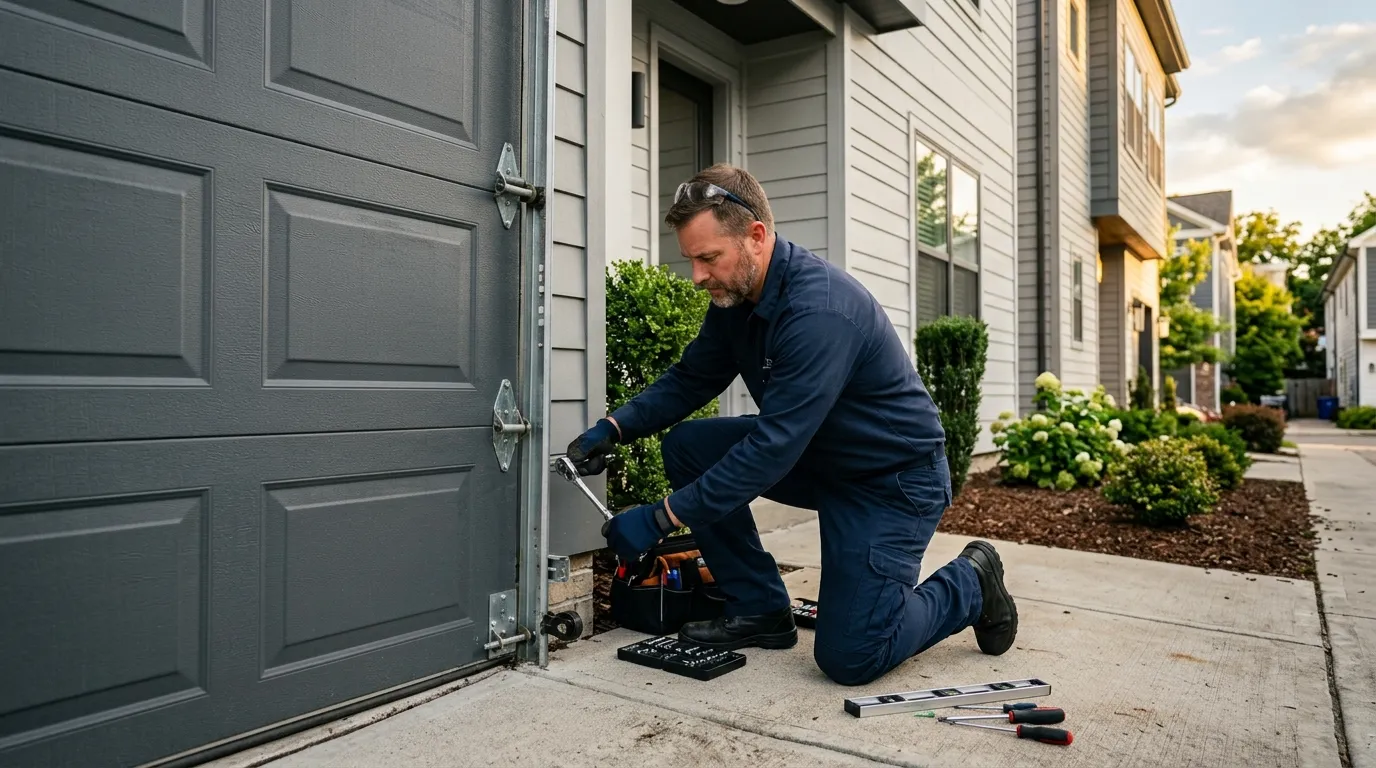
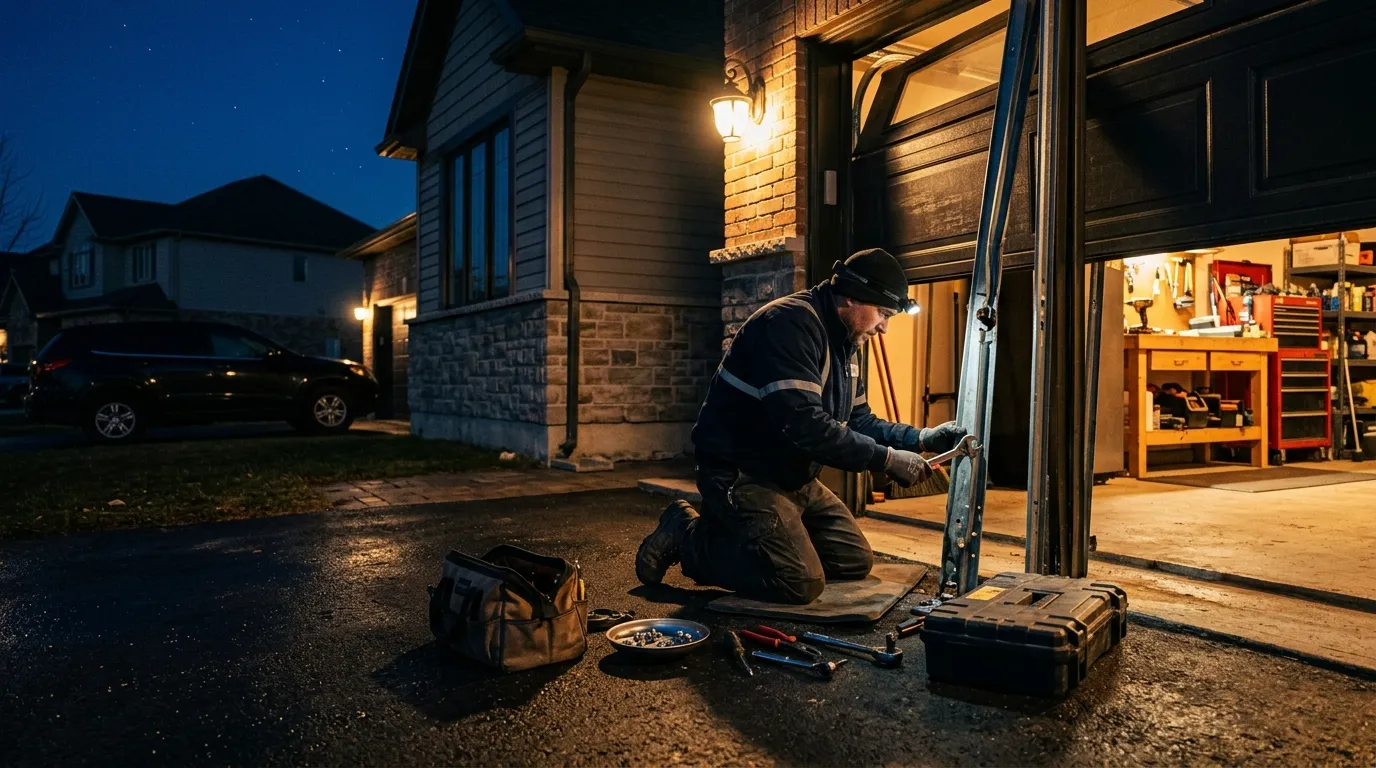
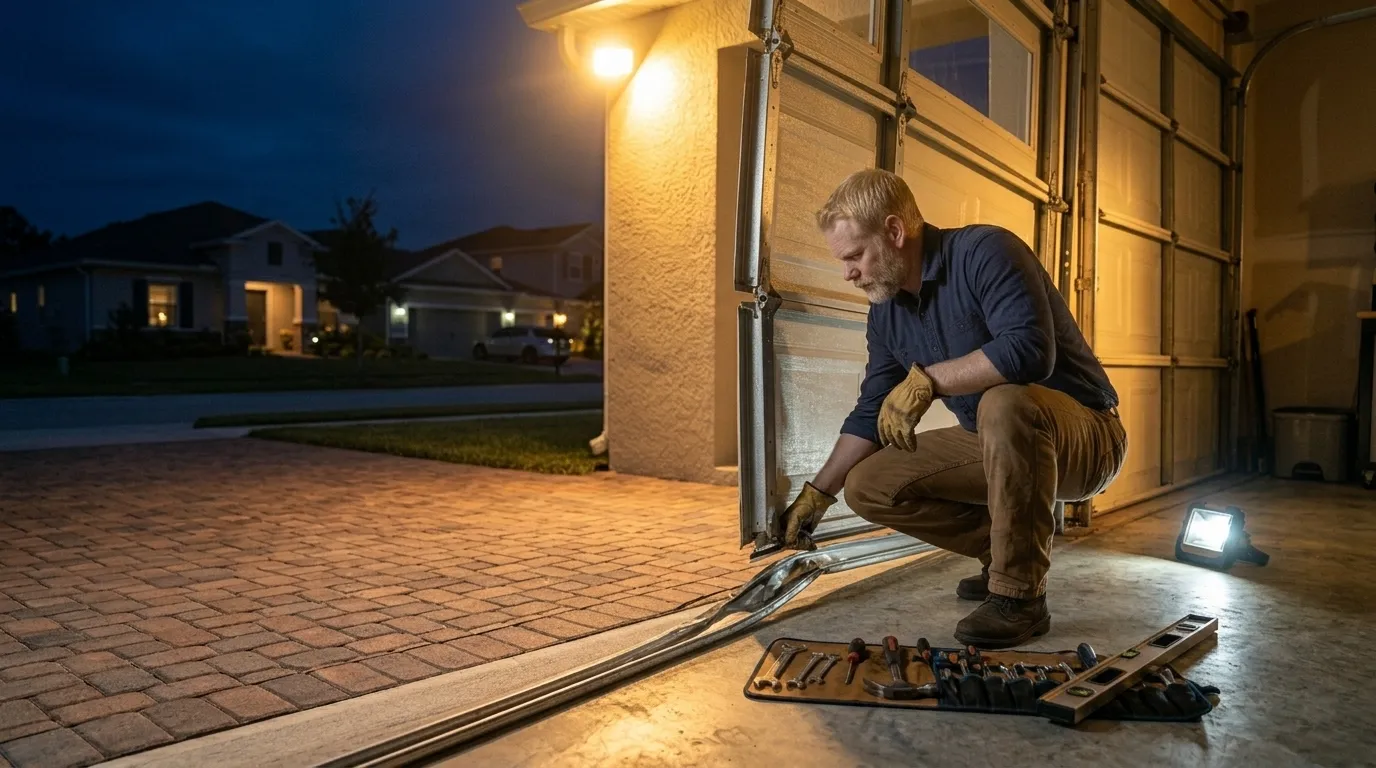
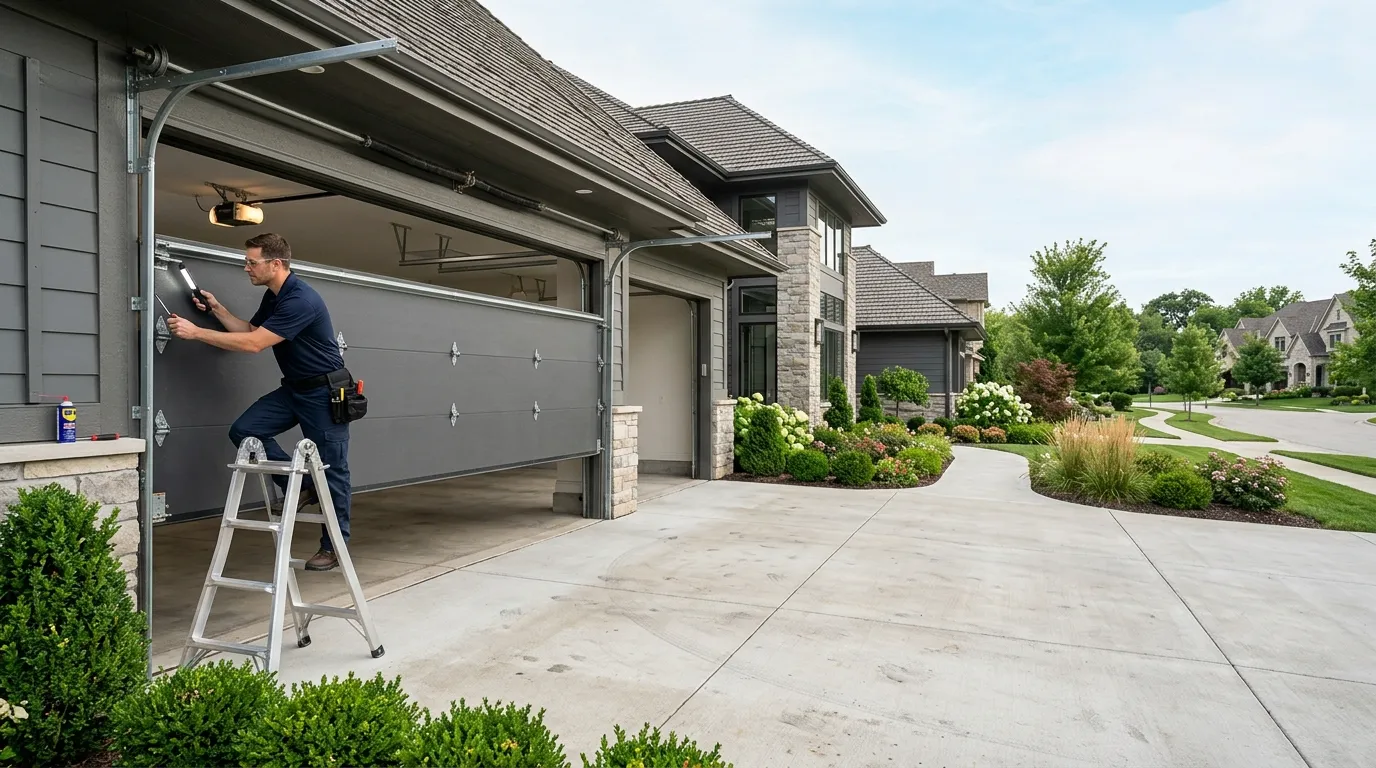
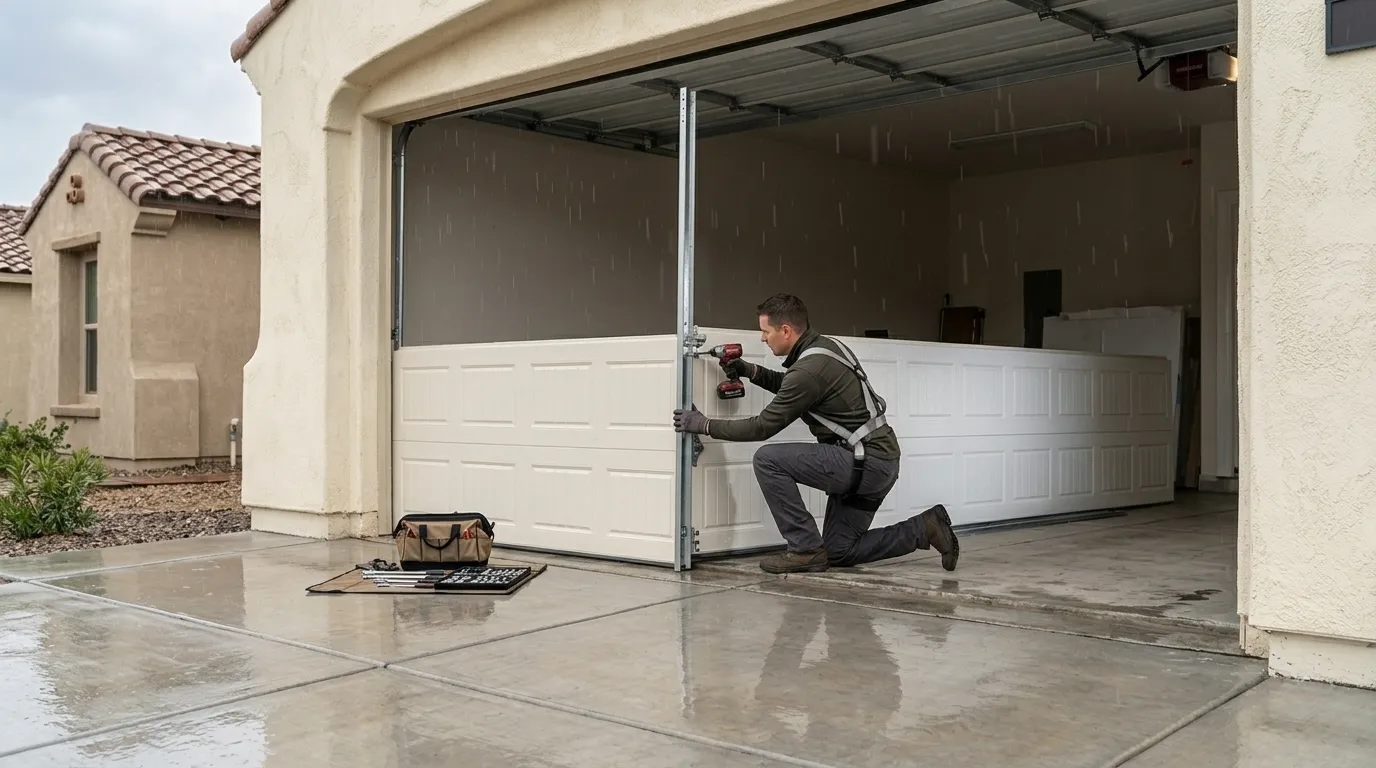
The door hangs up a foot off the ground and won't finish opening. Or the opener motor runs, you hear it straining, and the door doesn't move at all. Sometimes it's a bang from the garage in the middle of a cold night, and by morning the door won't budge past waist height. These are the calls we get most in Kansas City, and they're not random - they track pretty closely with when the house was built.
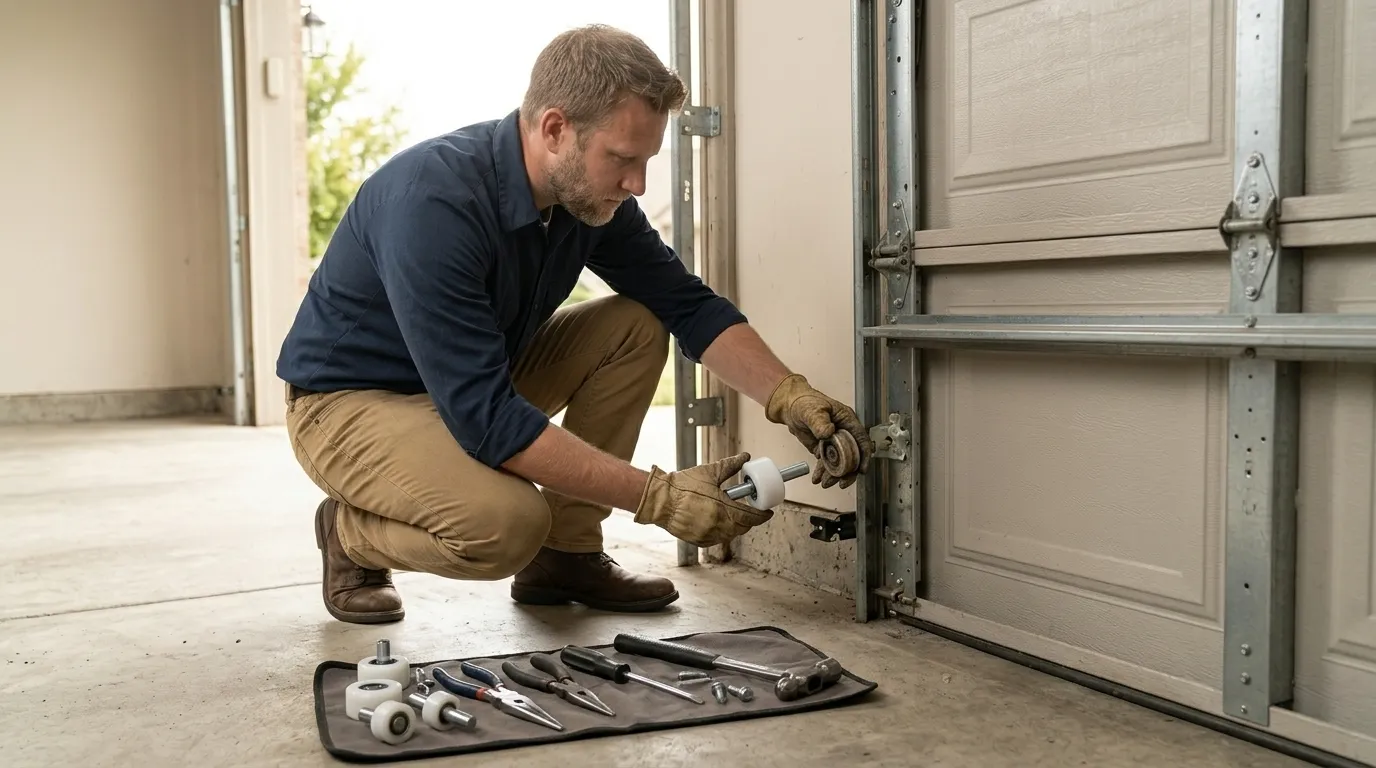
A lot of the housing in this service area went up between 1951 and 2002, with the heaviest concentration in the 1960s and '70s. That means a huge number of garages still have their original torsion spring, or a first-generation replacement that's now itself thirty or forty years old. Springs are rated for a number of open-close cycles, not a number of years, but a spring installed during the Nixon administration has usually seen every one of those cycles and more.
On double doors specifically, it's often one spring that goes while its twin keeps struggling along under double the load it was ever meant to carry alone. That's what causes the door to open crooked, or not lift evenly, before it stops working altogether.
Why This Fails Locally
Kansas City sits in a climate zone rated cold and severe, and that matters more for a garage door than people expect. Spring steel loses flexibility as temperatures drop, and repeated freeze-thaw cycles through a Kansas City winter put more fatigue stress on a spring than the same number of cycles would in a milder climate. That's part of why winter is when we see the sharpest jump in spring failures - the metal that made it through a mild fall finally gives out on the first hard cold snap.
Layer that on top of the housing stock. Across the 18 neighborhoods we map in this service area - from the Northeast Industrial District a mile out to six miles northwest - the story repeats: houses built mostly in the 1960s and '70s, many still running original hardware sized for the lighter, uninsulated doors common back then. When a homeowner upgrades to a heavier insulated door but keeps the old spring, that mismatch shortens the spring's life further.
So the failure isn't bad luck. It's original-era hardware meeting decades of cold-weather cycling it was never stress-tested for at this age.
What It Costs
We don't post a flat number here because the honest answer depends on what's actually wrong - a single spring replacement is a different job from a spring-plus-opener-plus-track visit, and door weight and spring type change the parts cost too. What we can tell you is that we price the job after we've looked at it, not before, because guessing over the phone leads to surprises neither of us wants.
Median household income across this service area runs around $69,680, and most of the repair calls we take are homeowners weighing a repair against a full door replacement. For an original door from the 1960s or '70s that's already had one spring swap and is now showing rust or panel warp, replacement can end up being the more sensible spend over the next decade rather than repeated patch repairs. For a door that's structurally sound and just lost a spring or opener, repair is usually the right call and the faster one.
We'll walk you through both numbers on the visit so you're deciding with real information, not a guess.