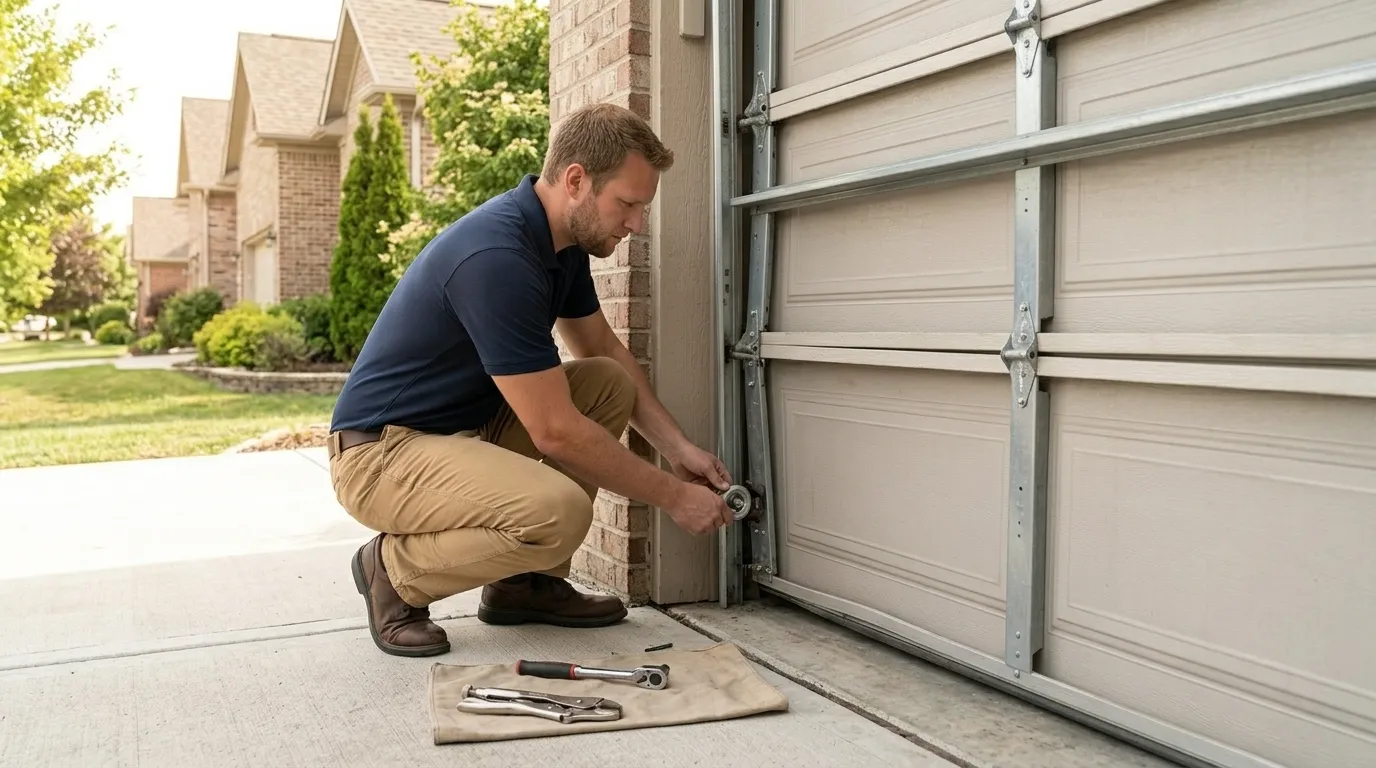

Stocked Parts
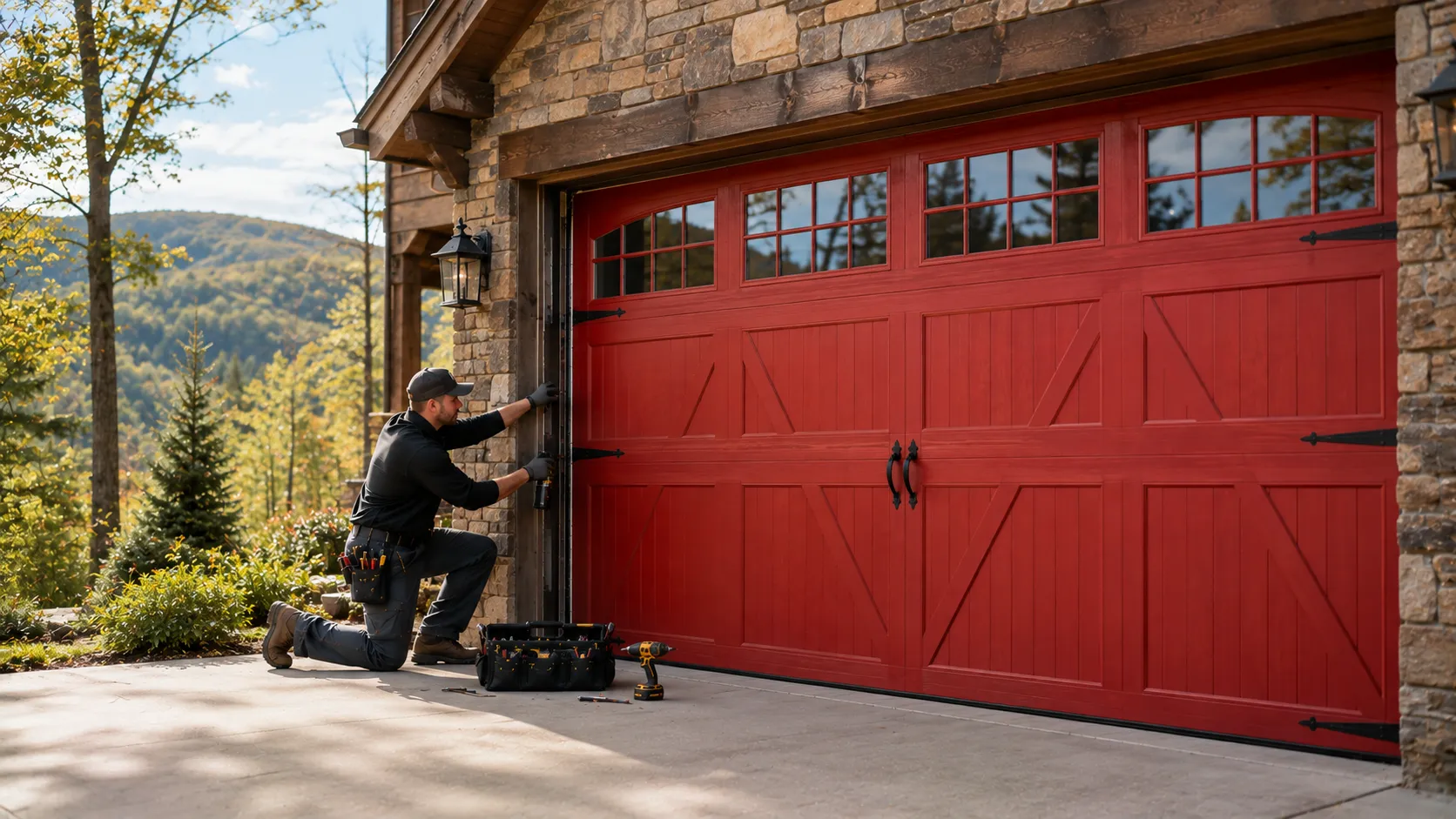
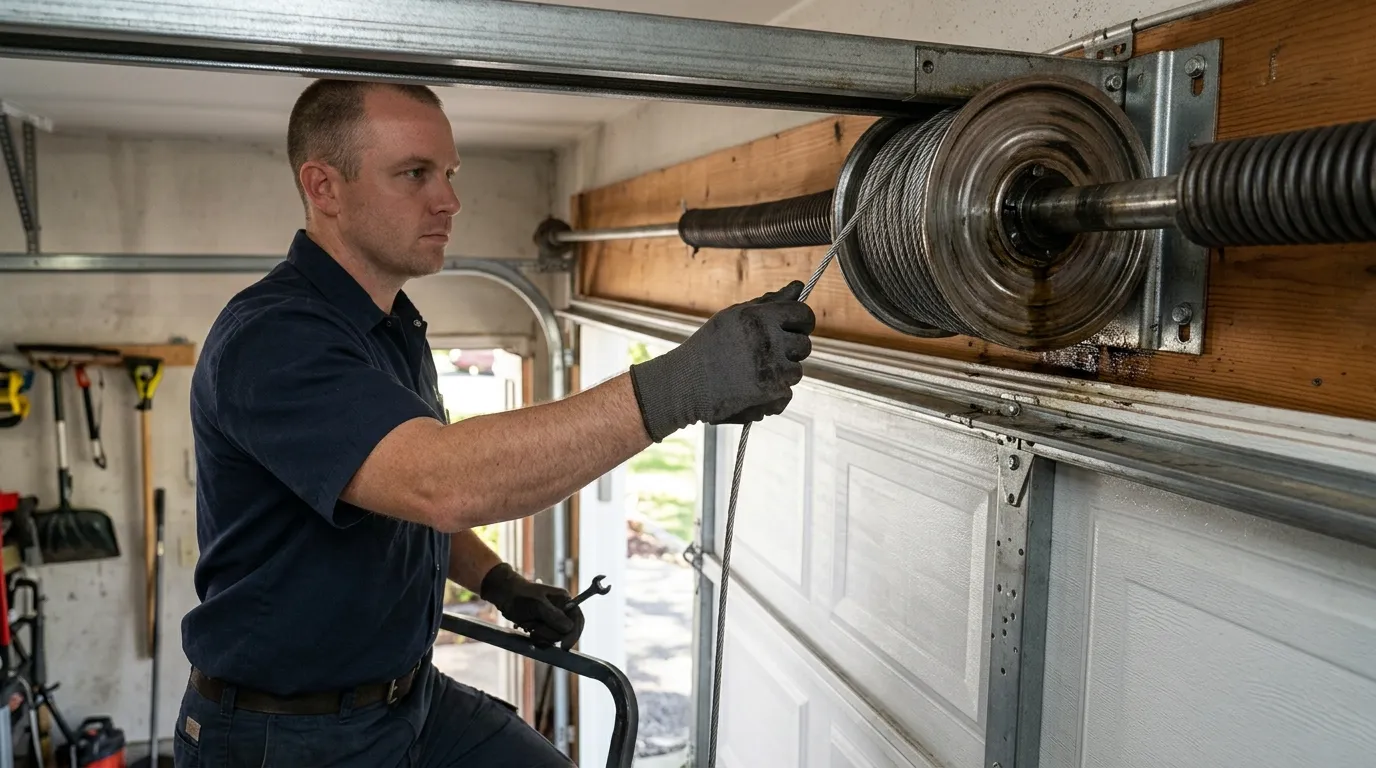
Most of North Kansas City went up around 1974, right in line with the metro's own construction midpoint of 1973. That means a lot of the doors here are original torsion setups from the mid-70s, or replacements installed on that same hardware footprint years later. We carry torsion springs sized for those older shafts, the drum and cable combos that went with them, and rollers for the track spacing builders used back then. We don't carry every obsolete panel style - some of the earliest single-layer steel doors from that era used trim profiles nobody makes anymore, and if yours is one of them we'll tell you straight that a full door swap beats hunting for a matching panel. Winters here run cold and hard, which is rough on 40- and 50-year-old spring steel; the metal fatigues faster than people expect, so we keep extension and torsion springs in the sizes that actually fail on this vintage of house, not just the sizes that fail on new construction.
How It Shows Up
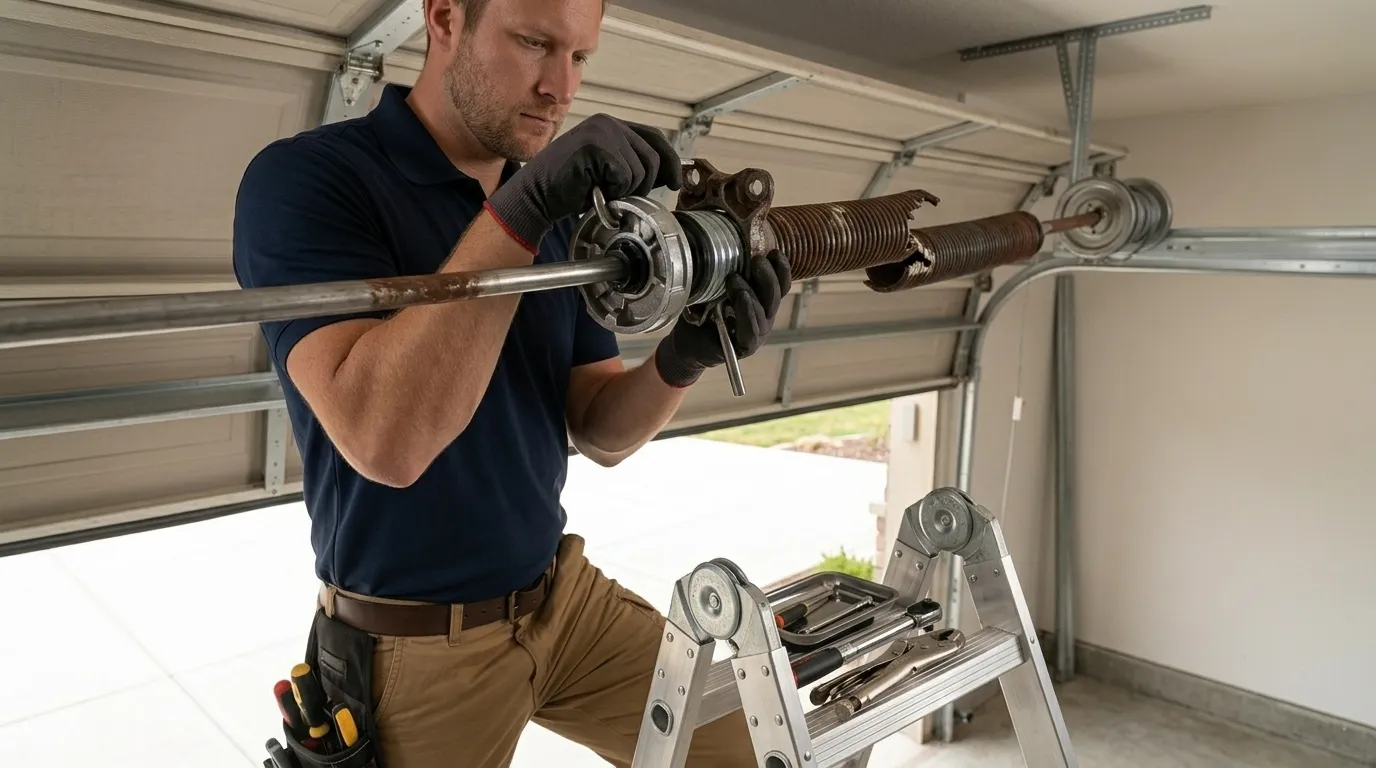
On a house built around 1974, the failure you see most is a torsion spring that's simply outlived itself - the door gets heavy to lift by hand, or the opener starts straining and clicking off mid-cycle. Cold-weather season adds a second failure mode: steel cable that's been flexing the same way for decades gets brittle, and a hard freeze is what finally snaps it, usually on the coldest morning of the week when you're already late. Openers from this era of construction (or their second- and third-generation replacements) tend to go out with a whimper, not a bang - the chain drive slips, the motor runs but the door doesn't move, or the remote works from ten feet away and nowhere else. None of these are dramatic. They're wear failures on hardware that's been doing its job since the Nixon administration, finally giving out.
Doing It Yourself
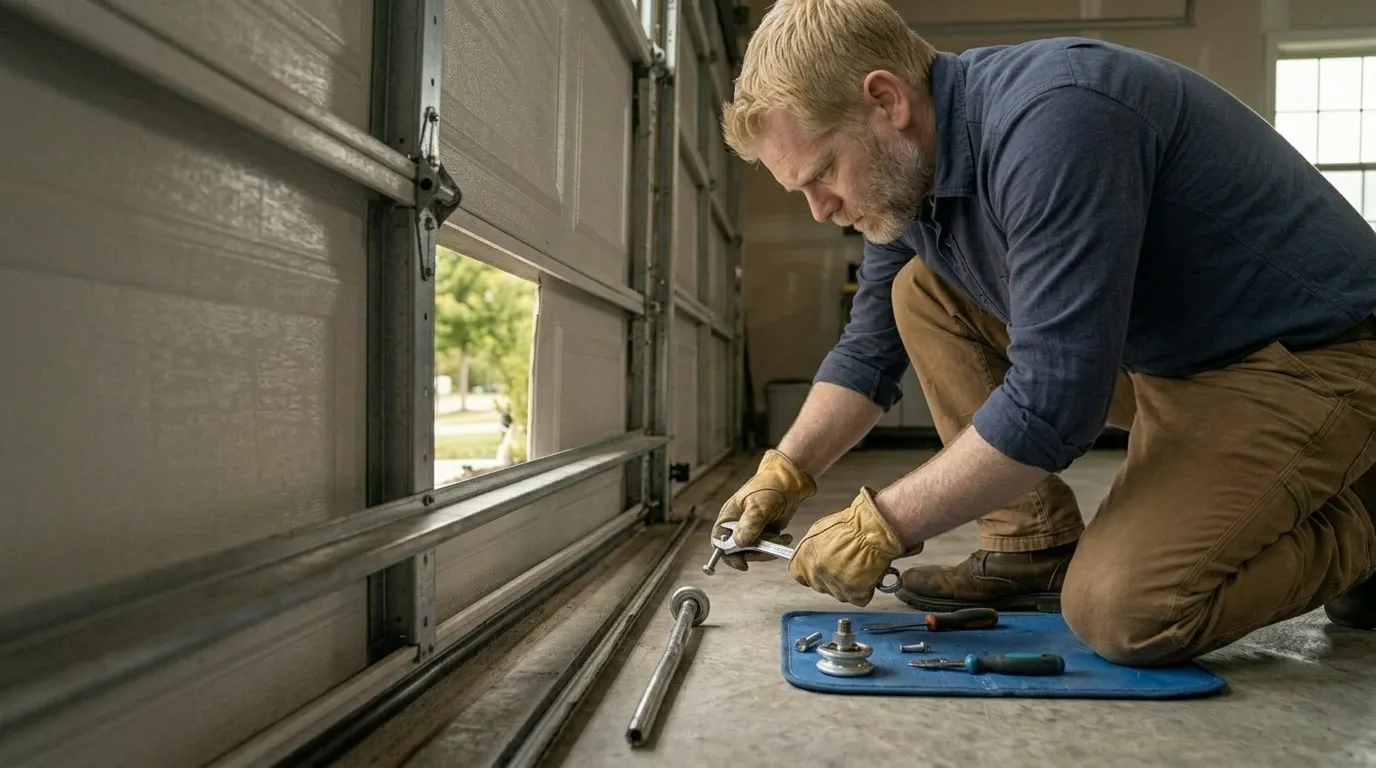
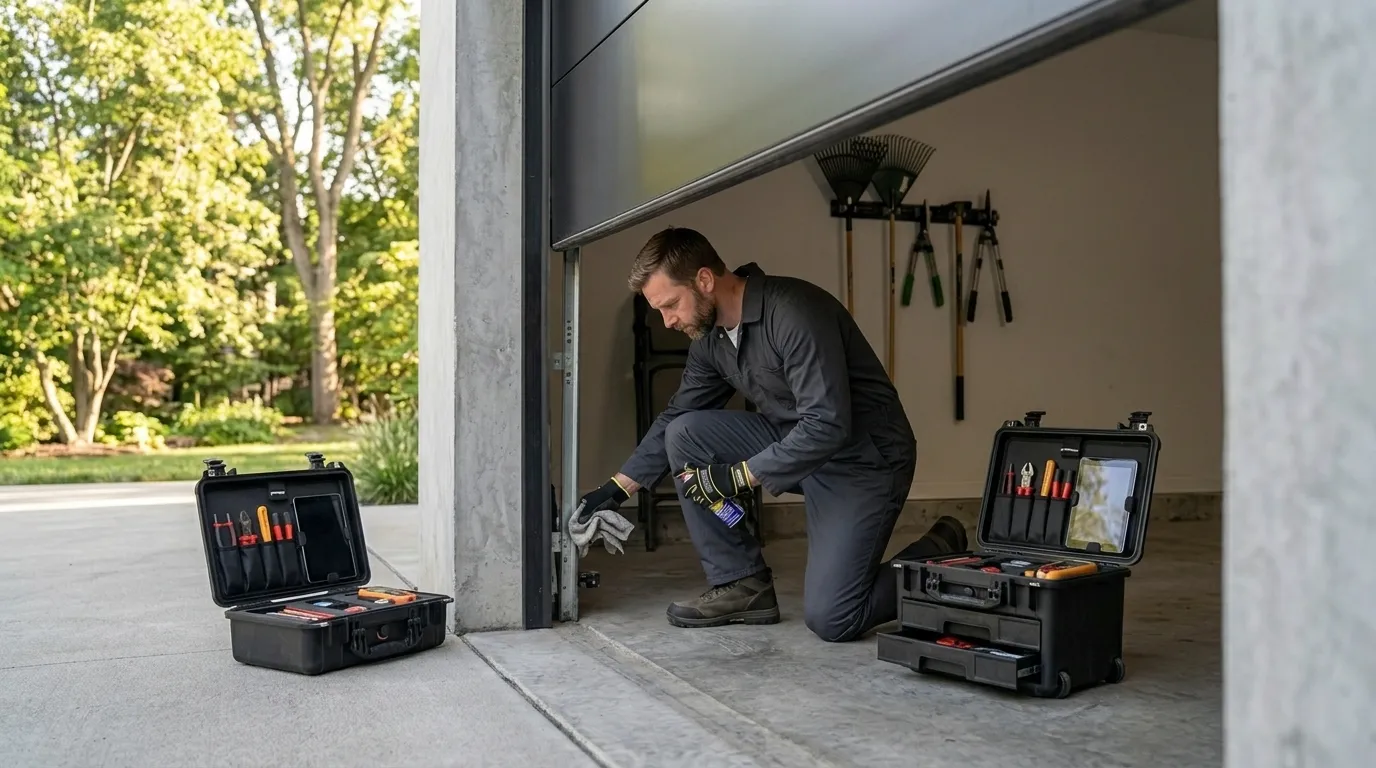
Some of this is fine to check yourself. Lubricate the rollers and hinges twice a year, tighten any bolts that have worked loose on the track brackets, and test the auto-reverse safety feature by setting a piece of wood under the door and running it down. Those take twenty minutes and no special tools. What you should not touch is the torsion spring itself. It's under enough tension to break a wrist or worse, and on a house this old the mounting hardware may not be in the condition the spring's tension assumes. If the door is off-balance - swinging up on its own, or dropping fast when you disconnect the opener - that's a spring or cable problem, not an adjustment problem, and it's not a weekend project. We'd rather you call before you've hurt yourself than after.