Serving Kansas City, MO & nearby
(816) 857-5830
Kansas City, MO

Garage Door Repair for North Kansas City, MO

North Kansas City has about 2,891 households, most in homes built near 1974. We fix the torsion springs, tracks, and openers that come with that stock, from Kansas City.

Garage Door Repair for North Kansas City, MO
Kansas City, MO
8 services
6 service areas
Diagnosis first, then the fix

Stocked Parts

North Kansas City is a small place - about 2,891 households, tucked a single mile from Kansas City proper. That size matters for parts, not just distance. A town this compact doesn't have thousands of garage doors cycling through decade after decade of styles; it has a tight run of houses built close to the same year, which means the fixes repeat.

Median year built here lands around 1974, which lines up with the wider service area's 1951-2002 range and its 1973 median. That means torsion springs sized for older 7-foot sectional doors, steel tracks with the horizontal-run geometry from that era, and openers on chain drive rather than belt - assuming the opener's even been swapped since the house was built, which plenty haven't. We carry torsion springs across the common wind and wire sizes from that build era, roller sets sized for those older tracks, and the extension spring hardware some of these houses still run instead of torsion. What we don't stock on the truck is anything custom-cut for a door that's been resized or a track bent to fit a nonstandard opening - that gets ordered, and it adds a day or two.

Why This Fails Locally

A 1974-era door in a COLD-severe climate band spends every winter doing something that door was never built to handle well: cycling through freeze-thaw with hardware that's now fifty years old. Steel expands and contracts, torsion springs lose tension unevenly, and the galvanized coating on original cable starts flaking at the swage point.

The wider service area runs a median household income of $69,680, but North Kansas City itself sits well under that at $46,024. That's not a comment on the town - it's a fact that shapes the calls we get. Owners here are more likely to ask for the repair that gets another five years out of a door than the full replacement, and more likely to want the original hardware fixed rather than upgraded. We plan the job around that. It changes which parts we quote first and whether we even bring up replacement on the initial call.

How It Shows Up

On a house built around 1974, the first sign is usually a door that won't lift past knee height and then reverses - a snapped torsion spring, most likely on the side that's held the higher wind load if the opening faces open ground. Second most common is a door that runs but scrapes or binds partway up, which on this stock is often a roller that's worn oval instead of round, riding in a track that was never lubricated after the house changed hands.

Openers in this vintage either still use a chain drive that's stretched and needs re-tensioning, or they've already been replaced once and the newer unit is fighting old track alignment it was never set up for. Cable fray near the bottom bracket shows up more here than in newer construction, because the original cable is original - nobody's swapped it in fifty years unless something already broke.

Doing It Yourself

Tightening a loose chain or clearing a photo-eye sensor that's caked with dust is fine to do yourself, and it solves a fair share of the calls we could otherwise skip. What isn't fine: touching a torsion spring. That spring is under enough stored tension to break a hand or worse, and on a house this age the spring has likely never been serviced, which means it's carrying decades of fatigue nobody can eyeball.

Here's the honest limit: if the track itself is bent - not just dirty, actually bent - realigning it yourself usually makes the door worse, not better, because you can't see the twist from the angle you're standing at. That's a call, not a YouTube fix. Anything involving the spring, the cable, or a bent track is where we'd rather you wait for a truck than lose a finger saving a service fee.
Getting It Booked In

We work North Kansas City from Kansas City, about a mile out, so there's no local branch to drive past - just a short run over for the call. That mile doesn't buy you a faster slot than a job further out in the service area; it just means less windshield time eats into the appointment.

If you're not sure the fault is here or elsewhere in the coverage area, our North Kansas City coverage page lays out what we cover from this side of the river. And if what you're dealing with sounds like a bigger job - full door swap, opener replacement, something outside a straight repair - the Kansas City garage door repair page covers the fuller range of what we do across the metro.

How it works

From “it’s stuck” to “it’s fixed”

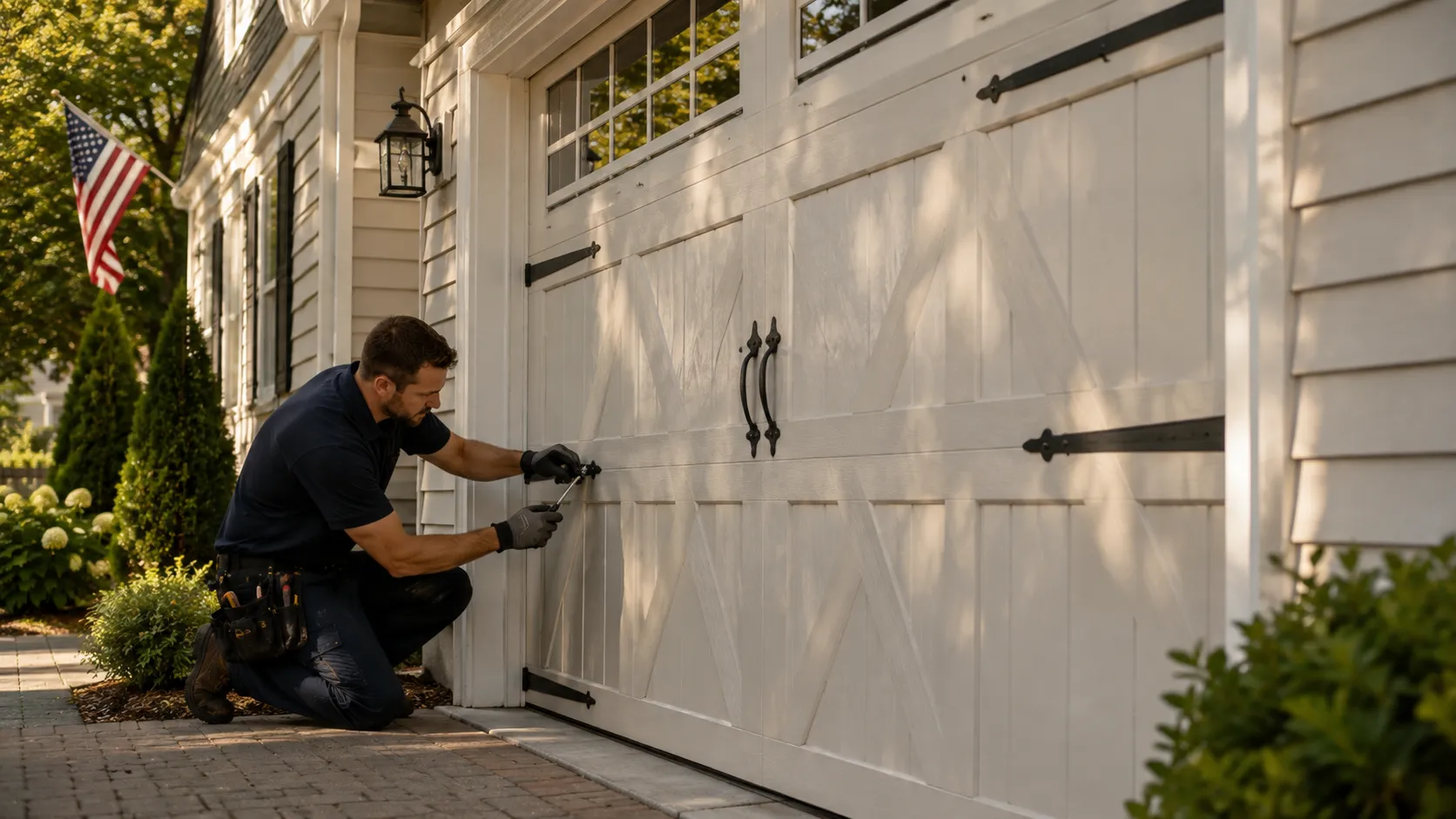
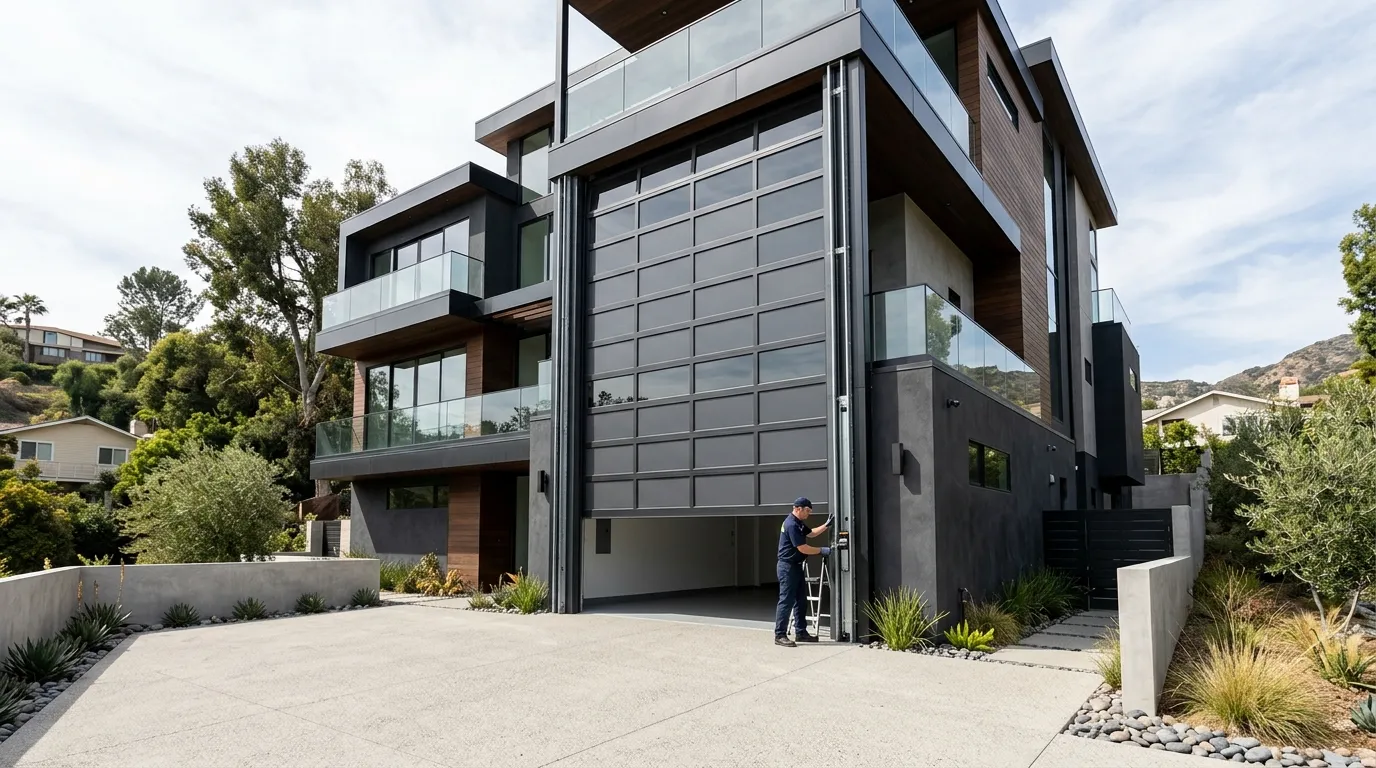
Tell us what’s wrong - Kansas City garage door service

Tell us what’s wrong

Describe the symptom - won’t open, loud bang, opener runs but the door won’t move.

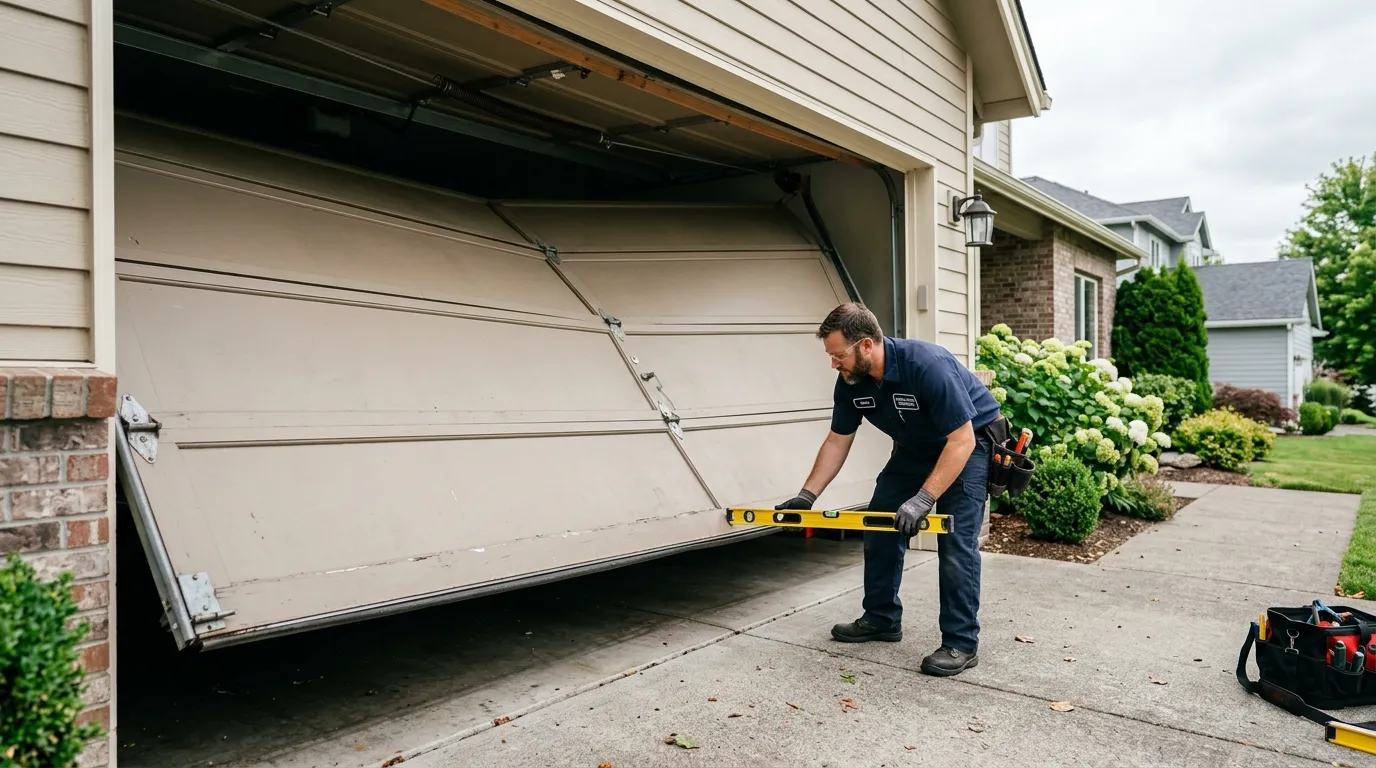
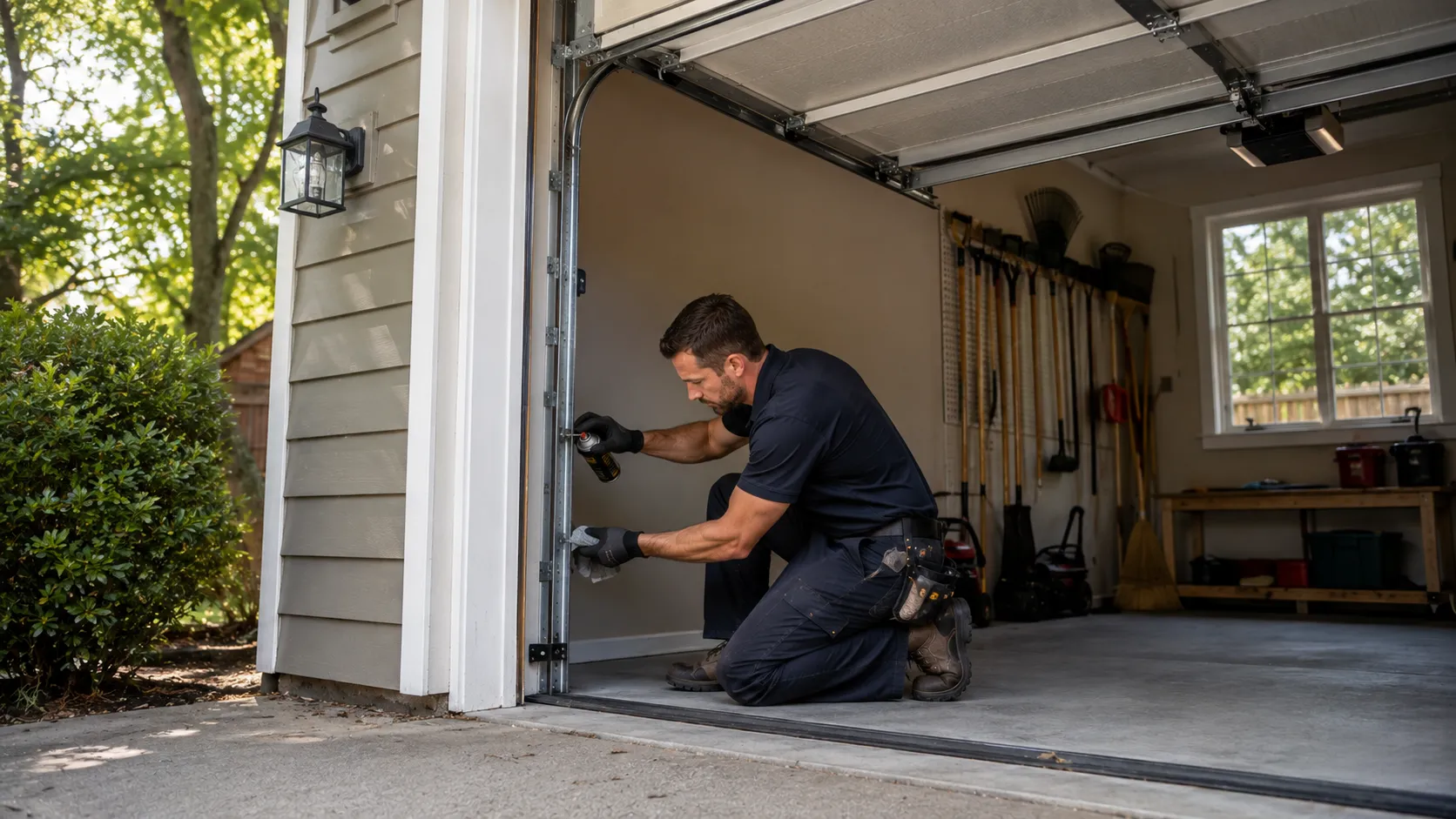
On-site diagnosis - Kansas City garage door service

On-site diagnosis

A technician tests the door under power and by hand and finds what actually failed.

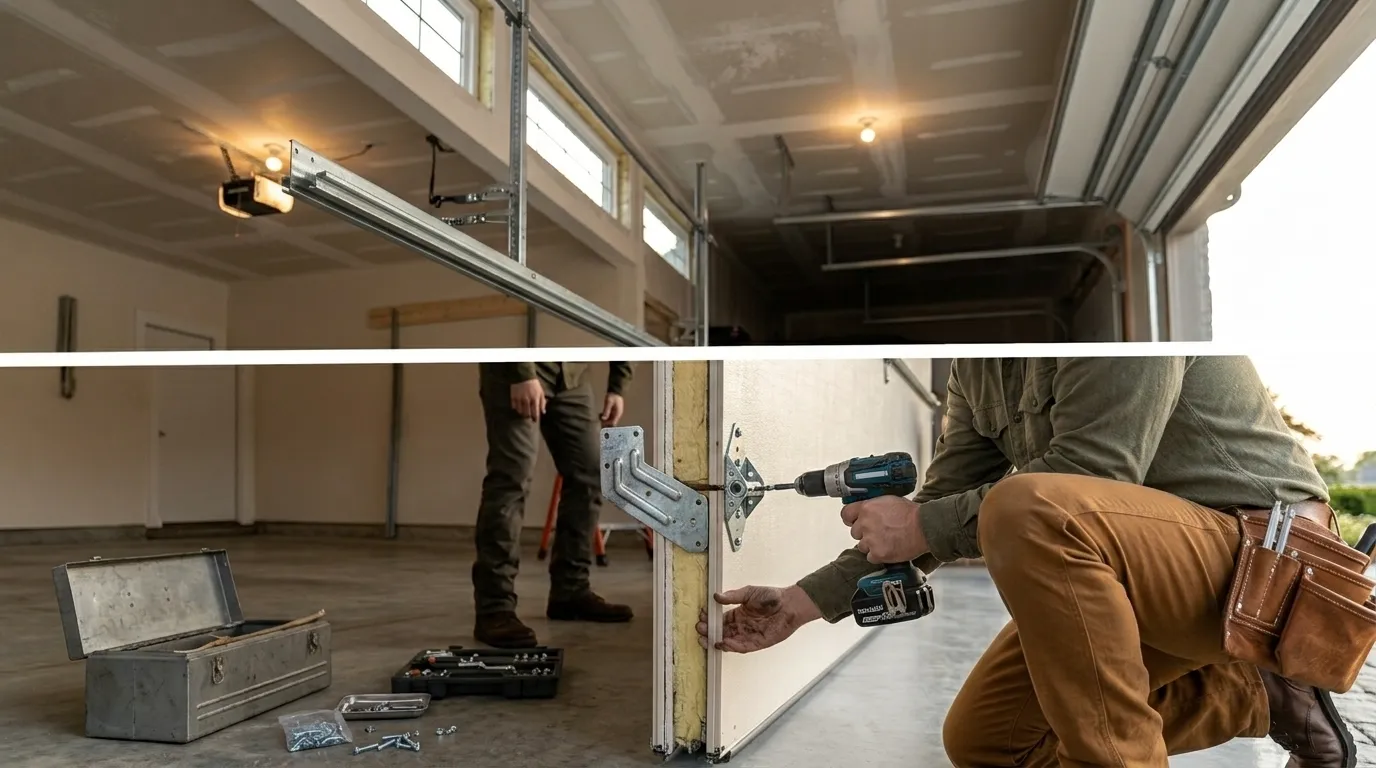
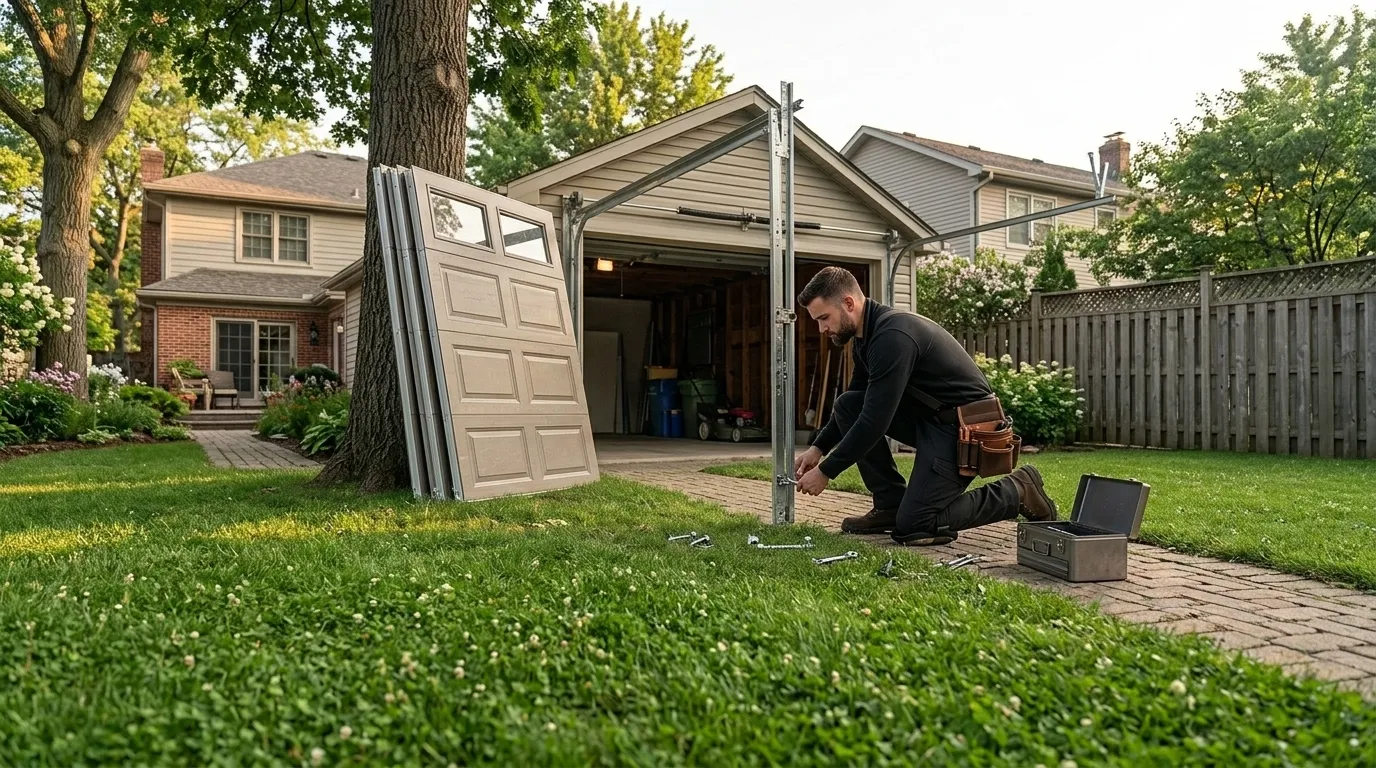
Clear, up-front plan - Kansas City garage door service

Clear, up-front plan

You get the fix that’s needed and what drives the cost - before any work starts.

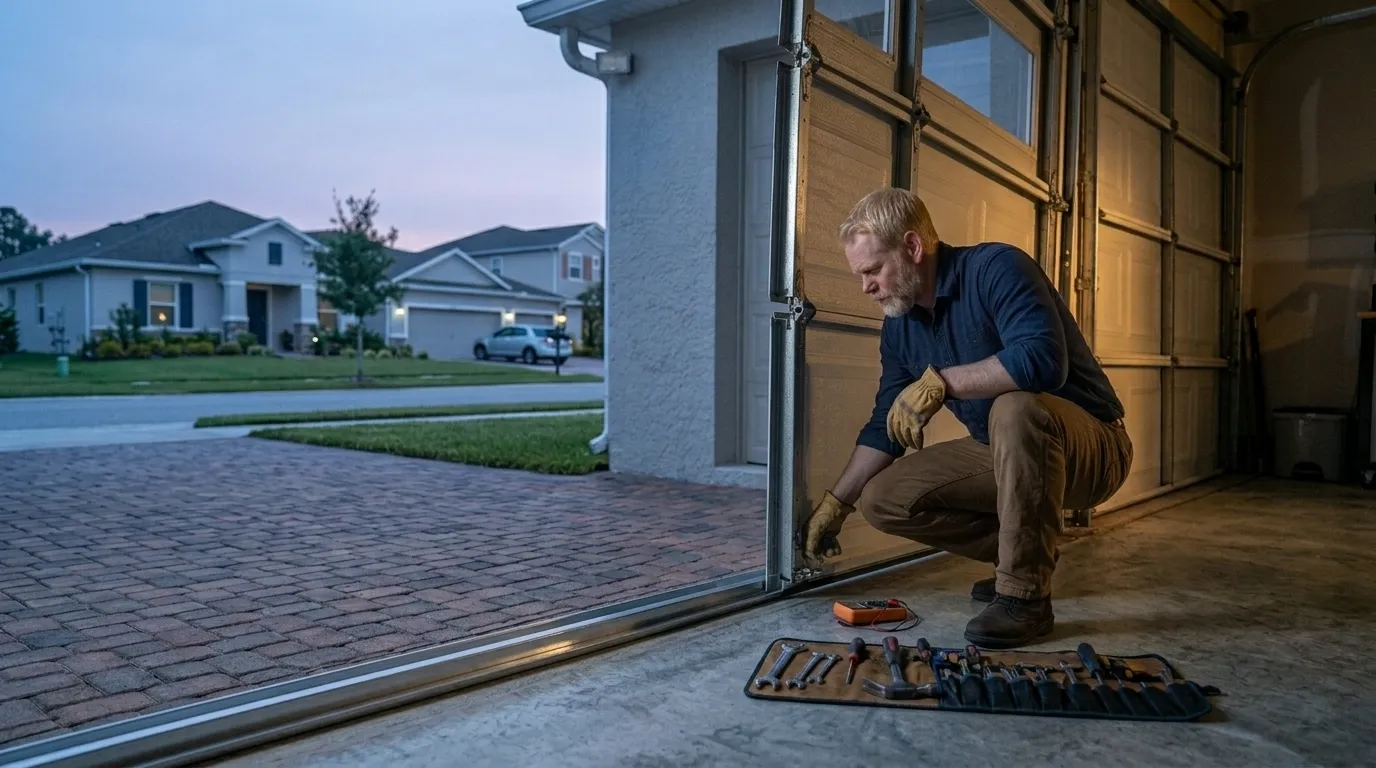
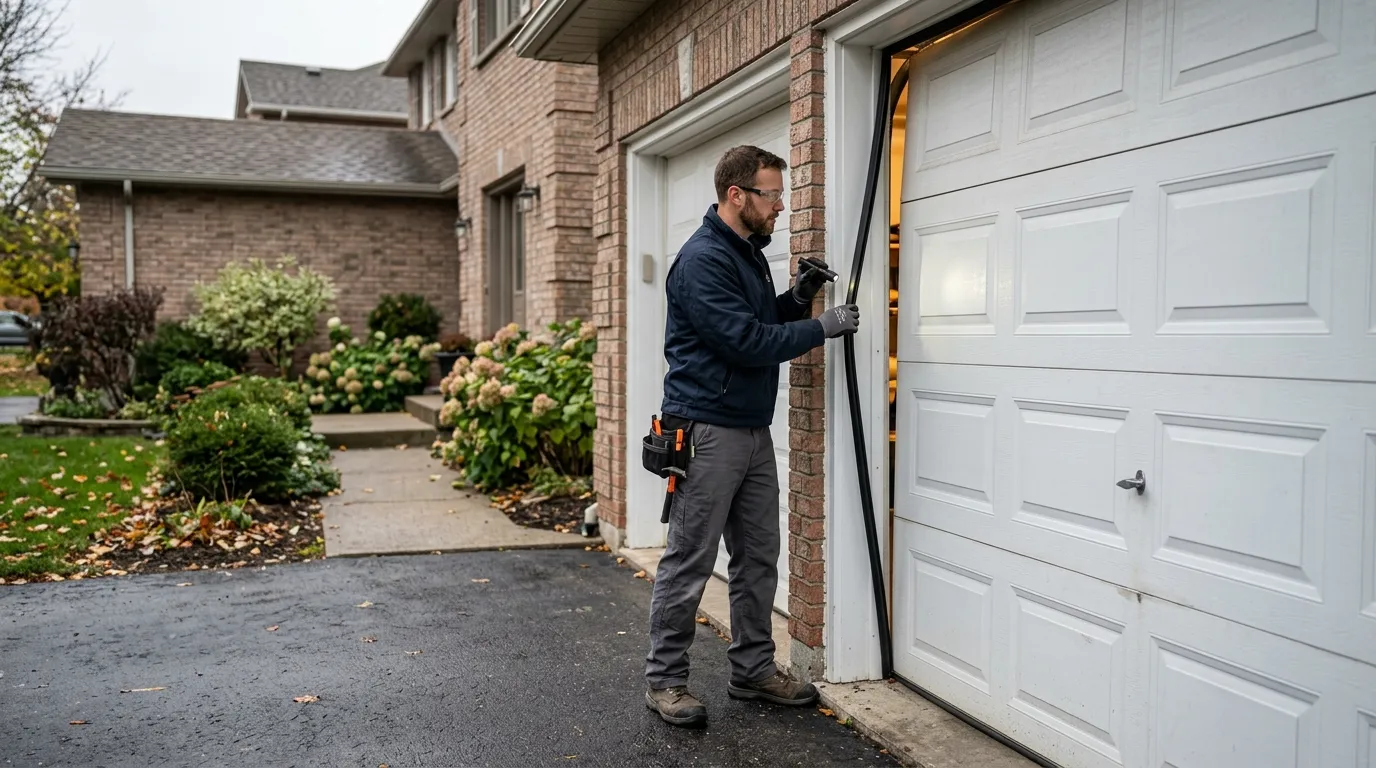
Repaired & tested - Kansas City garage door service

Repaired & tested

The repair is done, the door is set true and tested, and the work area left clean.

Serving Kansas City, MO - tell us what your door’s doing and we’ll take it from there.

How we work

What to expect

Diagnosis first

Every visit starts by finding what actually failed - not a pre-written parts list.

The right part for the door

Springs and openers matched to the door’s weight and age, so the fix holds up.

Straight answers

When a repair makes more sense than a replacement - or the reverse - you hear it plainly.

Clean, careful work

Tension released safely, hardware set true, the door tested under power before we leave.

475,378Residents in Kansas City
8Garage door services
6Neighborhoods & suburbs
MOServing Kansas City, MO
Questions

Frequently asked

Straight answers about garage door repair in Kansas City. Still unsure? Ask us directly.

Why does my door's spring keep breaking?

On houses built around 1974, the original torsion spring is often still in place and has simply worn out from decades of cycles plus freeze-thaw stress in this climate. A new spring properly matched to your door's weight usually solves it for good - it's rarely a sign of a bigger problem unless the track is also bent.

Do you have a location in North Kansas City?

No. We run this call from Kansas City, about a mile away. There's no branch here, just a short drive over, so the mile doesn't change how the job is quoted or handled once we're on site.

Is it worth repairing an older door instead of replacing it?

Often yes, especially on a door from the 1970s where the frame and track are sound and only the spring, cable, or rollers have worn out. We'll tell you straight if the track's bent badly enough that replacement makes more sense than another repair.

What's the most common repair call in this town?

Broken torsion springs and worn rollers on original 1970s-era tracks. The housing stock here is tight in age, so the same handful of failures repeat more than they would in a neighborhood with mixed build years.

Ready to get your garage door sorted?

Tell us what it’s doing and where you are in Kansas City - we’ll take it from there.

Request a QuoteCall