Stocked Parts
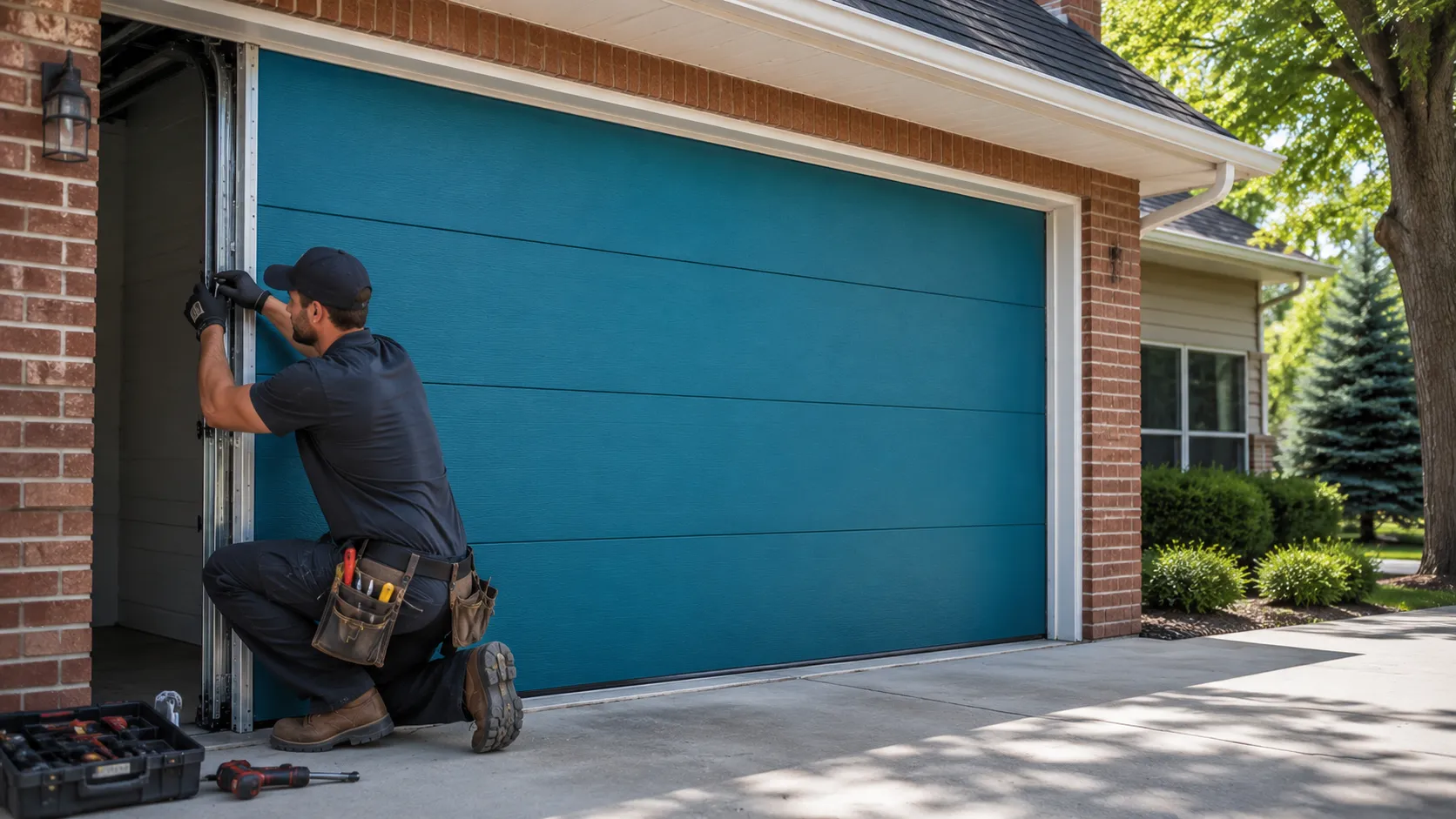
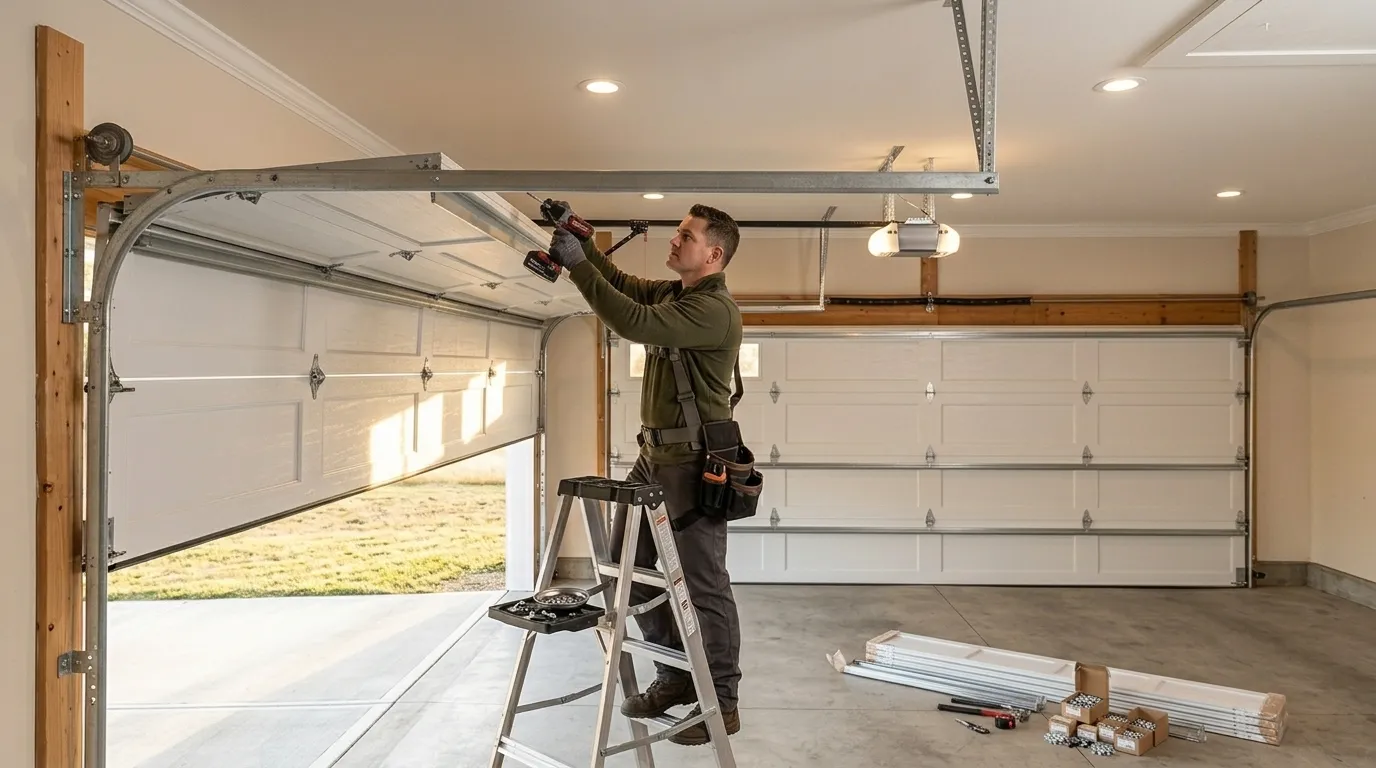
North Kansas City's houses cluster around a 1974 median build year, which lines up with the broader Kansas City stock built mostly between 1951 and 2002. That matters for a new install because the openings from that era were framed for a narrower range of standard door sizes than what's built today, and the tracks and jamb hardware from the 60s and 70s don't match current steel or insulated panel systems without adapting the header and side room. We carry standard 16x7 and 9x7 steel sections, torsion springs sized for those openings, and galvanized track in the widths this era actually used, because that's what shows up on ninety percent of the calls one mile out from Kansas City. What we don't stock is anything custom-width or arched - those get special-ordered and the lead time is the customer's to plan around, not ours to promise away.
How It Shows Up
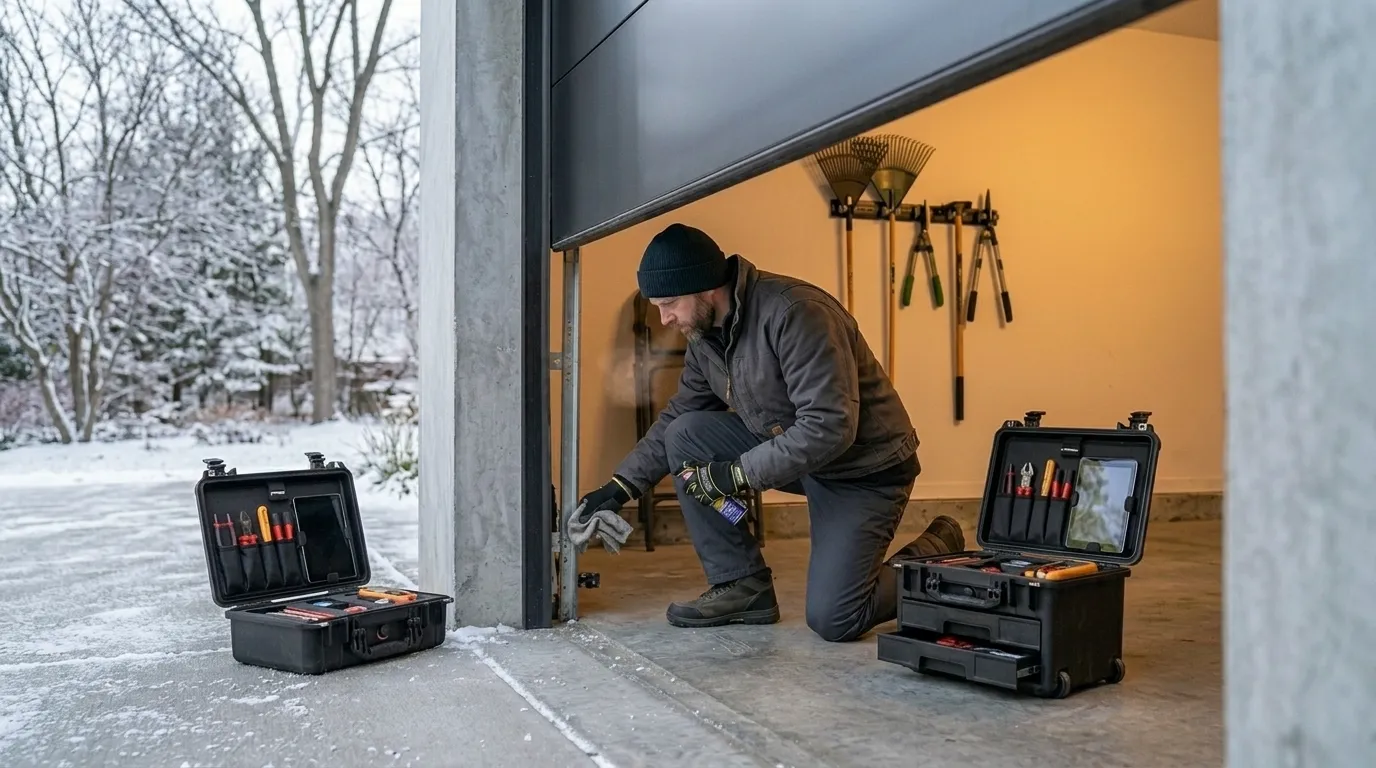
On a 1974-era North Kansas City house, the giveaway is usually a door that's been painted over a dent more than once, or an owner who's replaced the same section twice because the track alignment was never right to begin with. Cold-severe winters mean steel contracts and the seals crack faster than in a milder zone, so weatherstripping failure shows up as a draft along the bottom edge well before the door itself quits working. Because the housing stock here sits in that 1960s-70s band across most of the surrounding named areas, the failure pattern repeats house to house - it's rarely a one-off problem, it's the door doing exactly what a fifty-year-old single-layer panel does in this weather.
Doing It Yourself
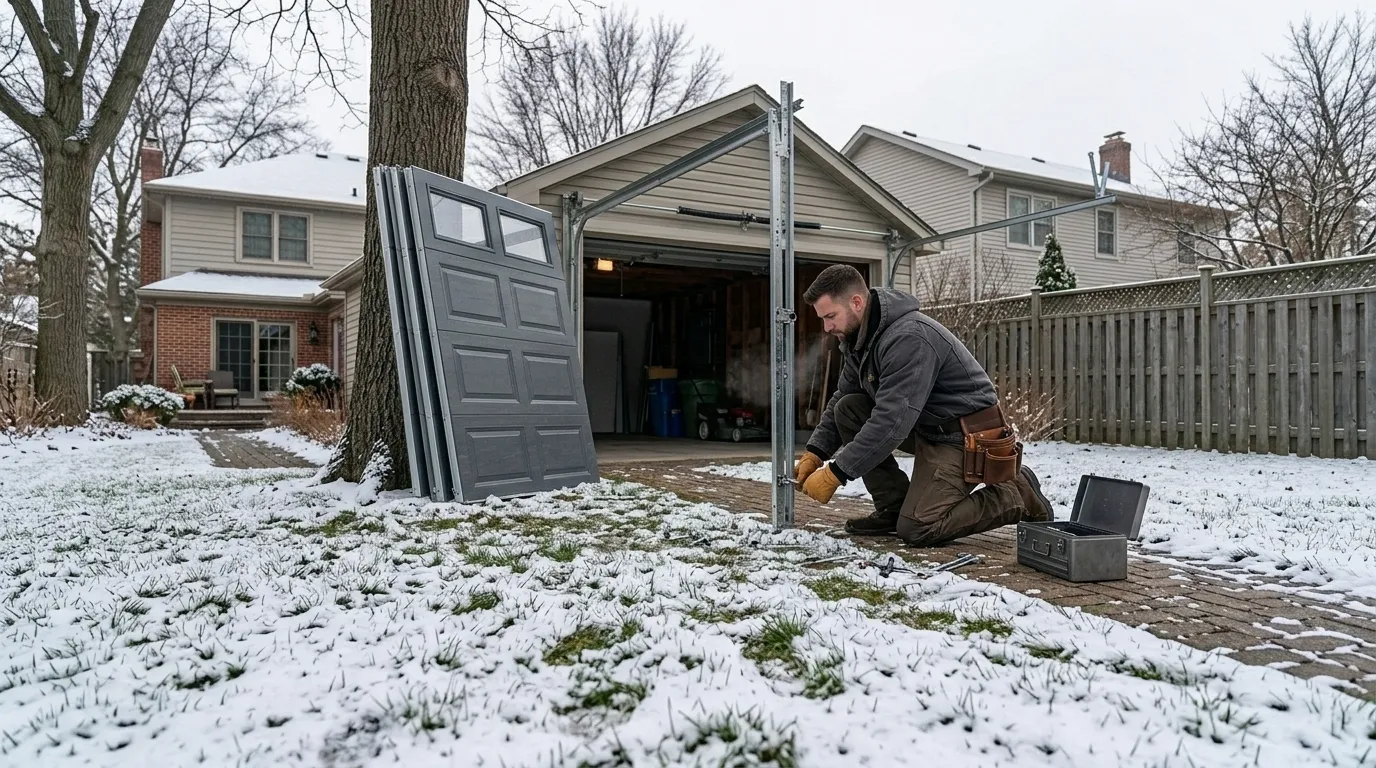
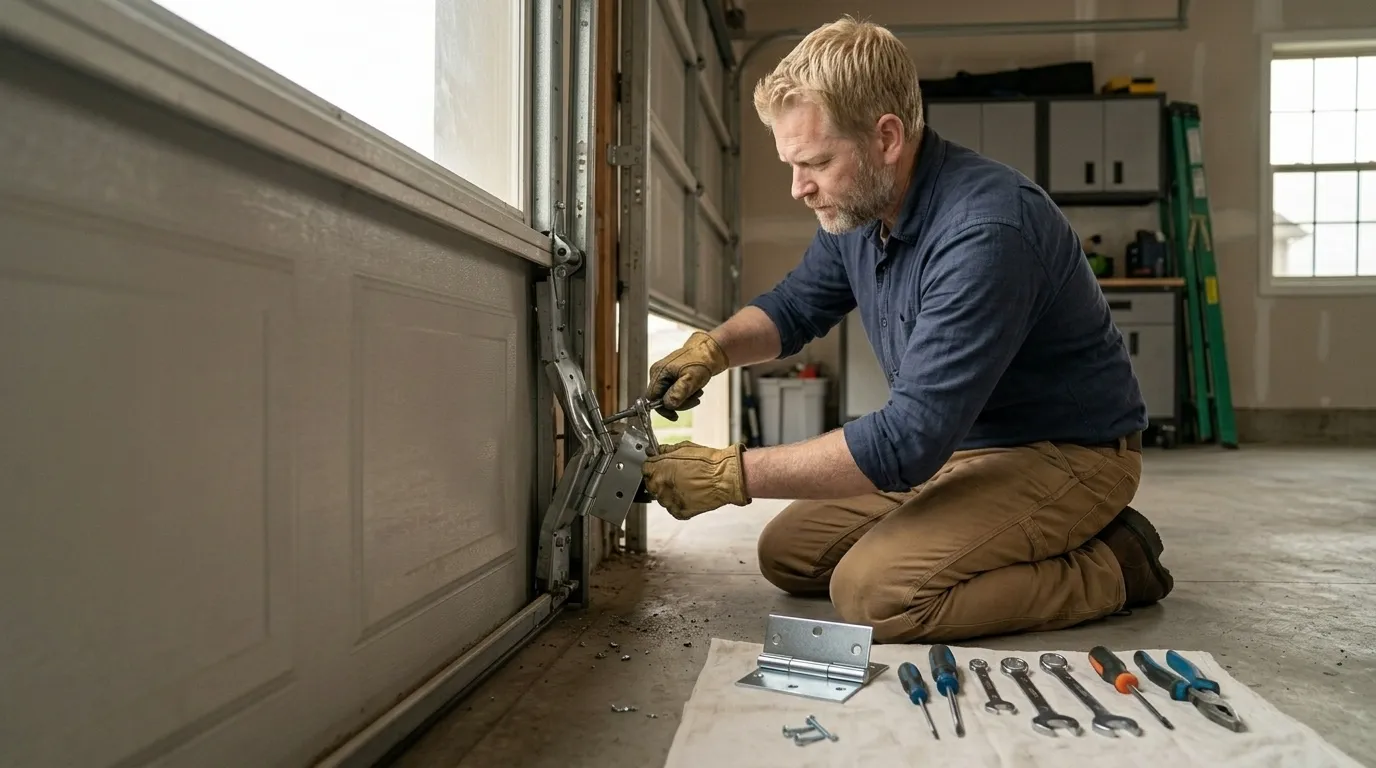
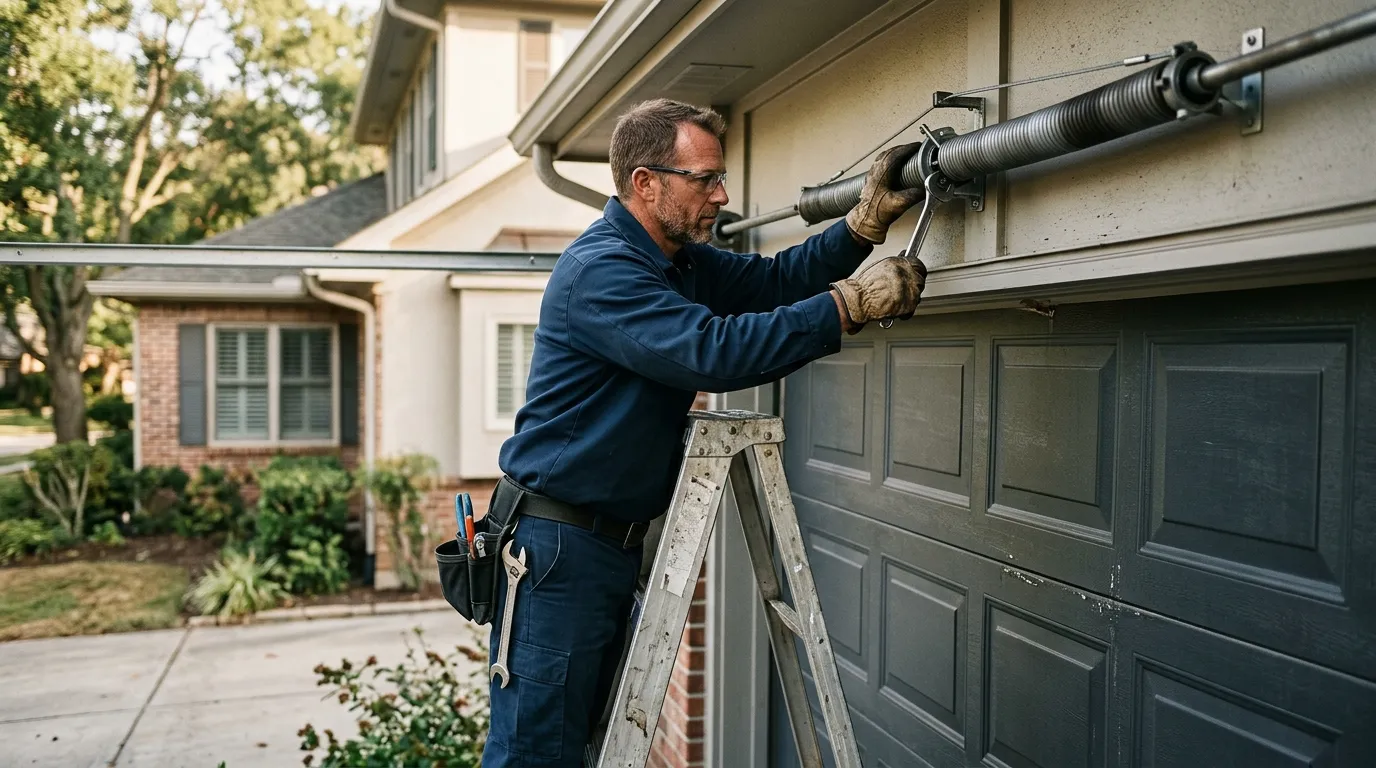
If you're set on handling the swap yourself, measure your rough opening before you order anything - a lot of these 1970s framings run narrower than a modern standard 16x7, and ordering off a a big-box sizing chart without checking your own jamb is the most common mistake we see corrected after the fact. Swapping panels is manageable. Setting new torsion spring tension on an opening this age, where the header may not be square anymore, is where people get hurt or wreck the new door in the first week. We're honest that this isn't a job to learn on a cold day with a heavy insulated door - if you get partway through and the spring's already under tension, stop and call, don't finish it.