What It Costs
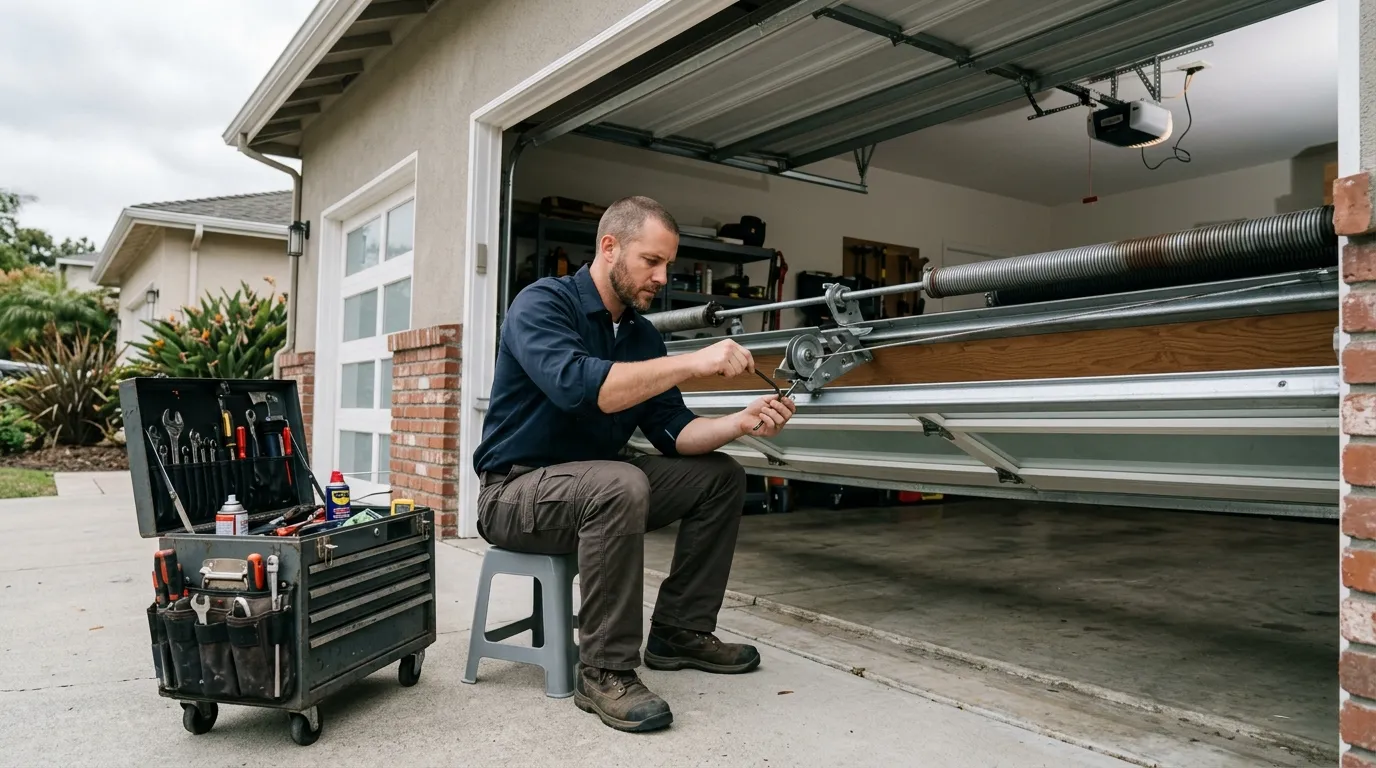
The number that matters most for Raytown isn't the service call, it's what's behind the door. A house built around 1963 - which is the median build year here, a decade ahead of the broader Kansas City area's 1973 median - was very likely fitted with extension springs mounted along the horizontal track, not the torsion spring setup that shows up in newer builds. Extension spring replacement, cable swaps, and the pulley hardware that goes with them are a different job than torsion work, and pricing follows the parts on hand, not a flat rate we can quote sight unseen.
What we can tell you without seeing the door: original hardware from this era is usually undersized for the door weight code allows today, and once one component fails, the rest of the assembly is often close behind. We'll always tell you if a repair is going to cost more than sense allows given the age of the unit, rather than patch something that's going to fail again in six months.
Getting It Booked In
We come out to Raytown from Kansas City, about 10 miles up the road. There's no local branch or depot here - it's the same crew and the same truck stock that covers the rest of the service area, so what we carry on the truck is built around what actually breaks across roughly 52,855 owner-occupied houses in this region, not around one suburb's inventory.
Because Raytown's stock runs older than the area median, we try to have the right parts on the truck before we show up rather than diagnosing on-site and coming back a second time. Tell us the approximate age of the house when you call and we can usually guess at the hardware type before we're in the driveway.
Stocked Parts
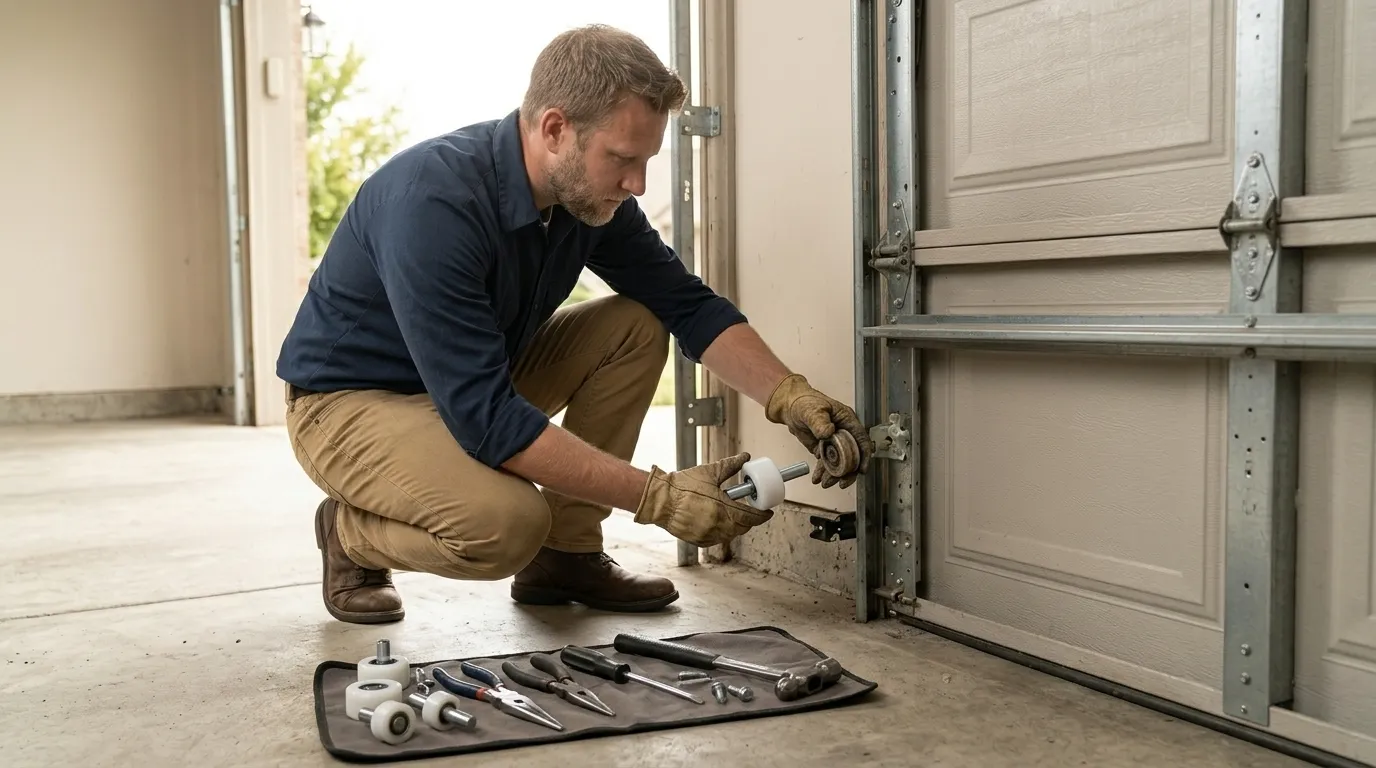
Given a median build year of 1963, the parts we expect to need most in Raytown are extension springs, the pulleys and cable drums that go with them, and end bearing plates worn from decades of the door's own weight riding on undersized hardware. Panel sections for doors this old are a different story - many original doors from this era were replaced outright decades ago, but where the original steel panel survives, matching a section is a special-order item, not a truck-stock one.
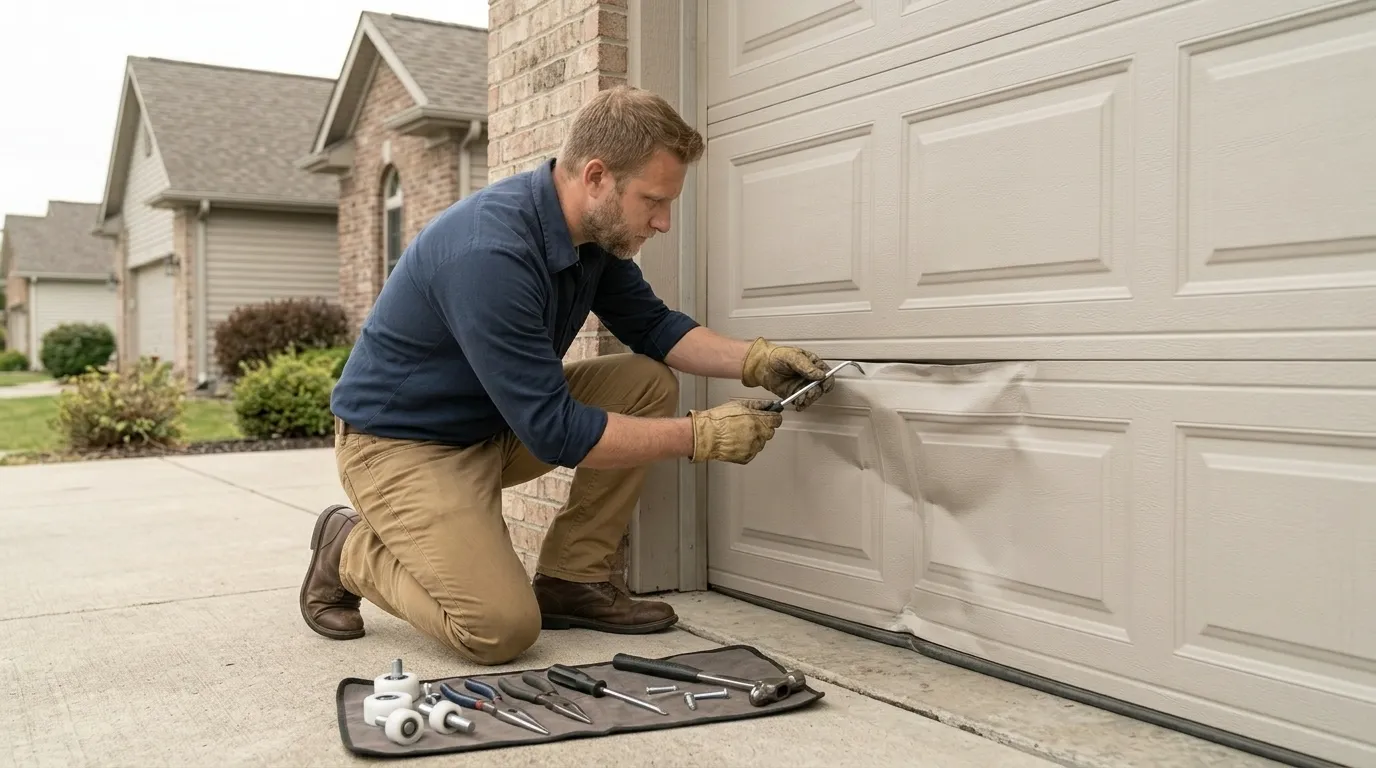
We carry standard rollers, hinges, and common opener parts for any door age. What we don't stock is a match for a discontinued panel profile - if your door still has its original face, expect us to talk replacement options rather than a patch.
The Complications
The complication in Raytown is less about diagnosis and more about parts matching. When a door has already had one owner-era repair - a spring swap in the '90s, say, or a replaced opener bolted onto original track - the hardware on site can be a mismatch of generations, and that changes what a straightforward repair should be. We've opened doors expecting a simple cable job and found the drum from one decade paired with a spring from another.
We don't guess at load ratings on mismatched hardware. If what's on the door doesn't add up to a safe, code-appropriate setup, we'll say so and price the fix to bring it into a consistent state, even if that costs more than the single part that actually failed.