Stocked Parts
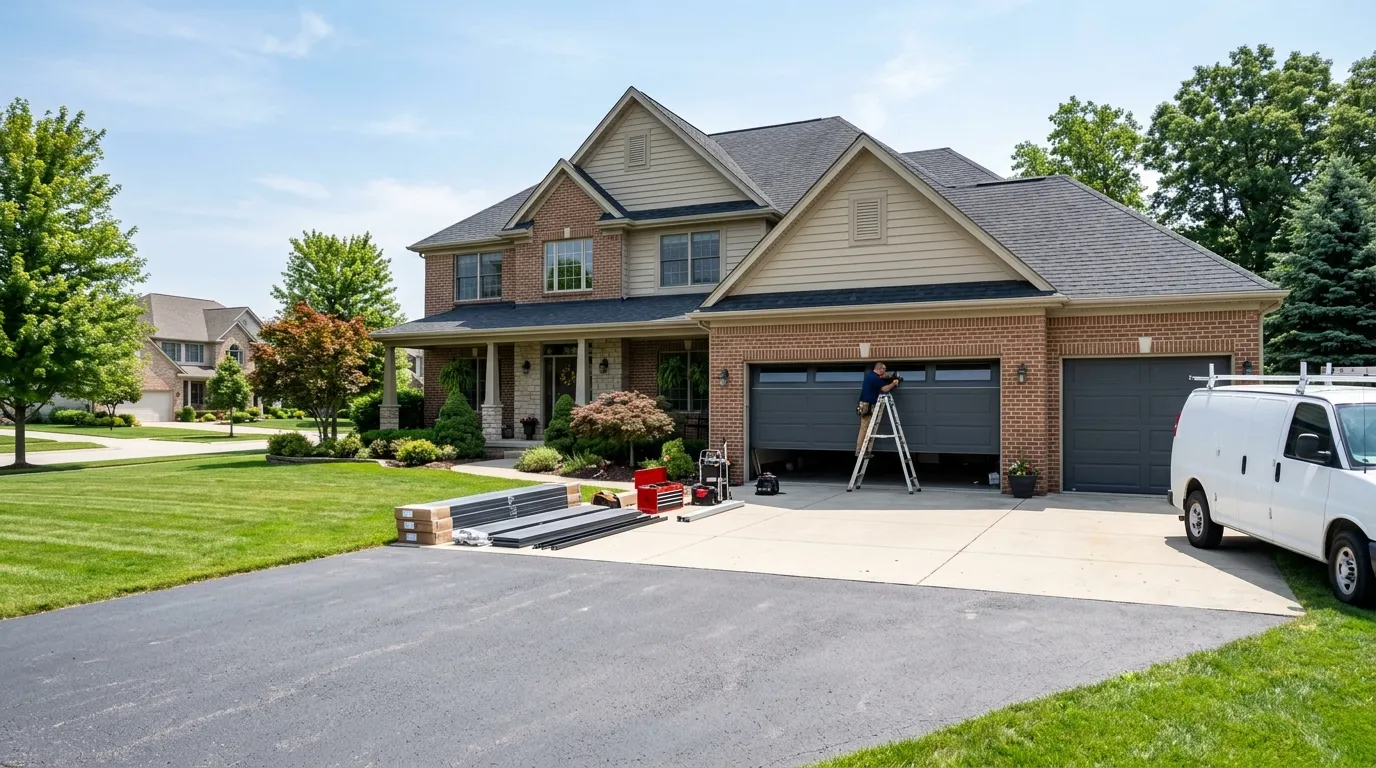
Kearney's houses carry a median build year of 2001, close to three decades newer than the 1973 median across the rest of the service area. That gap matters more than it sounds. By 2001, steel raised-panel doors on torsion spring systems were the standard install, not the older one-piece or extension-spring setups you still find on side-mounted hardware in the neighborhoods that went up in the 60s and 70s. When we replace a door out here, we're almost never fighting old hardware to make a new door fit - we're swapping a door of roughly the same era and dimensions.
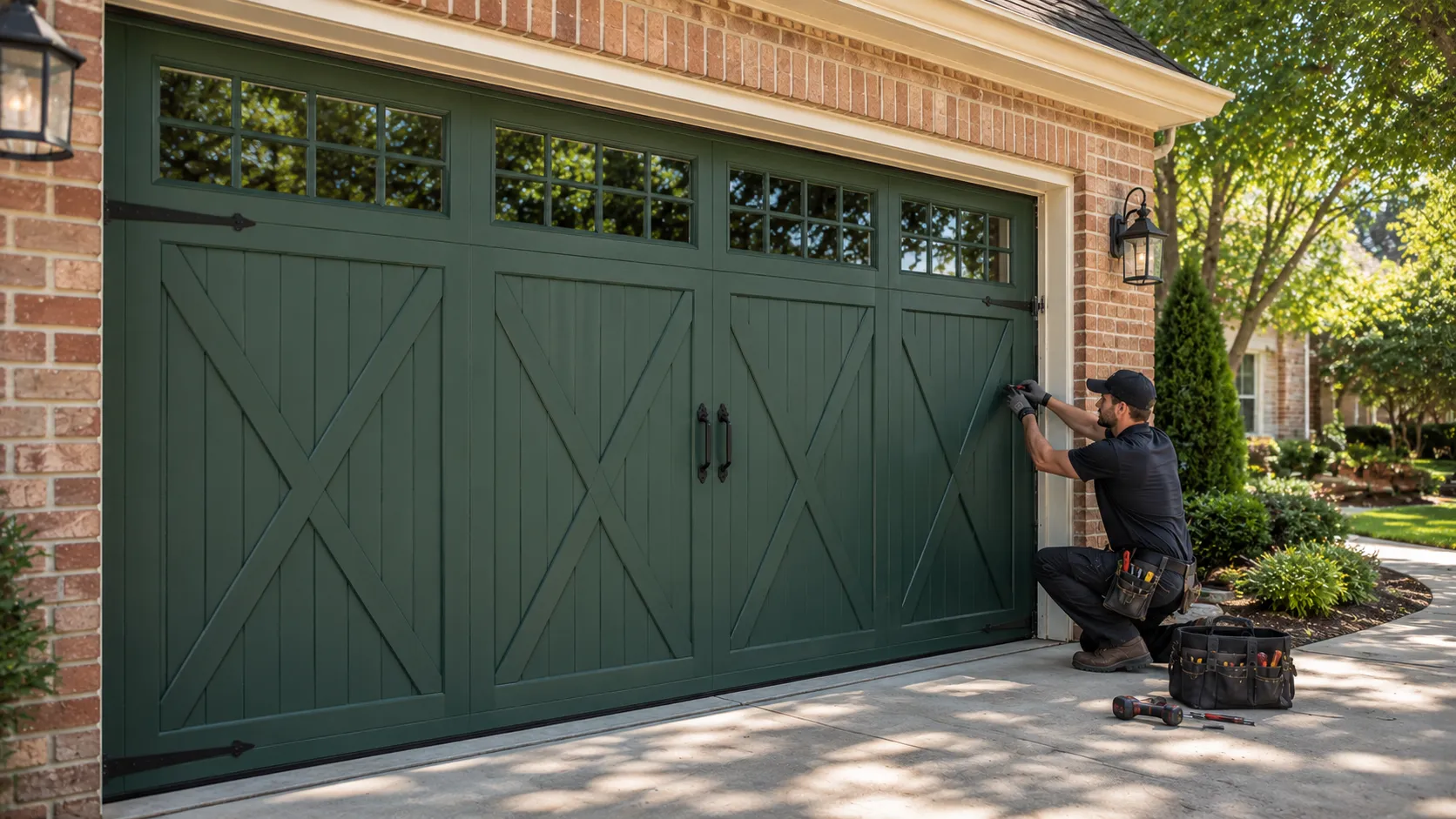
Median household income here runs $102,523, well above the $69,680 median for the service area as a whole. In practice that shows up as more requests for insulated steel doors with windows and better hardware packages, rather than the bare economy panel. We carry standard steel sectional doors, torsion springs sized for both single and double openings, and openers with the photo-eye safety sensors that have been required since the mid-90s - all stock for a build era like Kearney's.
The service area sits in a cold, severe climate band, so insulation matters on any new door here, not just on paper. A poorly insulated door on an attached garage in a Kearney winter is a cold wall next to a bedroom or laundry room, and that's worth asking about before you pick a model.
What It Costs
We're not going to hand you a number here that isn't tied to your door, because a single-car steel door with a basic opener and a double-car insulated door with a belt-drive opener and windows are not close to the same job, and quoting one price for both would be a guess dressed up as a fact.
What actually moves the number: door width (single versus double), insulation level, whether you want windows or a specific panel style, and opener type - chain drive is the cheaper end, belt or wall-mount units cost more but run quieter. Given Kearney's income relative to the rest of the service area, we see more requests here for the insulated, windowed doors than for the stripped-down model, but that's a choice, not a requirement.
One honest limitation: if you want a specific color or a less common window pattern, that's often a special order from the manufacturer, and it can add real lead time to the job - sometimes a couple of weeks beyond what we'd otherwise schedule. If you're not particular about the exact look, sticking to a manufacturer's stock color and panel style keeps the job moving faster and usually keeps the price down too.
How Long It Takes
At 19 miles out, Kearney sits farther from our shop than North Kansas City or Gladstone, but closer than Smithville. That distance doesn't change how long the install itself takes once the truck is on site - it changes how we schedule the day. A straightforward single-door swap with standard hardware is usually a same-day job once we're there; a double-door install with a new insulated door and a new opener runs longer because there's more to align and test.
With a median build year of 2001, Kearney's openers are the first generation required to carry photo-eye safety sensors, not the retrofit units common in the older, 1973-median stock closer to town. That means less time spent explaining or adding safety hardware that's already required elsewhere, and more time spent on the actual door and spring work.
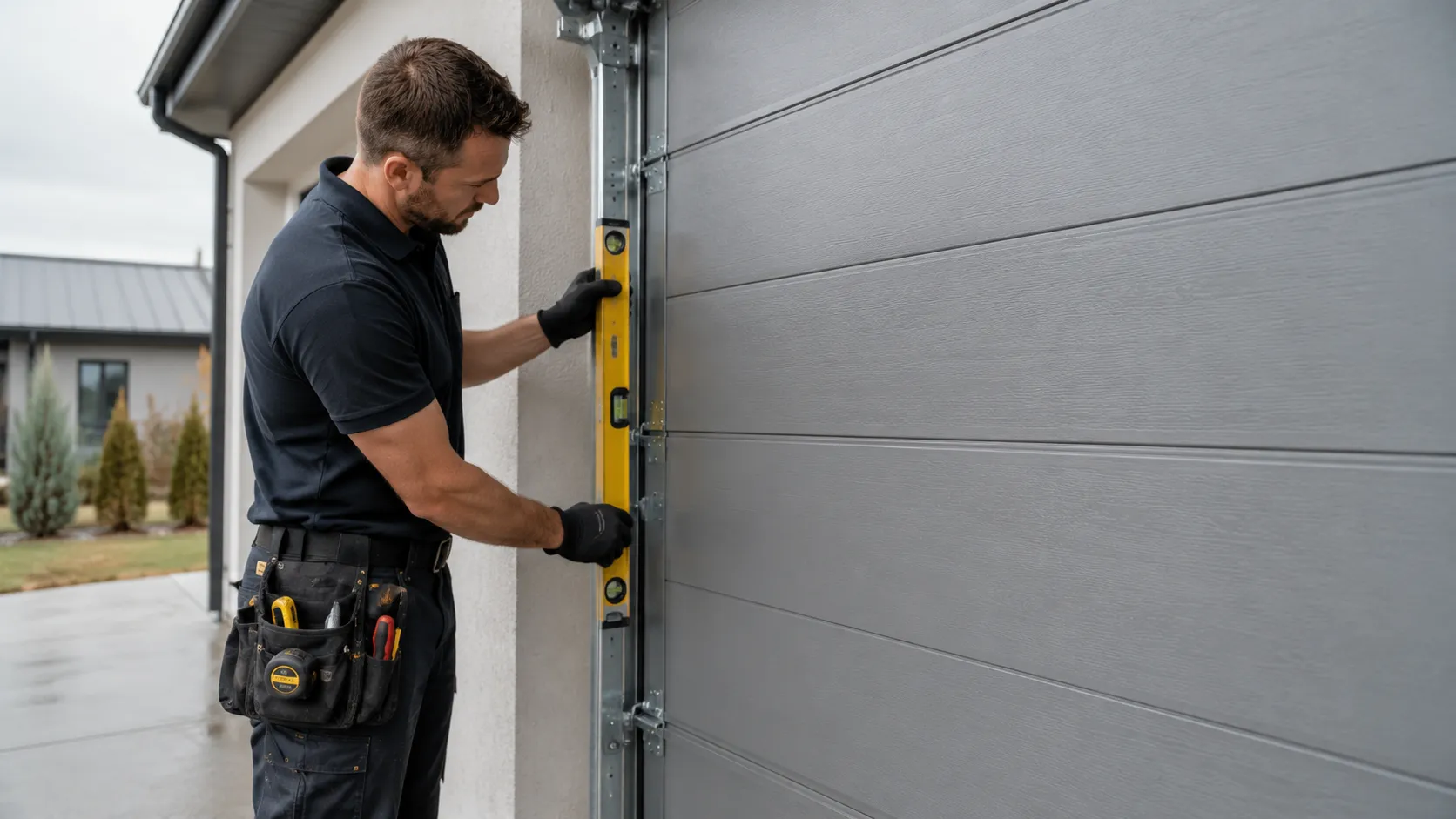
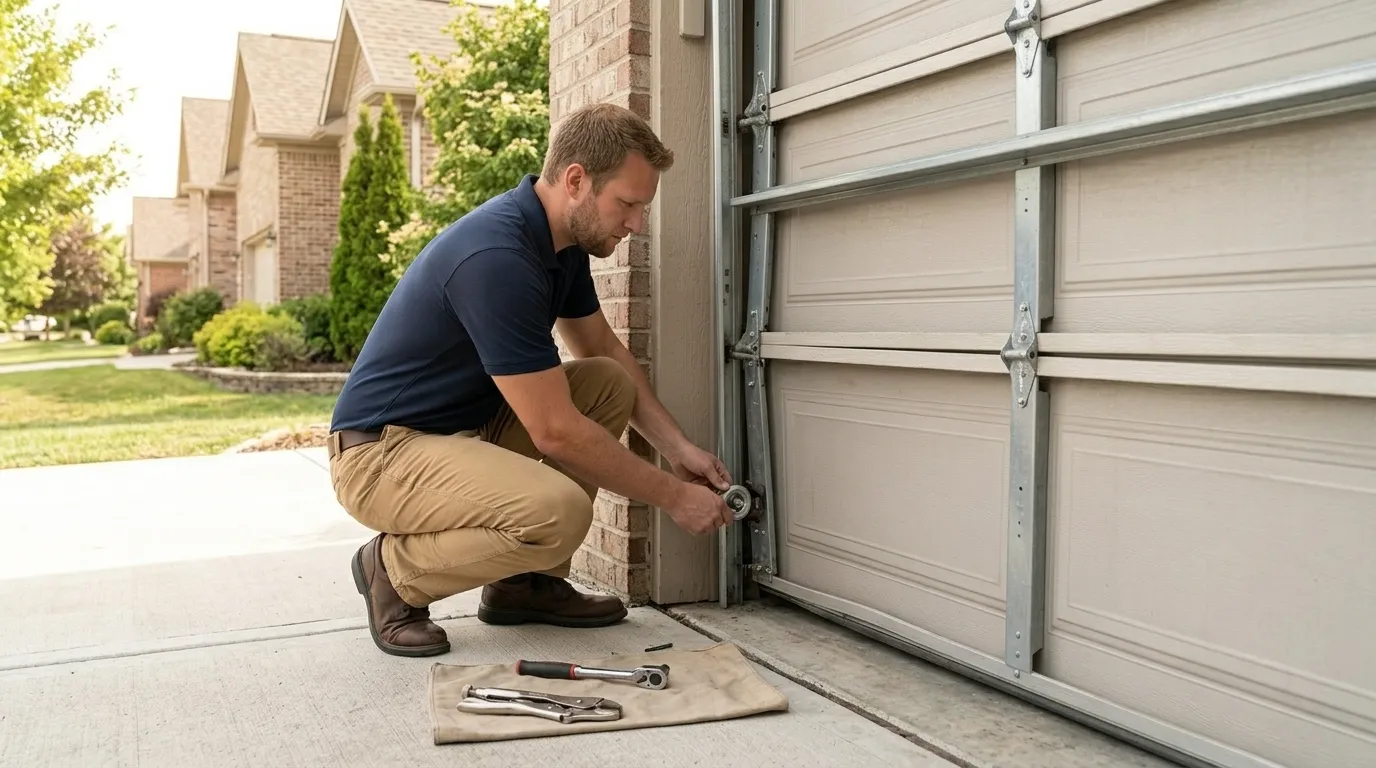
What we can't promise is a same-day appointment on short notice, since we're driving out from Kansas City rather than working out of a Kearney location. Once a job is on the schedule, though, a standard new install - measuring, removing the old door, setting the new one, balancing the springs, and testing the opener - typically wraps in a single visit.